
 Μake us preferred on Google
 Paleontologists have uncovered the fossil of a 155 million-year-old dinosaur in the Chubut Province of south Argentina dating back to the Upper Jurassic period.
The species, named Bicharracosaurus dionidei, displays a remarkable combination of features from different dinosaur families — something that makes it unique in the paleontological record.
Researchers identified more than 30 vertebrae, ribs, and part of the pelvis, belonging to an adult animal roughly 20 meters long — not the largest sauropod ever found, but certainly an impressive giant.
A Strange Mix of Characteristics
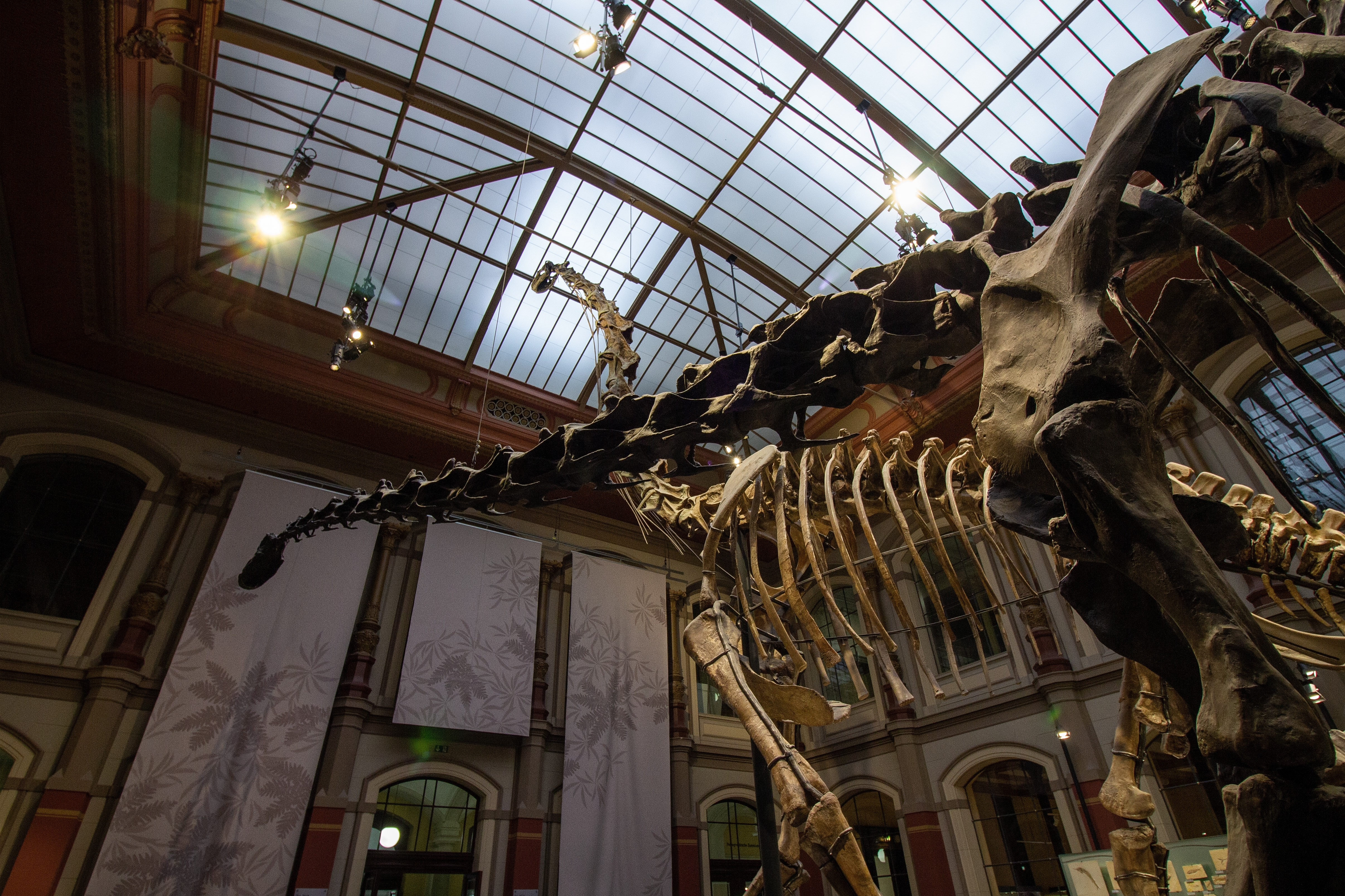
Dinosaurs such as Diplodocus and Brachiosaurus are considered classic examples of long-necked titans. Until now, most scientific knowledge about them has come from fossils found in North America and other northern regions.
What caught the researchers’ attention was the anatomy of Bicharracosaurus dionidei. According to the study published in PeerJ, some bones closely resemble those of Giraffatitan, a brachiosaurid from Tanzania, suggesting a kinship with that branch of sauropods.
However, other parts of the spinal column — particularly the dorsal vertebrae — are more reminiscent of Diplodocus and its North American relatives. This combination of features in a single species makes its classification particularly challenging.
As Alexandra Reutter of LMU Munich, who led the research, explains, the analysis places this dinosaur within the Brachiosauridae group. If confirmed, this would be the first recognized brachiosaurid from the Jurassic period in South America.
Patagonia as a Paleontological Treasure
The fossil comes from the Cañadón Calcáreo formation in Patagonia — a region of growing importance for paleontology. Oliver Rauhut of the Bavarian State Collections of Palaeontology and Geology noted that findings from the area help scientists compare dinosaurs across different continents.
For a long time, fossils from the southern hemisphere were scarce, with Tanzania being one of the few known sites. As Rauhut explained, this new evidence helps scientists more accurately reconstruct how sauropods spread across the world.
A Discovery That Started with a Shepherd
The first remains of Bicharracosaurus dionidei were discovered by a local shepherd, Dionide Mesa, who spotted the bones of this giant animal on his property in Patagonia. The species name dionidei was given in his honor, while the word bicharraco, Spanish slang for “huge creature”, proved a fitting description for this remarkable new dinosaur.