 Μake us preferred on Google
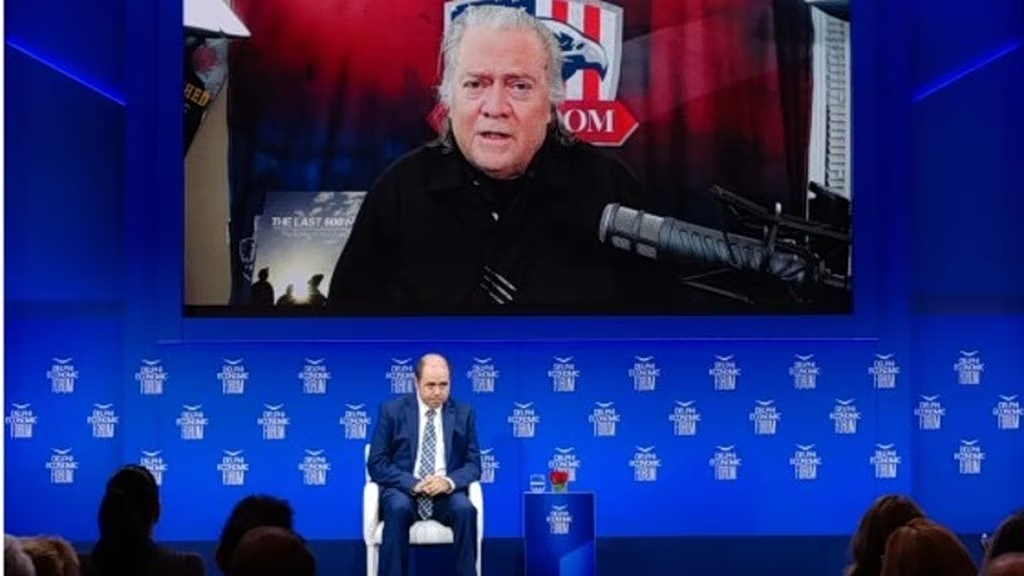
 Future global conflicts are likely to center on control of maritime routes and the principle of free navigation, former White House chief strategist Steve Bannon said during an appearance at the Delphi Economic Forum.
Speaking via teleconference, Bannon pointed to intensifying competition between the United States and China, particularly over strategic ports and shipping infrastructure. He stressed that safeguarding open sea lanes will be a defining issue in the coming decades.
Maritime Routes at the Center of Global Rivalries
Bannon described key maritime corridors—including the Red Sea, the Strait of Hormuz, and other major shipping passages—as critical flashpoints for future geopolitical tensions. He argued that control over global supply chains and sea-based trade routes will shape international power dynamics.
He also highlighted the role of countries with strong maritime traditions, noting that Greece plays a significant part in global shipping and has a vested interest in maintaining freedom of navigation.
NATO and European Security
Addressing broader security concerns, Bannon reiterated his criticism of US involvement in the war in Ukraine, arguing that Europe should take greater responsibility for its own defense.
He referenced recent regional security developments to underline what he described as limited European military responses, suggesting that stronger coordination among European nations is needed to ensure stability.
Trade Policy and US Economic Strategy
On economic policy, Bannon defended the use of trade tariffs, describing them as a tool aimed at boosting domestic production in the United States. He said US President Donald Trump seeks to re-establish the country as a global industrial leader.
According to Bannon, this approach is intended to benefit not only the US economy but also global trade, while promoting cooperation between nations based on mutual interests.
He contrasted this vision with China’s economic model, which he described as aggressive, framing the broader US–China rivalry as both economic and strategic.