
 Μake us preferred on Google
 The first refurbished train on Athens Metro Line 1 has finally entered service, more than two years behind schedule and almost a year after the entire fleet of 14 upgraded trains was originally supposed to have been delivered.
Prime Minister Kyriakos Mitsotakis traveled aboard the refurbished train Monday, October 12, riding from Thissio to Moschato alongside Deputy Transport Minister Giorgos Kotsiras and STASY Chief Executive Thanasis Kottaras. The train had entered passenger service the previous week, after consequtive delays. After the journey, Mitsotakis acknowledged the poor condition of Line 1, which connects Piraeus with the northern suburb of Kifissia and is commonly known in Athens as the Electric Railway, or ISAP. “I don’t think there is much point in sugarcoating things,” he said. “The truth is that Line 1 is currently in a very problematic state because of its extremely old trains. But that is changing.”
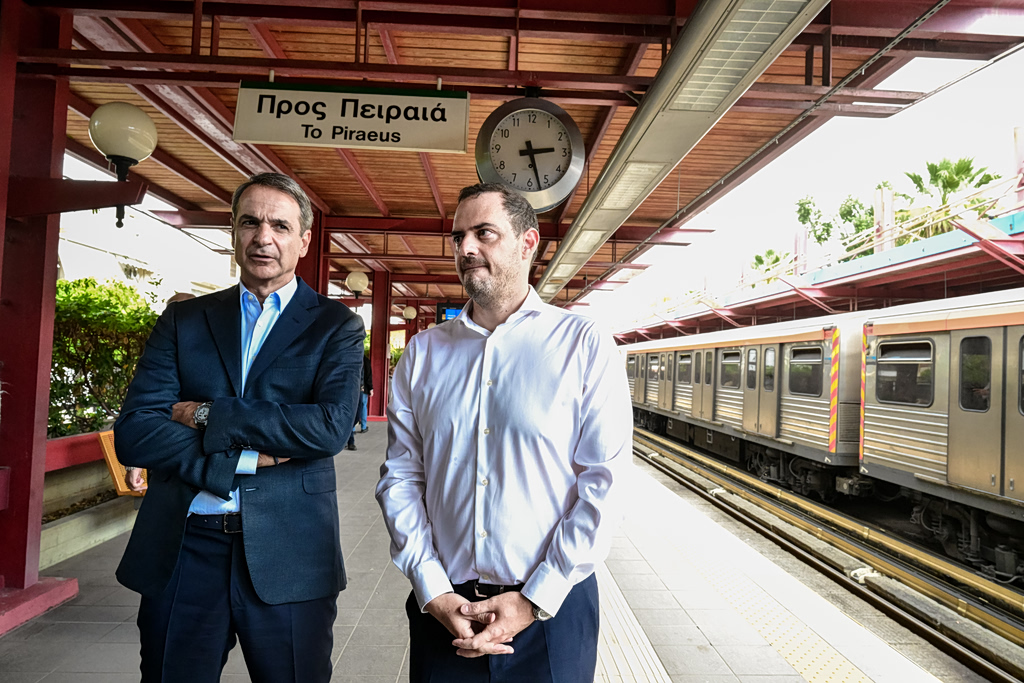
Prime Minister Kyriakos Mitsotakis aboard a refurbished Line 1 train during a visit to Thissio railway station in Athens on Monday, October 12, 2026. (Tatiana Bolari/Eurokinissi)
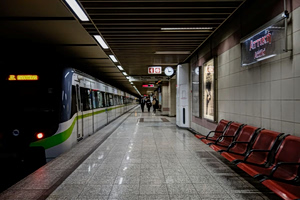
The admission came as the government presented the refurbished train as evidence of its commitment to improving public transportation in the capital. Yet the project itself illustrates how slowly those improvements have materialized, especially for commuters who rely on Line 1, where aging trains, unreliable or non-existant air conditioning and long waits is the norm.
A modernization project years behind schedule
The contract to refurbish 14 trains was signed in December 2022 between STASY, the company operating Athens’ metro and urban rail network, and Spanish manufacturer Construcciones y Auxiliar de Ferrocarriles (CAF). Under the original agreement, the first upgraded train was to be delivered within 19 months, by July 2024. Four more were expected by January 2025, another five by June 2025 and the final four by October 2025. In other words, all 14 trains should have been delivered by this time last year.
Instead, the first has only now entered service, while the remaining 13 are expected to arrive gradually through 2027, according to the government’s revised schedule.
The refurbishment work is being carried out in Volos, under a project funded through European Union structural funds. The trains undergoing modernization first entered service between 1983 and 1985, making them more than 40 years old. The refurbishment program is designed to extend their operational life by another 25 years.
The government itself acknowledges that the project represents the first substantial renewal of Line 1’s rolling stock in 22 years, a striking admission given how central public transportation improvements have been to its stated policy priorities.
What passengers can expect from the upgraded trains
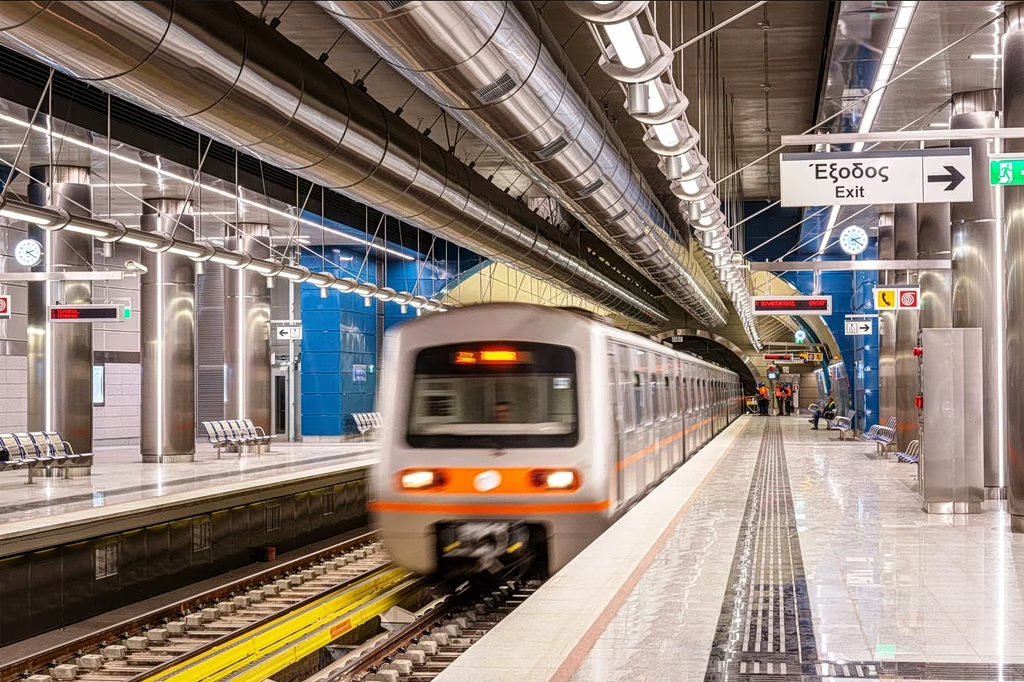
The upgraded trains feature improved air conditioning, new seats, floors, windows and interior panels, along with LED lighting and digital passenger information displays. They also have new motors, upgraded mechanical systems and closed-circuit security cameras. Accessibility has been improved, including designated spaces and safety provisions for passengers using wheelchairs.
But one refurbished train will do little on its own to resolve the wider problems facing Line 1. The full program is intended not only to provide a more comfortable journey but also to increase the number of trains available for service, allowing operators to run them more frequently and reduce waiting times.
Aging trains remain a problem across Athens
The difficulties extend beyond Line 1. As To Vima have reported in May, another 22 older trains, including 12 serving Metro Lines 2 and 3 and 10 former ISAP units, are also slated for modernization. At the time, the relevant procurement process had yet to begin, meaning improvements such as air conditioning for those trains were still at least two years away. A separate tender for 15 new metro trains, including seven designed to serve the airport connection on Line 3, was and still is pending.
The delays have left Athens heavily dependent on aging trains at a time when the government says stronger public transportation is essential to easing the capital’s chronic traffic congestion.
Speaking Monday, Mitsotakis said the government’s ambitions extended beyond replacing old equipment. Reducing the time passengers spend waiting for trains was equally important, he said. He pointed to new buses already introduced into the capital’s network and argued that public transportation improvements were beginning to produce results.
Kotsiras also said waiting times had already fallen across all three metro lines, though no specific figures were provided in the statements accompanying Monday’s visit.