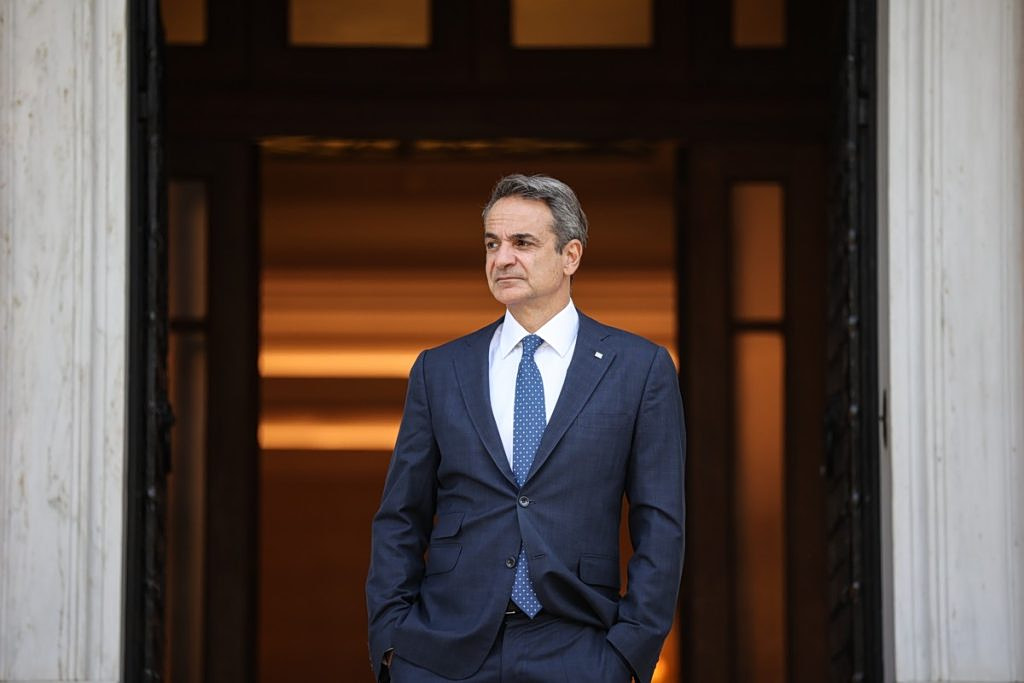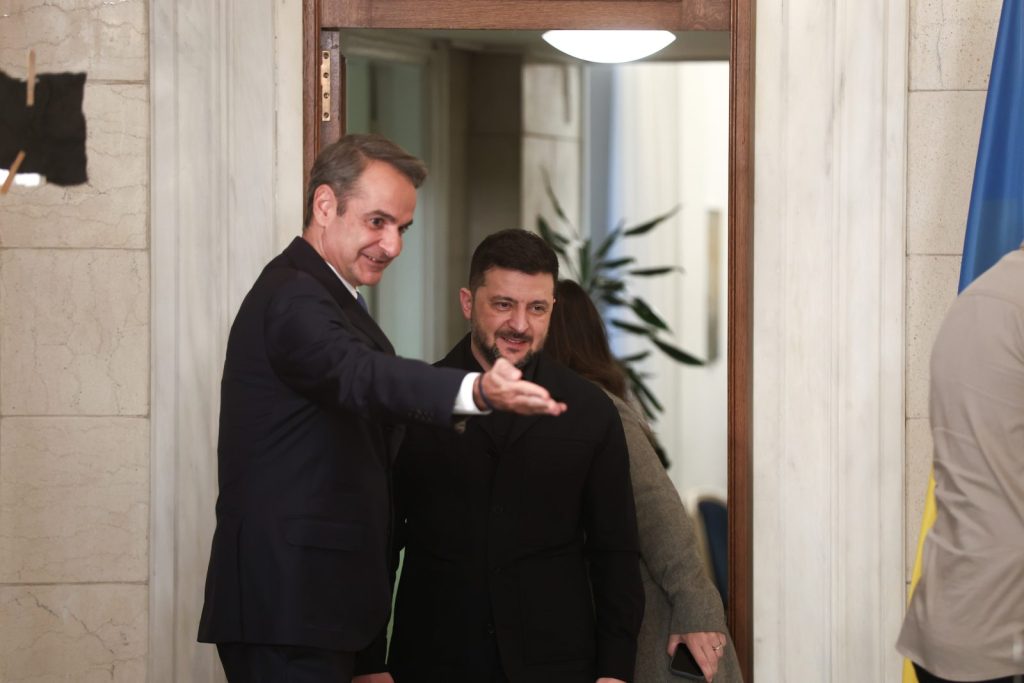
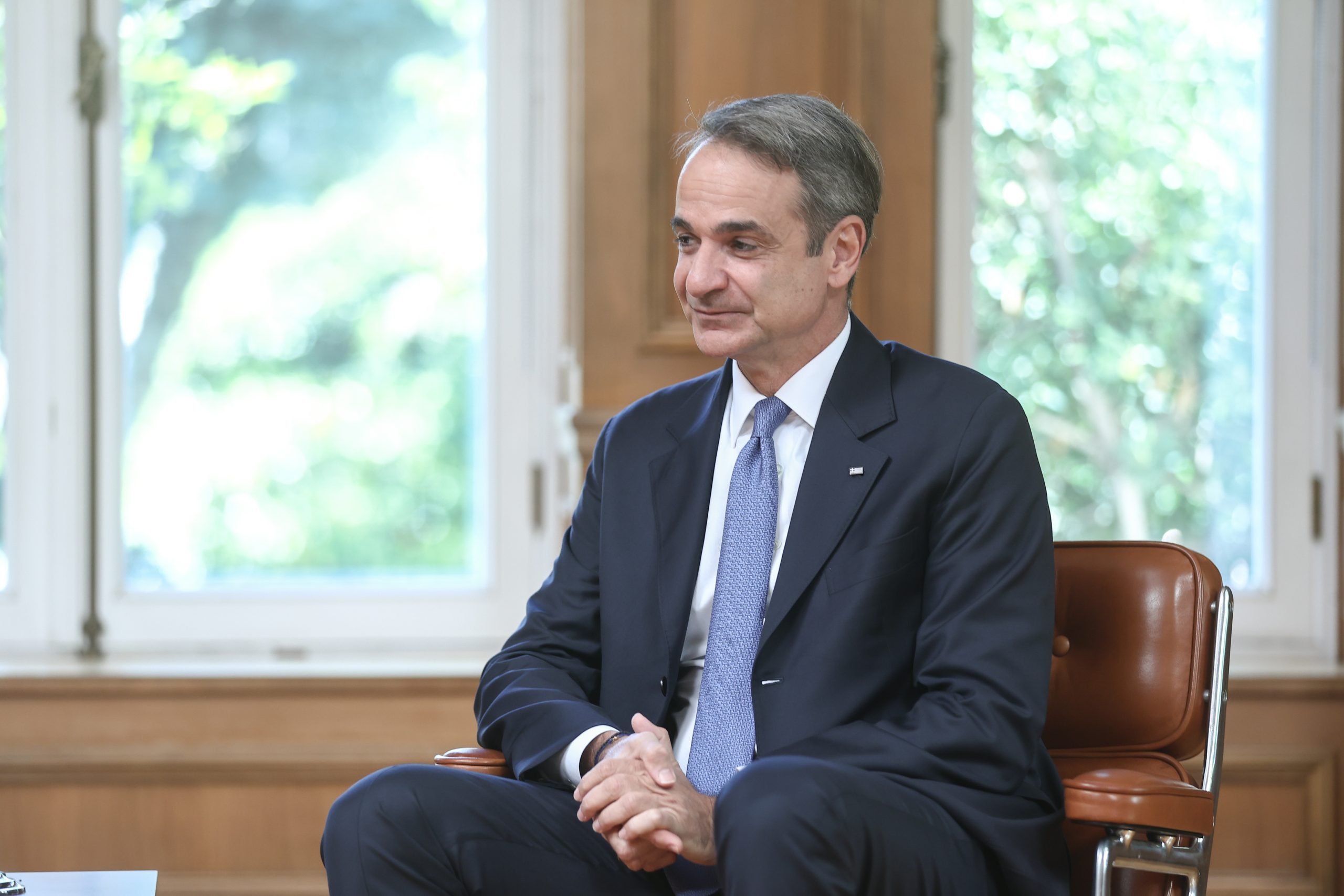
Kyriakos Mitsotakis walked into his interview with Greek public broadcaster ERT this morning trying to reconcile two parallel realities: an economy charting an upward path, and a public wondering why they’re still struggling. The Prime Minister laid out his planned relief for renters, further promises of stricter market oversight, and reforms he says will finally shift the balance. The bigger question, which is whether voters believe him, hung quietly over the entire interview.
Inflation, Rents, and Disposable Income
Mitsotakis acknowledged the squeeze many households feel, describing inflation as a “global phenomenon” but insisting that the government is trying to soften its impact. He highlighted a two-part strategy: raising disposable income and tightening oversight of consumer markets to curb price-gouging.
A newly consolidated Consumer Authority, he said, will unify supervisory mechanisms and provide stronger enforcement tools. He also pointed to a new tax framework that will take effect next year, saying it will leave “more money in people’s wallets.”
Housing costs, a pressure point especially for younger renters and families, received prominent attention. The prime minister said the “vast majority” of tenants will receive a refund equivalent to one month’s rent at the end of the month, describing it as meaningful but temporary relief. Additional housing measures and a new renovation subsidy program are expected to be announced in the coming weeks.
Mitsotakis emphasized that more than €2 billion in support will be rolled out in the months ahead, while warning that exceeding this amount would risk fiscal stability.
Farmers: Delays, Disease, and a New Payments System
The state of greek agriculture and the desperate situation many greek farmers are facing this winter was another major topic. The prime minister confirmed that EU-linked basic farm subsidies, typically paid in late October, will instead arrive at the end of November due to what he called a “difficult but necessary” overhaul.
He argued that the revamped system will ultimately benefit “real farmers and livestock breeders” by excluding those who do not meet eligibility criteria. Although the overall subsidy pool remains unchanged, he said legitimate producers should receive a larger share.
Responding to recent outbreaks of sheep and goat pox, Mitsotakis announced direct compensation for breeders who lost livestock, with payments tied to the number of animals culled and expected before the end of the year.
Athens Traffic: A Persistent Urban Frustration
The prime minister also addressed Athens’ worsening traffic, a daily frustration for residents that consistently ranks among the city’s top quality-of-life complaints. Mitsotakis cautioned that “there is no magic solution,” while pointing out that one of the reasons that traffic has deteriorated is that the overall number of vehicles on the road keeps rising.
According to the Prime Minister, long-term improvements hinge on mass transit expansion, especially Metro Line 4, “currently Greece’s largest infrastructure project”. More immediate efforts center on the bus network. With roughly 800 new buses already deployed, the government aims to increase frequency on high-use routes within the next six months, he claimed.
Energy Agreements, Regional Security, and Sea-Drone Cooperation with Ukraine
Mitsotakis struck an unmistakably buoyant tone when the discussion turned to energy and regional security. Referring to the agreements signed over the past week — both on U.S. LNG shipments and on activating the northbound gas corridor supplying Ukraine — he said that “everyone understands” that these moves, combined with the strong American presence in Athens, mean that Greece is being “substantially upgraded, both geopolitically and in energy terms.”
He argued that the country is shifting “from the end point of an energy network to a central hub for transporting natural gas northward,” a development he said “without doubt” strengthens Greece’s regional standing. Greece, he added, is becoming “a provider of energy security for the Balkan countries and for Ukraine,” something he described as carrying “significant benefits for our country in the broader geopolitical game being played today.”
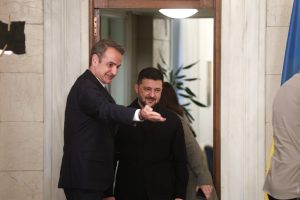
Mitsotakis also confirmed that Athens and Kyiv are preparing a sea-drone cooperation agreement, drawing on expertise Ukraine has developed during the war.
Turkey, Regional Calm, and Concerns Over Cyprus
Mitsotakis also addressed Greece’s relationship with Turkey, noting that the meeting planned with President Recep Tayyip Erdogan on the sidelines of the UN General Assembly in New York — later canceled by the Turkish side — will “certainly take place at some point.” He described the current state of Greek-Turkish relations as marked by an unusual “calm,” adding that he has already met Erdoğan seven times during his tenure.
The prime minister said that even meetings without concrete outcomes can be useful, pointing to the absence of airspace violations in the Aegean over the past two years, the increase in Turkish visitors to Greek islands, and improved cooperation on migration. Still, he cautioned that “thorny issues remain.”
His main concern centered on Cyprus. Mitsotakis noted ongoing statements out of Ankara supporting a two-state solution — a proposal rejected by Greece and the broader international community. He said he holds cautious expectations for the upcoming meeting between Cypriot President Nikos Christodoulides and the newly elected Turkish Cypriot leader.
While stressing that the calm in the Aegean is welcome, he concluded that it is “certainly not a bad thing” that front pages are no longer dominated by scenarios of conflict or renewed tension in Greek-Turkish relations.
Postal Reform and the Political Calendar
On the troubled state postal service, ELTA, Mitsotakis defended ongoing restructuring efforts, arguing that resisting reform effectively paves the way for collapse “to the benefit of private interests.” He said rural communities will continue to receive service through alternative models that are still under discussion.
Addressing political speculation, the prime minister reiterated that elections will be held in 2027 and that the electoral law will not change. He dismissed talk of early elections and reshuffles as disconnected from citizens’ daily priorities.
Asked about comments by former prime ministers Antonis Samaras and Alexis Tsipras, Mitsotakis declined to engage directly, though he noted he does not intend to read Tsipras’ new book.