 Μake us preferred on Google
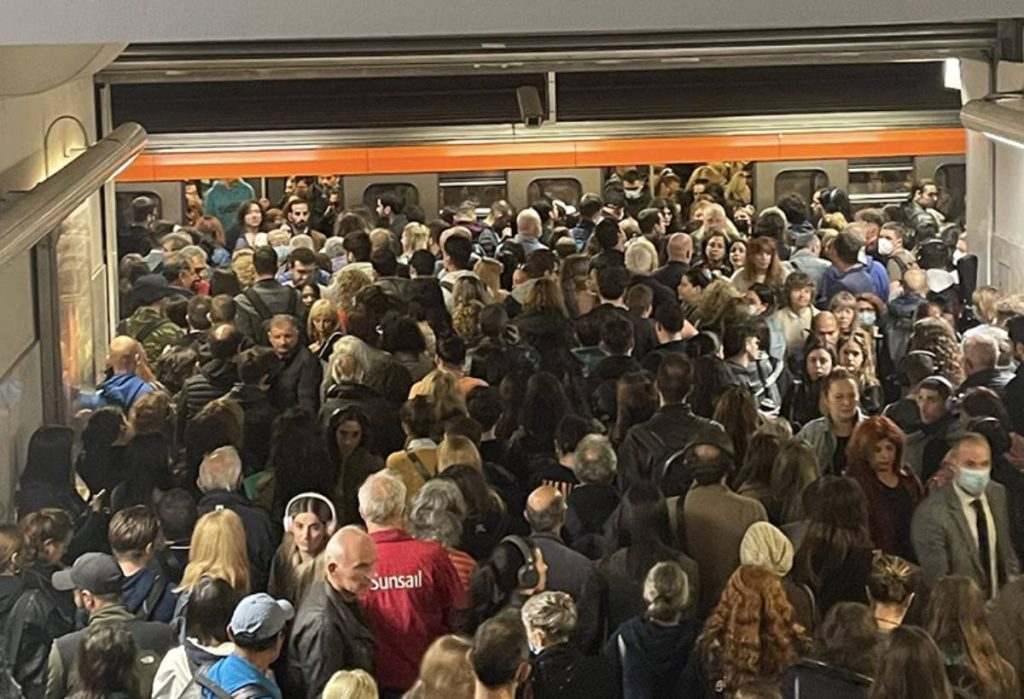
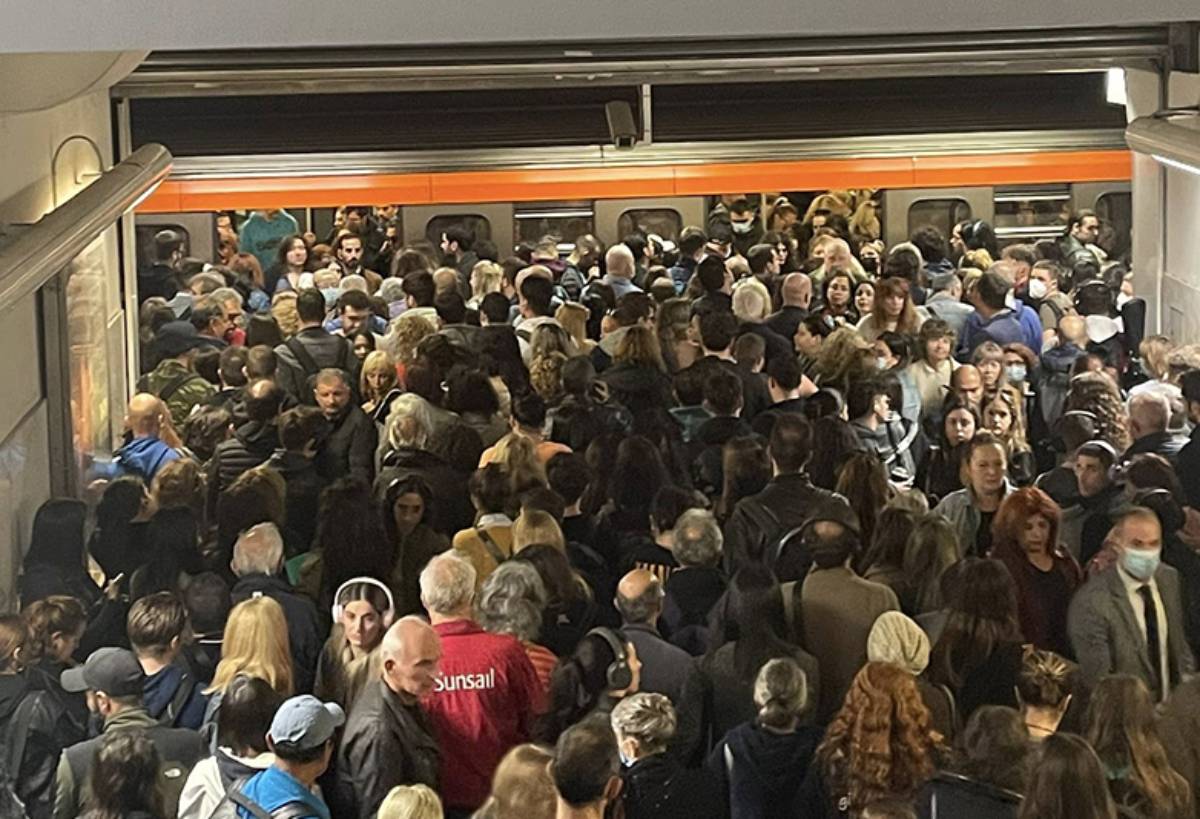
 Syntagma Square, 8 a.m. last Monday. Two waves of commuters surge in from the red and blue metro lines, colliding on the platform beneath the city’s heart. Within minutes, the air grows thick and breathless. Hundreds cram onto escalators, carriages, and against closing doors. Each time the train arrives, a small panic erupts. Social media fills with photos of the chaos. What’s happening to Athens’ metro, once the pride of the city? And why are buses still crawling through traffic, packed with exhausted passengers and running dangerously late? Why, after all, is public transportation in the Greek capital so bad?
What’s unfolding on the platforms of Syntagma reveals a deeper story, that of a system that runs on worn-out machinery, insufficient maintenance, and skeleton crews. Infrastructure built for another era, now strained by overuse and years of neglect.
Without Maintenance
Christos Koukis, president of the fixed-track drivers’ union of STASY, tells a story decades in the making — one that has systematically worn down the patience of millions across Attica.
“Anything built will eventually wear out,” he says. “The problem in Greece is that we build, but we don’t maintain. There’s a long-standing mentality of neglect. The crisis and the pandemic stopped maintenance, but not usage.”
Track damage, he explains, is worst on the curves and switches “where materials take the greatest stress.” The system still runs on 1990s technology, well past its prime. “To restore the tracks properly,” he says, “sections must be shut down entirely. Patching them up doesn’t solve the problem.”
The results are painfully visible: long delays and stations so crowded they test the limits of safety. “Trains that should run at 80 kilometers per hour are crawling at 60, even 40,” Koukis says. The metro is also understaffed. “We don’t have enough drivers. The number of trains is limited, and intervals between them have reached six to eight minutes.”
But running more trains wouldn’t necessarily help. “It would just wear the network out faster,” he notes. Natural conditions make things worse — groundwater and the sea’s proximity, particularly along the stretch to Piraeus, the ancient port of Athens, accelerate corrosion underground.
Malfunctioning Doors and the Weight of Austerity
Transportation engineer Nick Sbarounis traces the roots of the problem back to one single issue: the memorandum — shorthand in Greece for the years of austerity agreements that followed the country’s debt crisis.
“The core cause is the same: the endless austerity,” he says. “We need equipment and infrastructure comparable to what we had during the 2004 Olympics. And we need to restore workers’ living standards to pre-crisis levels.”
The wear on the rails, he admits, is real, but not by itself decisive. “It’s mostly in the track switches, where trains naturally slow down. The real issue comes when the allowed grinding cycles are exhausted — at that point, you must close down the line completely.”
Far greater delays, he explains, are caused by malfunctioning train doors and the lack of staff. “Athens’ transit system is fifteen years behind,” Sbarounis says, “and without bold investment, the gap will only widen.” His conclusion is stark: “Priority must go to the trains themselves and not the infrastructure beneath them.”
What the Operator Says
In response to questions from To Vima, STASY — the company that operates the Athens metro — downplays the complaints. “There is no metro system in the world without crowding at certain times,” the company said in a statement. “October is always the busiest month. On Monday, October 20, traffic at Syntagma was indeed higher, with an average interval of five minutes.”
Yet in most major European capitals, trains rarely take more than two minutes to arrive, and connections between different transit systems are seamless enough that few residents need to drive downtown at all.
Regarding reports of structural damage, STASY insists “there are no cracks in the tunnels, only normal wear,” which, it says, is being addressed through a €7.3 million project to replace 32 kilometers of track. International safety standards, the company notes, set the wear limit at 10 millimeters, while current measurements in Athens show 6 to 8 millimeters.
The replacement work focuses on curved sections of Lines 2 and 3 — areas of high mechanical stress — and is expected to be completed by the end of 2026. “The interventions were planned in advance,” STASY claims, “based on technical data and predicted wear, to avoid surprises.”
The Underground Highway Athens Never Built
The question, however, remains: does Greece have a modern, sustainable strategy for public transportation — one that truly meets the needs of its citizens? Because what commuters usually get are answers filled with long timetables, complex maintenance schedules, and distant promises.
From his perspective, Athanasios Tsianos, president of the Hellenic Association of Transport Engineers, believes the state needs a shift in mindset. “Any expense on maintenance or upgrades should not be viewed as a cost,” he argues, “but as an investment. The state earns that money back many times over.”
A well-functioning transit network, Tsianos explains, boosts the economy, cuts pollution, and improves safety. “If train frequency were reduced from six to three minutes, capacity would double. That would be like building a new ‘Kifissias Avenue’ — 110 kilometers long — underground.”
For Athenians, Kifissias Avenue is a daily symbol of gridlock, stretching north out of the city center. An underground version, then, would be nothing short of transformative. “Maintaining and acquiring new trains pays off far more than building new lines we’ll never maintain,” Tsianos concludes.
The Long Wait for the Bus
Of course, the problems of rush-hour crowding and long waits aren’t confined to the metro. On the city’s bus routes, the situation is often worse. During rush hour, commuters face not only delays but stifling conditions inside aging vehicles.
Leonidas Skoulos, a board member of the Athens Bus Workers’ Union (OSY), describes a system on the brink. “We’re facing a serious shortage of drivers,” he says. “Many resign within months of being hired because previous years of service aren’t recognized, so they start at the lowest pay grade.” Those who remain, he adds, “work to the point of exhaustion.”
Even the city’s new electric buses, a much-touted modernization effort, are stuck idle. “The chargers at the depots don’t work,” Skoulos says. “So even when the Athens Urban Transport Organization (OASA) schedules routes, not all of them are carried out.”
He estimates that up to 700 shifts a day may go unstaffed, leaving passengers stranded for 40 to 50 minutes at stops — especially on major routes like the A2. “When two buses per line are missing,” he explains, “the gap stretches, and people are left waiting longer and longer.”