 Μake us preferred on Google
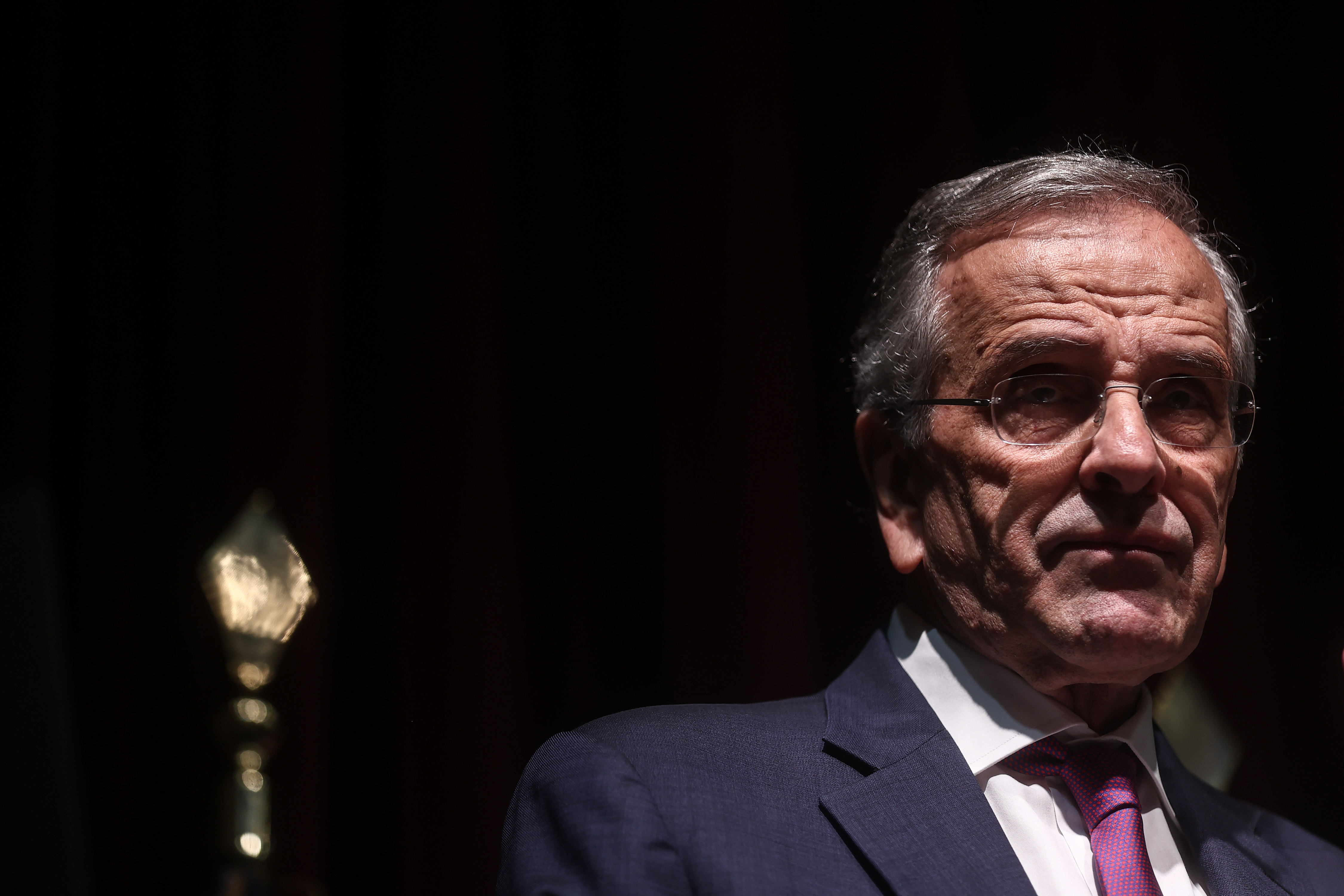
 Former Greek Prime Minister Antonis Samaras has publicly challenged the government’s agreement with Chevron for offshore exploration south of Crete, warning of what he described as a “potential cession of sovereign rights.”
In a written statement, Samaras, who also previously led the center-right New Democracy party, said he “does not have the right to remain silent” on issues concerning Greece’s national interests. His remarks amount to a sharp rebuke of his former political camp
At the center of Samaras’ criticism is the exploration and drilling contract between Greece and a Chevron-led consortium for offshore blocks south of Crete. His remarks amount to another sharp rebuke of his former political camp and reflect an escalating pattern of criticism from Samaras toward Prime Minister Kyriakos Mitsotakis, particularly over his handling of relations with Turkey and the broader foreign policy direction of the government.
Concerns Over the Chevron Contract
The former PM argued in his most recent statement that last-minute additions to the agreement include provisions that indirectly point to the possible relinquishment of sovereign rights. According to Samaras, the contract refers to the company’s withdrawal from areas that may not constitute part of the Greek continental shelf or exclusive economic zone (EEZ), as well as to areas where the Hellenic Republic will not hold sovereign rights. He also cited language referring to the potential loss of a delimited area and to a waiver even if an exploitation area has already been defined.
“What kind of contract is this?” Samaras asked, questioning whether Greece is effectively legislating for a potential retreat from its own maritime blocks. He further challenged the government’s public celebration of the agreement as a vote of confidence in Greek positions, asking how such clauses can be reconciled with that narrative.
Dispute Over Alleged Turkish Interference
Samaras also pointed to conflicting public statements regarding offshore research activity near the island of Kasos in the southeastern Aegean.
He cited comments by the Cypriot government spokesperson stating that research in the area was obstructed by Turkey and, as a result, not completed. In contrast, Greek Foreign Minister Giorgos Gerapetritis has said the research program “was completed in full” and that there was “absolutely no retreat.”
“Is Cyprus lying?” Samaras asked, highlighting what he described as a serious discrepancy between official accounts.
“These are not ‘calm waters,’” he added, referring to the phrase often used to describe efforts to ease tensions in the Eastern Mediterranean.
Government Pushback
Government sources responded sharply to Samaras’ intervention, describing his remarks as his “usual out-of-touch statements.”
Regarding the Chevron agreement, government sources said Greece’s sovereign rights cannot be ceded through contracts with private companies. They emphasized that agreements of this kind routinely include legal safeguard clauses to protect the state from potential compensation claims in the event of future maritime boundary delimitations decided by the government.
The same sources noted that preliminary technical discussions have already begun between Greece and Libya on the delimitation of the continental shelf and exclusive economic zones, while a partial delimitation agreement between Greece and Egypt is already in place.
On the issue of the alleged turkish interference during offshore research activity near Kasos, government sources pointed to a July 24, 2024 announcement by Greece’s Independent Power Transmission Operator (ADMIE), which oversees the Crete–Cyprus electricity interconnection project. According to the operator, the vessel Ievoli Relume completed its scheduled work in international waters between Kasos and Karpathos as planned.