 Μake us preferred on Google
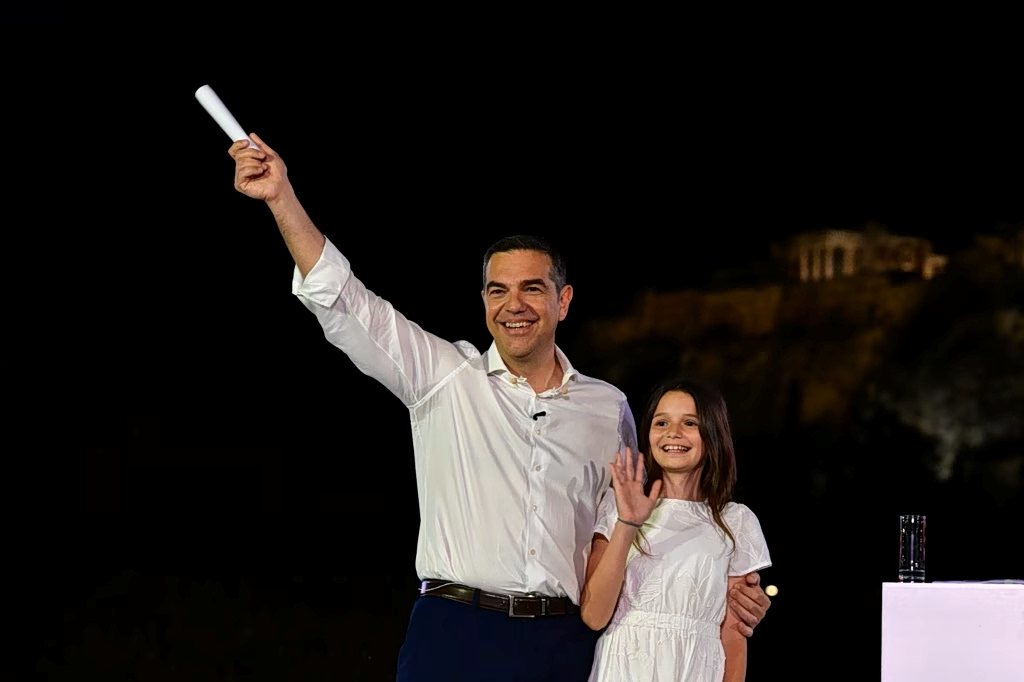
 Former prime minister Alexis Tsipras launched a new left-wing political party Tuesday night in central Athens, unveiling the name “ELAS” — an acronym for “Greek Left Alliance” — during a rally at the Thiseio square.
ELAS is also a wordplay meaning “Greece” in Greek, or Hellas.
Addressing hundreds of supporters gathered around a circular stage, Tsipras said the new political movement aimed not only to bring political change but to “change policy,” calling for the creation of a new progressive majority amid what he described as rising inequality, corruption and democratic decline in Greece.
“The great day has arrived,” Tsipras said, arguing that the initiative emerged from public demand and growing social pressure rather than personal ambition. He accused the Mitsotakis government of allowing inequality and corruption to deepen while restricting democratic institutions.
The former premier focused heavily on cost-of-living pressures, housing affordability and labor conditions, criticizing what he described as precarious employment, long working hours and weak workplace protections. He said access to housing had become an “unreachable dream” for younger generations due to soaring rents and property speculation.
On foreign policy, Tsipras condemned Israel’s military campaign in Gaza, saying, “We will not remain silent in the face of the genocide of Palestinians in Gaza by the Netanyahu government,” while also denouncing Israeli strikes in Lebanon.
Presenting the party’s founding declaration, titled “Compass for a New Greece,” Tsipras called for a “moral revolution” centered on democracy, transparency and social justice.
The launch comes after months of speculation over Tsipras’ political future following his resignation as leader of SYRIZA in 2023 after consecutive electoral defeats. Over the past year, local media have highlighted persistent fragmentation within the wider left political spectrum, internal disputes inside SYRIZA, and scathing criticism of Tsipras’ earlier tenure in office, particularly over economic management, institutional controversies and the party’s declining electoral influence.
Tsipras governed Greece between January 2015 and July 2019 after leading SYRIZA to power on an anti-austerity platform during the country’s debt crisis. His government initially clashed with international creditors over bailout terms, culminating in the July 2015 referendum rejecting austerity measures, with bank closures and capital controls having come days earlier. Despite the vote, Tsipras later signed off on a third bailout package to keep Greece in the eurozone, triggering internal divisions within radical leftist SYRIZA but securing re-election later in September 2015.
During his tenure, the government implemented multiple tax hikes, pension cuts and privatizations required under bailout agreements while attempting to expand social welfare programs. The administration faced criticism over economic pressures on households and its handling of the deadly 2018 Mati wildfire, while supporters credited it with stabilizing the economy and overseeing Greece’s formal exit from bailout programs in 2018.
In its waning days, the Tsipras government also signed the Prespa Agreement with North Macedonia, resolving a decades-long naming dispute.