 Μake us preferred on Google
 Wildfires burning in northern Greece on Saturday prompted precautionary evacuations and a major firefighting response, with emergency alerts issued for communities in central Macedonia, the region surrounding Greece’s second-largest city of Thessaloniki, and the Epirus province, in the country’s mountainous northwest, amid rising temperatures and strong winds.
⚠️ Ενεργοποίηση 1️⃣1️⃣2️⃣
🆘 Πυρκαγιά στην περιοχή #Περιβολάκι της Περιφερειακής Ενότητας #Θεσσαλονίκης
‼️ Παραμείνετε σε ετοιμότητα και ακολουθείτε τις οδηγίες των Αρχών
ℹ️ https://t.co/GY26GrlKvl@pyrosvestiki@hellenicpolice
— 112 Greece (@112Greece) July 11, 2026
⚠️ Ενεργοποίηση 1️⃣1️⃣2️⃣
🆘 Δασική πυρκαγιά στην περιοχή #Γαλατά της Περιφερειακής Ενότητας #Θεσπρωτίας
‼️ Αν βρίσκεστε στην περιοχή απομακρυνθείτε προς #Καριώτη
‼️ Ακολουθείτε τις οδηγίες των Αρχών
ℹ️ https://t.co/GY26GrlKvl@pyrosvestiki@hellenicpolice
— 112 Greece (@112Greece) July 11, 2026
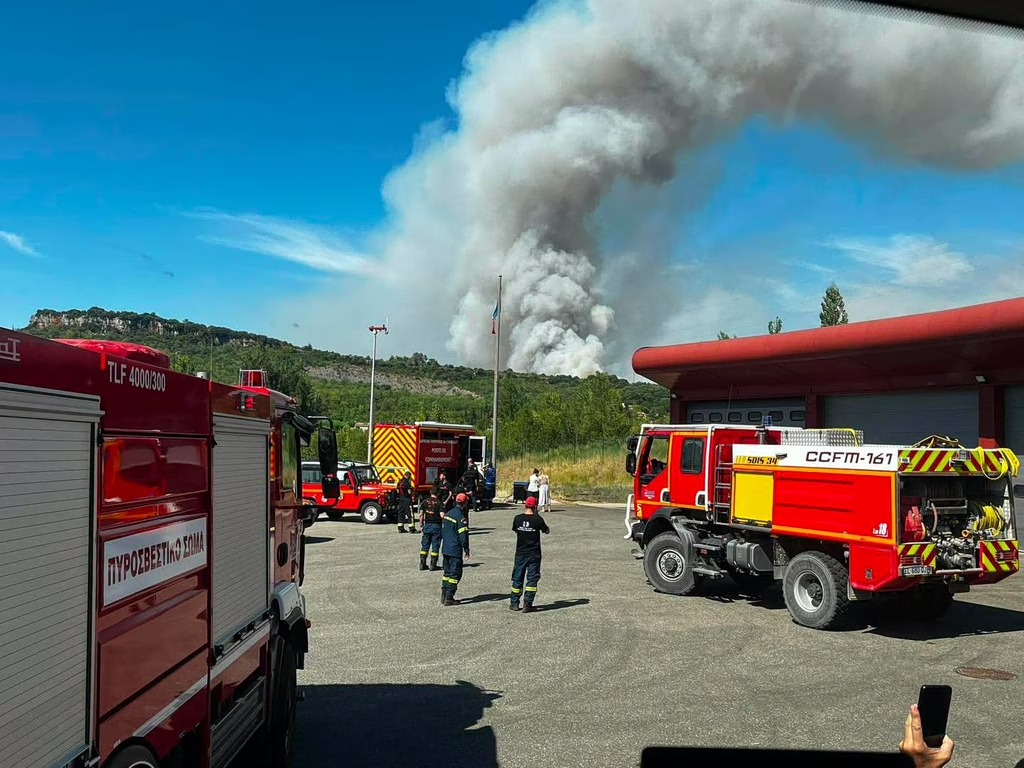
The most serious blaze broke out shortly after 2:30 p.m. local time near the village of Perivolaki, in Lagadas municipality, about 35 kilometers (22 miles) northeast of Thessaloniki, in a low vegetation area along an irrigation canal. Authorities issued two successive emergency alerts via the 112 public warning system, initially urging residents to remain on standby before calling for the precautionary evacuation of the settlement.
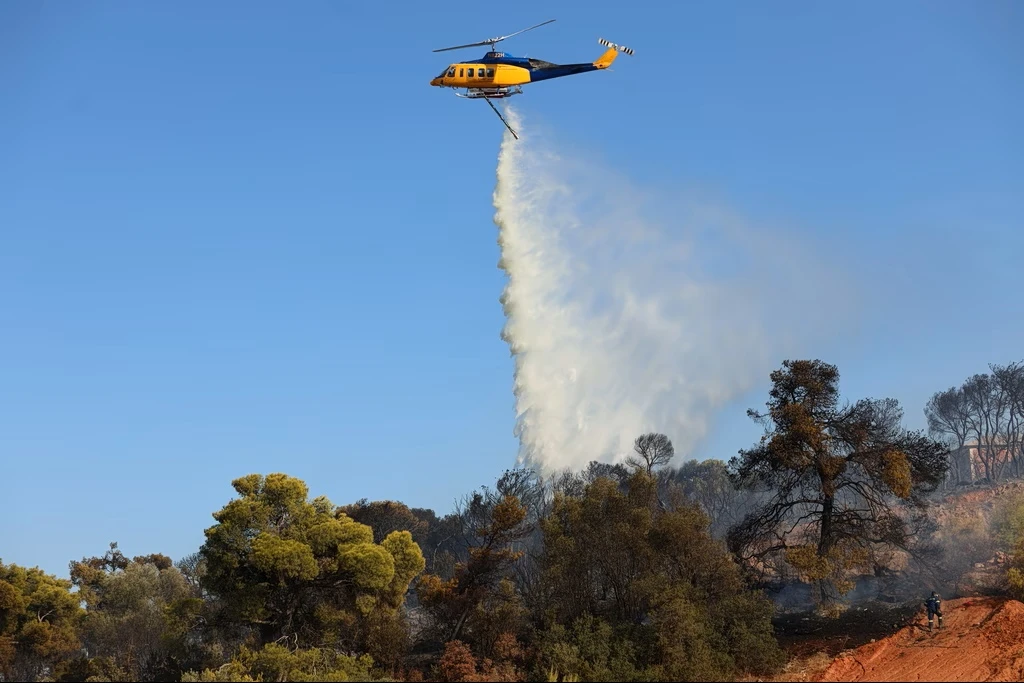
A total of 65 firefighters, supported by two specialized ground teams, 20 fire engines, two helicopters and two fixed-wing firefighting aircraft, were deployed to contain the blaze. Water tankers from the regional authority also joined the operation.
Elsewhere, two wildfires erupted almost simultaneously near Paramythia, a town in the mountainous Thesprotia prefecture of extreme northwest Epirus, close to Greece’s border with Albania, prompting another 112 emergency alert.
The larger fire burned near the settlement of Kambos, northwest of the town center, while residents in the nearby village of Galata, also in Thesprotia, were instructed to evacuate toward the neighboring village of Karioti as a precaution.
The fire brigade deployed 25 firefighters, a specialized ground team, seven fire engines and two firefighting aircraft to the Thesprotia operations.
The latest outbreaks come after a week of heightened wildfire activity across Greece, with firefighters responding to major vegetation fires in Attica prefecture, the region encompassing the greater Athens-Piraeus metropolitan area, central Greece and other parts of the country, as prolonged heat and dry conditions increased the risk of rapid fire spread. Authorities have repeatedly urged the public to avoid activities that could ignite fires while placing many regions under elevated wildfire-risk warnings.
The government entered the 2026 fire season with what officials have described as the largest operational mobilization in the history of the Greek fire brigade, deploying approximately 18,000 permanent and seasonal firefighters, reinforced by specialized forest commando units, volunteers and expanded aerial resources.
Additional surveillance measures, including increased drone patrols and the pre-positioning of firefighting assets in high-risk areas, have also been implemented to improve rapid response during another summer expected to bring prolonged periods of extreme wildfire danger.
Greece has experienced increasingly destructive wildfire seasons in recent years, with prolonged heatwaves, drought and strong seasonal winds contributing to larger and more intense blazes. Successive governments have expanded aerial firefighting capabilities, strengthened civil protection planning and increased preventive measures following a series of devastating wildfires that have claimed lives, destroyed thousands of homes and burned vast tracts of forest across the country.