Turkey is making another attempt to advance its revisionist agenda in the Aegean and Eastern Mediterranean, this time by legislating two marine parks between Lemnos and Samothrace and between Rhodes and Kastellorizo.
By effectively using an environmental protection issue as a vehicle, Ankara is promoting its longstanding positions on maritime zones. Under those claims, Greek islands have no sovereign rights beyond six nautical miles, while the continental shelf should be delimited on the basis of the two countries’ mainland coastlines, effectively dividing the Aegean down the middle.
In what is seen as a carefully calculated response to Greece’s designation of its own marine parks — particularly the one in the southern Cyclades — as well as to Athens’ Maritime Spatial Planning framework, Turkey has focused on two areas of particular significance.
The first is the northeastern Aegean, where Turkey first advanced claims over what Greece regards as its potential continental shelf in 1973. At the time, the dispute emerged following the discovery of deposits off Thasos, when Ankara granted exploration licenses to Turkey’s state oil company, TPAO.
The second is the Eastern Mediterranean, where since 2019 Ankara has sought to advance its “Blue Homeland” doctrine, using the Turkish-Libyan maritime memorandum as a key instrument.
An Arc of Turkish Claims
Through these moves, Ankara is creating what amounts to an arc of claims encompassing the eastern Greek island region and spanning the period from 1973 to the present. Under Turkey’s position, the Greek islands within this area would effectively be confined to their territorial waters.
The Turkish marine parks had also appeared in the informal Maritime Spatial Planning map submitted to UNESCO, which once again reflected Ankara’s established revisionist positions in the Aegean and Eastern Mediterranean.
Greece’s corresponding map, by contrast, was based on the median-line principle. Under this approach, where bilateral delimitation agreements with neighboring states remain pending, Greece considers the limits of its continental shelf and Exclusive Economic Zone (EEZ) to extend to the midpoint between the coasts of the Greek islands and those of Turkey, Egypt, Libya and Cyprus.
The map also included Greece’s EEZ delimitation agreements with Egypt and Italy. Turkey has considered the agreement with Egypt invalid from the outset, as it challenges the Turkish-Libyan memorandum.
As for the marine park in the southern Cyclades, Ankara was quick to object because it regards the Kinaros-Levitha island group as part of the so-called “gray zones,” a position rejected by Greece as contrary to international law and international treaties.
Athens Accuses Turkey of Maximalism
Sources in Athens describe the move as an example of “Turkish maximalism,” particularly in the case of the park between Rhodes and Kastellorizo, which covers an exceptionally large area. They argue that, aside from other issues, it would in practice be impossible to enforce environmental protection rules across such a vast zone.
According to the same assessment, this points to Ankara’s broader intention: to restate its established claims in the Aegean and Eastern Mediterranean whenever the opportunity arises. In the case of Kastellorizo, Athens sees Turkey’s strategy as seeking to separate the remote Greek island from the country’s broader maritime space.
Athens also considers it unprecedented that Ankara is legislating marine parks beyond the jurisdiction of Turkish territorial waters.
Greece’s Foreign Ministry responded that “to the extent that these parks occupy international waters, their establishment is illegal, since under the Law of the Sea no state has the right to unilaterally establish marine protected areas in regions beyond national jurisdiction.”
The ministry added that the parks are also illegal to the extent that they extend over areas Greece considers part of its continental shelf. It said the move “produces absolutely no legal effect either with regard to international waters or to our rights on the Greek continental shelf.”
Officials in Athens are aware that Turkey’s actions do not create legal faits accomplis or alter Greek sovereign rights derived from international law. At the same time, however, there is growing concern that incidents increasing tension between the two sides of the Aegean have multiplied in recent months.
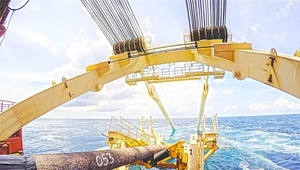
Some also link the timing of the marine park announcement — just one day after the August 15 holiday — to the entry of French company Meridiam into the Greece-Cyprus electricity interconnection project. This comes as Athens continues to wait for legislation through which Turkey’s “Blue Homeland” doctrine is expected to be incorporated into the country’s domestic legal framework.
Turkish Revisionism Tests the “Calm Waters”
The incorporation of Turkey’s revisionist agenda into domestic law may not create international legal consequences, but it could still push Greece and Turkey away from the so-called “calm waters” that have characterized recent efforts to ease tensions.
Against this backdrop, Greece’s Foreign Ministry said yesterday that Turkey’s designation of the marine parks does not contribute “to consolidating a climate of good-neighborly relations,” while also undermining efforts to maintain relations based on mutual understanding between the two countries.
The Greece-Cyprus Electricity Cable
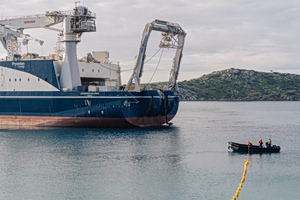
Attention is also turning to the timetable for the resumption of surveys related to the laying of the Greece-Cyprus electricity cable.
Athens is expected to issue the relevant NAVTEX navigational warnings during the fall, a move that is widely expected to trigger a reaction from Ankara.