 Μake us preferred on Google
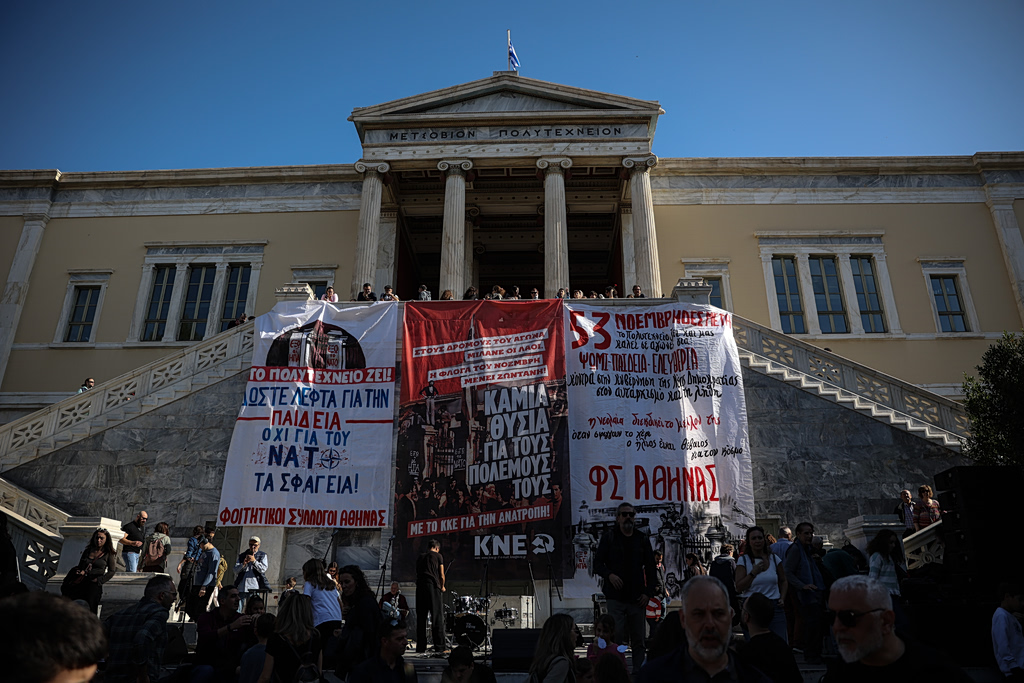
The bullet pierced the book’s spine and came to rest on page 961. It has stayed lodged there for 53 years, in a copy of the Proceedings of the Third Pan-Pacific Science Congress held at the Central Library of the National Technical University of Athens (NTUA). It is a small but haunting relic of a defining moment in modern Greek history. The volume is one of several that bear the marks of gunfire from security forces who opened fire on students at the Athens Polytechnic in November 1973. These wounded books are irrefutable witnesses to the dramatic events of the time, yet the wider public has scarcely heard of them. History itself is imprinted on their pages.
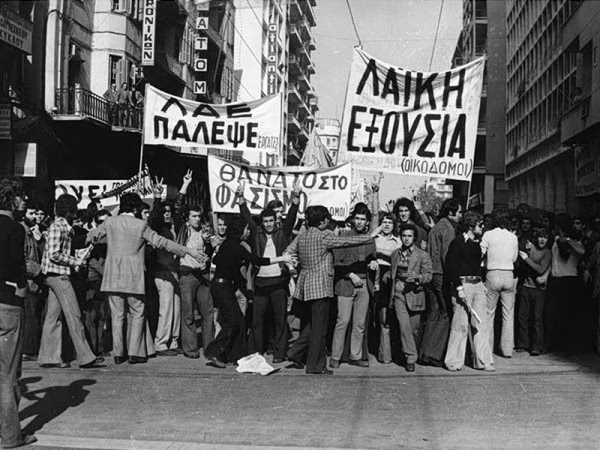
How did the bullets get there? According to oral accounts from those who took part, thousands of students occupied the campus during the turbulent days of the uprising, demanding “Bread – Education – Freedom.” The library’s volumes became makeshift shields. To protect themselves from police and army fire, students stacked books in the windows with their spines facing the glass. Some may have stopped bullets that would otherwise have struck people. Others were hit inside the library itself.
Tonia Moropoulou, a member of the occupation’s Coordinating Committee and now professor emerita at NTUA, has described the atmosphere: “There was tension, there were dead. In the middle of all this, I hear students saying: ‘They’re firing at the historic Rectorate. They’re shooting inside the library, too.'”
The scars of those days are not confined to a single volume. Richard Klimpert’s Geschichte der Geometrie (History of Geometry), published in 1888, is now on display in the Central Library. It lies open at page 78, showing the hole left by a bullet that passed through its back cover. Other books carry similar marks. Some were printed as long as 140 years ago to advance scientific knowledge, and through their “wounds” they took on a second identity as part of the nation’s historical memory. Even so, they sat in obscurity for years. They were only found in 1991, while the library was trying to heal wounds of its own.
In October of that year, after violent clashes outside the Polytechnic, a major fire broke out in the landmark building on Patission Street. “Many books were destroyed not only by the flames but also by the water blasted from firefighters’ hoses,” library staff told Ta Nea. They care devotedly for the university’s archival holdings. “When it was decided to move the library to the Polytechnic campus in Zografou, the volumes were kept in other university buildings for a long time. Gradually they were cataloged, sorted, and returned to the shelves.” It was then that staff noticed unusual marks on some of them, and an effort began to document where those marks came from.
Today, the library holds more than 60,000 volumes, and digitization is underway to preserve its collection and open it to more researchers and readers. The university is also working to bring its wider history to light by opening its spaces and archives to the public.
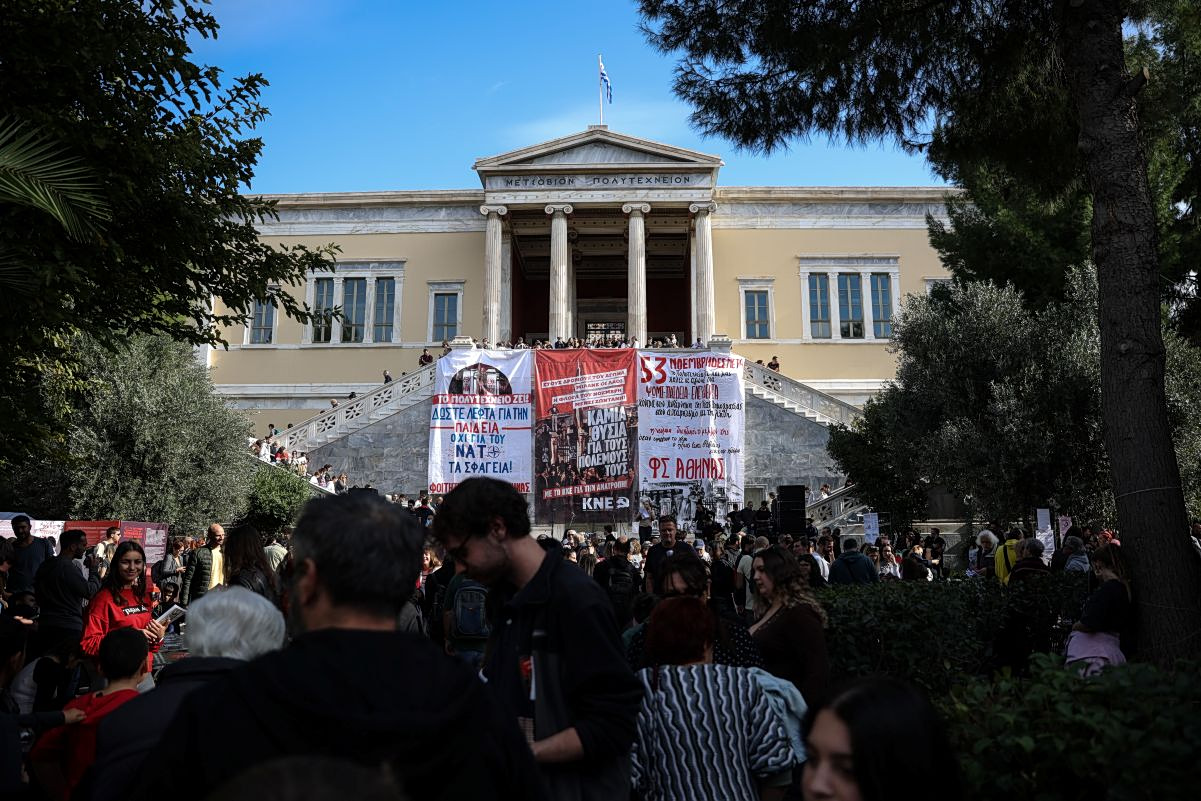
“I asked for these books to be put on display, because they are historical documents,” NTUA Rector Ioannis Chatzigeorgiou told Ta Nea. The administration’s goal, he explains, is to showcase the Polytechnic’s history, which goes well beyond its library and archive. “It is the story of its graduates, the architecture of its building, its heirlooms, and its art collection. Restoring these spaces and highlighting this heritage serve that purpose.”
The initiative has also taken on an educational role. For the first time, the rector notes, school groups are visiting the old Rectorate, and the students are showing keen interest in the exhibits.
Unseen photographs
Among the items given pride of place there are little-known photographs of the uprising by photojournalist Aristotelis Sarrikostas, who personally curated their display in the Rectorate. “The public doesn’t know these photographs. Most people have only seen the classic images of the tank outside the gate. But there are around 100 photographs, including some from the first commemorations of the uprising after the fall of the junta. That’s why people are so struck when they see them,” Chatzigeorgiou says.
The Rectorate also preserves parts of the makeshift radio transmitter that students built within days, using the meager means at hand, to broadcast the message of the uprising. It was the Free Radio Station of the Struggling Students, the Struggling Greeks. Its voice reached as far as Paris and was etched forever in the consciousness of the Greek people. The amplifier is missing. “During the dramatic events, the station was seized by the police and never returned,” the rector explains.
Nearby stands the mimeograph on which students printed leaflets and pamphlets setting out their demands, along with an early photocopier they also used.
Fifty-three years on, the Polytechnic tells its story through books pierced by bullets.