 Μake us preferred on Google
Can Athens accommodate more concrete? The question has resurfaced as Greece considers new urban planning measures that could allow additional construction in parts of the capital, even as a separate citywide plan seeks to reduce building density.
The debate comes as the government conducts a two-month public consultation on the first 13 studies identifying designated receiving zones for transferred building rights, a long-delayed planning mechanism. Athens is not included in this initial group of studies, but two parallel planning processes concerning the capital have exposed competing visions for its future.
The new Local Urban Plan for the Municipality of Athens, already submitted to the Environment and Energy Ministry, proposes reducing building coefficients to limit further construction. At the same time, a separate study for the creation of receiving zones has identified six areas where additional building capacity could be accommodated.
The resulting proposals raise a central question for policymakers: whether Athens needs more space for development or greater protection from further urban density.
Six areas identified for additional construction
According to sources familiar with the planning process, the Environment Ministry’s political leadership has requested the creation of designated receiving zones in the areas around Chalepa Square, Kypriadou, Nea Filothei, Skouze Hill and Rizoupoli, as well as at two locations in Prompona.
The proposed building coefficients in these areas would increase by between 0.30 and 0.80. For example, in an area behind Panormou in Nea Filothei, the coefficient would rise from 1.20 to 2.
The zones would allow property owners to use transferable building rights through Greece’s Digital Land Bank.
The mechanism is intended to compensate owners who cannot fully use the building rights attached to their properties, including listed buildings, properties designated for expropriation for urban planning purposes and certain properties in traditional settlements. The state has recognized these owners’ entitlement to compensation, and they can transfer their unused building rights to other property owners.
Those purchasing the rights would then be able to build additional floor space on properties located within designated receiving zones.
Athens urban plan proposes lower building coefficients
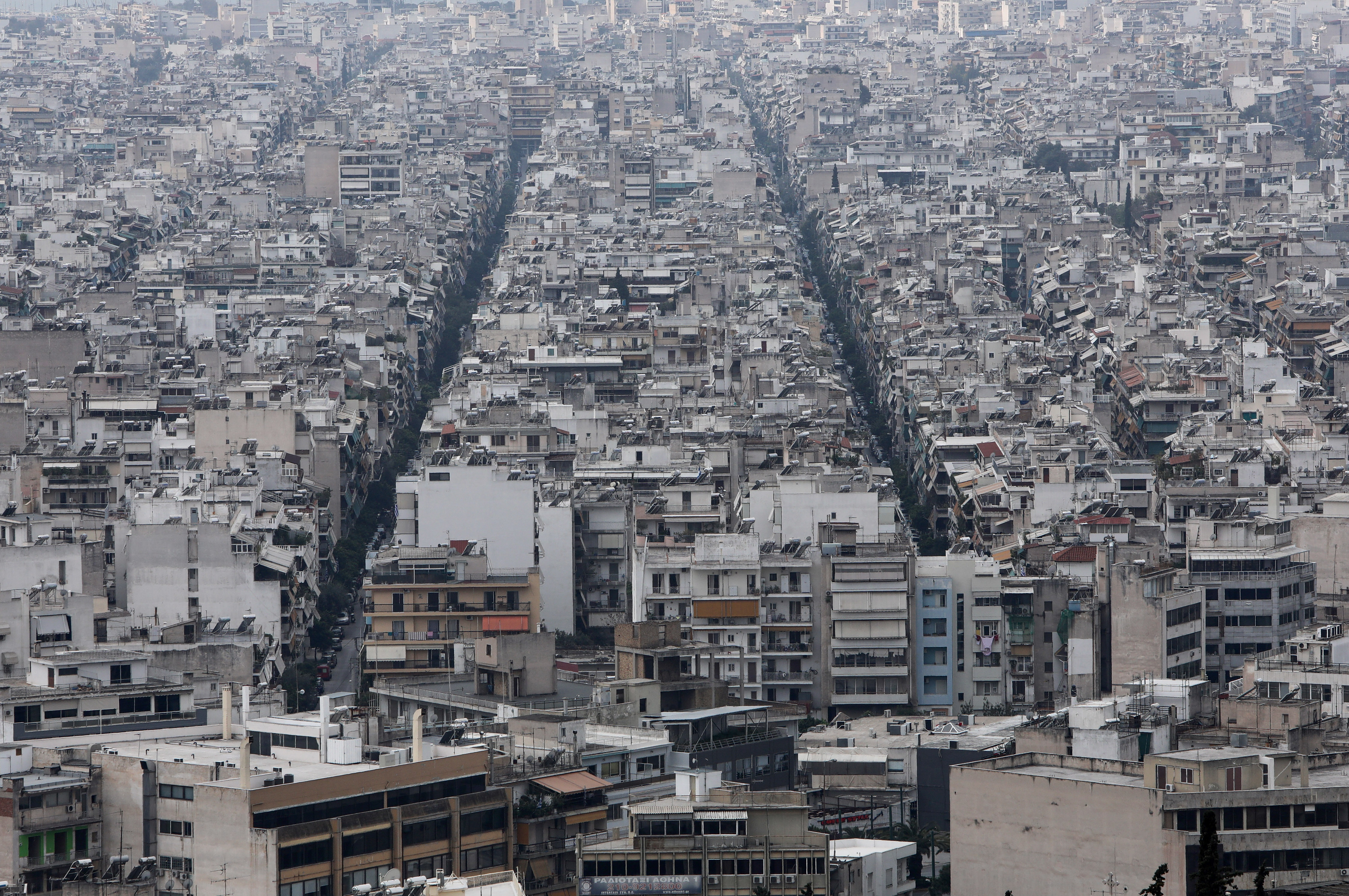
The new Local Urban Plan for Athens takes a different approach. Presented recently at a conference organized by the Association of Greek Urban and Regional Planners, it starts from the assessment that 95% of the city is already built up and that Athens has lost approximately 20,600 residents over a decade.
The study, prepared by a consortium comprising Chorometria Consulting Engineers, Giorgos Dimitriou and Associates, and Panagiotis Sarantakos, under the coordination of Konstantinos Lalenis, a professor at the University of Thessaly, proposes reducing building coefficients to between 0.8 and 4.8. In the Omonia area, for example, the current coefficient is 5.4.
The original proposal did not include designated receiving zones or zones for buildings using the additional construction incentives provided under Greece’s New Building Regulation. The planners had concluded that Athens could not withstand further building pressure.
The Environment Ministry, however, asked that receiving zones identified in a separate study be incorporated into the city plan. In response, the planning team submitted a revised proposal seeking a compromise.
Under that approach, areas designated to receive transferred building rights would first see their existing building coefficients reduced. The additional construction permitted through transferred rights would then compensate property owners without increasing the overall building volume in the city.
The revised proposal differs from the ministry’s list and identifies areas in Prompona, Rizoupoli and Sepolia, as well as locations around the Fix metro station, toward Neos Kosmos, and the Panormou and Ambelokipi metro stations.
The proposal amounts to a compromise, as the ministry continues to insist that receiving zones be included in the urban plan.
Restrictions proposed for building incentives
The new plan also takes a restrictive approach to the construction incentives provided under the New Building Regulation.
It proposes that these incentives should not apply in historical and archaeological zones. Elsewhere, combining the regulation’s additional building allowances with transferred building rights could be permitted only up to the building coefficient that applied before the new urban plan was introduced.
The planners are also proposing restrictions on small plots, including new minimum plot-size requirements and lower building coefficients.
Athens Mayor Haris Doukas has opposed the prospect of additional construction, warning that the city cannot withstand more concrete.
The municipality has already challenged the building incentives provided under the New Building Regulation in court, arguing that residents have a right to a sustainable city.
Doukas rejects what he describes as a return to excessive construction through the receiving-zone system. He has warned against further development pressure in neighborhoods including Prompona, Rizoupoli and Kypriadou, as well as increased building around metro stations and major roads.
“We did not fight this battle only to see overbuilding return through the back door, via the receiving zones. Athens is not a plot of land to be exploited. We will not back down,” he told To Vima.
Mayors take objections to the prime minister
The first 13 receiving-zone studies, which are now subject to a two-month public consultation, have faced strong opposition, including from mayors affiliated with the governing New Democracy party.
In northern Athens, a group of mayors from Filothei-Psychiko, Lykovrysi-Pefki, Nea Ionia, Papagou-Cholargos, Chalandri, Metamorfosi and Kifissia has called for the relevant study to be withdrawn and the planning approach reconsidered.
They argue that the plans must take into account the capacity of each area, including the limits of local infrastructure, traffic systems and the environment.
The objections have reached the government leadership. Prime Minister Kyriakos Mitsotakis has called an emergency meeting for Tuesday morning, Nov. 17, with the Environment Ministry’s political leadership and six mayors. As of Friday, the mayor of Metamorfosi had not been invited.
The meeting follows a series of government statements intended to ease concerns.
Deputy Prime Minister Kostis Hatzidakis has stressed that no final decision has been made while the consultation remains open. He also reiterated the government’s stated position that building rights should not be transferred from one municipality to another.
Government spokesman Pavlos Marinakis has similarly assured that decisions will be taken with the participation of local communities.
Deputy Environment Minister Marilena Soukouli-Viliali has acknowledged that the studies may contain errors or omissions and said that changes, including the exclusion of certain areas, remain possible. Nothing, she said, is “set in stone.”
Next round of studies remains pending
The government’s response has also been reflected in the pace of the planning process. Nearly 10 days after the first 13 studies were published, no second group of studies had been released.
The public consultation is formally continuing, but the political debate has eased, leaving the most difficult decisions for later.
Urban planning may begin as a technical process, but its consequences are deeply political. As the next election approaches, the government faces a growing challenge in balancing its planning objectives with opposition from local communities.