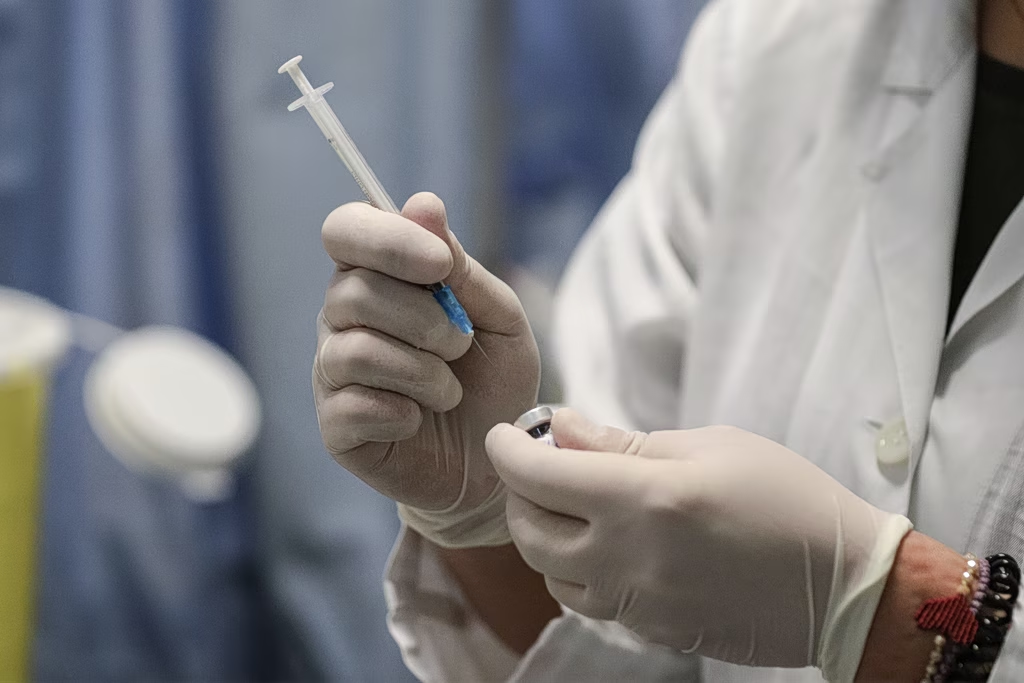
With Health Secretary Robert F. Kennedy Jr. fueling the anti-vaccine movement, the number of parents refusing to let their newborns receive the necessary vitamin K injection has risen sharply this year, a Reuters analysis shows, a trend that leaves babies exposed to the risk of dangerous bleeding.
The data reviewed confirm what more than a dozen pediatricians, neonatologists, and pediatric intensive care specialists told Reuters: a growing number of parents are showing distrust toward doctors’ recommendations on vaccines and other medical interventions for newborns.
For decades, Health Secretary Robert F. Kennedy Jr. has fed this distrust with his unsupported claims linking childhood vaccines to autism.
In January, Kennedy announced he was withdrawing the recommendation for six vaccines given to newborns and children, arguing they were unnecessary. Although the decision is still being contested in court, it was put into effect through an executive order signed by President Donald Trump in August.
The share of newborns who did not receive the vitamin K shot within one day of birth rose by more than 57 percent from January through June, according to an analysis of medical records covering more than 1 million births nationwide, carried out for Reuters by the health data and analytics company Truveta.
While parental refusals of vitamin K have been climbing for years, the analysis shows that in the first half of 2026 the share of newborns who did not receive the vitamin was 2.5 times higher than the 2019 to 2024 average, and 1.4 times higher than the equivalent rate in 2025.
Babies are born with very low levels of vitamin K, which helps blood clot, and remain without adequate protection until around six months of age, according to the Centers for Disease Control and Prevention (CDC), which still recommends the shot.
Without the vitamin during their first six months of life, infants face an 81 times greater chance of life threatening bleeding in the brain or intestines, the CDC reports.
One in five infants who experience severe bleeding will die. Without the shot, this type of bleeding occurs in about one in 59 births.
“It’s really frightening. It’s like we’re going backward,” said Dr. Nia Heard Garris, a pediatrician and researcher at Lurie Children’s Hospital in Chicago. “We’re working really hard to keep these babies alive,” she said.
When asked in Congress in April about the decline in vitamin K acceptance and its connection to these policies, Kennedy denied having any role in it.
“Concerns about vitamin K and declining trust in public health institutions predate this administration and intensified during the COVID 19 pandemic, amid the Biden administration’s strict mandates,” said Grace Davis Jameson, a spokesperson for the Department of Health and Human Services, adding that the department is working to “restore trust” and “respect for individual choice.”
Differences Between Boys and Girls
When Dr. Sarah Coggins was a medical student at Vanderbilt Children’s Hospital in 2013, Nashville saw an unusual cluster of infants with severe bleeding due to vitamin K deficiency.
Their parents believed the shot was unnecessary and possibly toxic or carcinogenic, according to a report published by the CDC. Coggins cared for one of these infants.
“The baby suffered permanent brain damage,” said the pediatrician, now a neonatologist at the Children’s Hospital of Philadelphia. “That case has always stayed with me. I think most pediatricians have a similar story.”
Not long after, refusals of vitamin K began climbing, as an earlier nationwide study showed.
Coggins encounters distrust of the shot in her own practice too, where parents who decline it are required to sign a form confirming they understand the risks.
Still, she and other doctors have noticed a difference among parents who oppose the shot but still want their sons circumcised. Many hospitals refuse to circumcise boys who have not received vitamin K, because of the bleeding risk such procedures carry.
Coggins and her colleagues studied medical records from three hospitals affiliated with the University of Pennsylvania health system in Philadelphia and found that being born a girl was linked to double the odds of a vitamin K refusal.
Truveta’s nationwide analysis confirms this finding, showing that girls are disproportionately affected by the rise in vitamin K refusals. In June 2026, 8.9 percent of girls and 7.3 percent of boys had not received the shot within one day of birth.
This raises the question of whether vitamin K deficiency, and the bleeding cases that come with it, will start to affect more girls.
“This isn’t a theoretical risk. It keeps me up at night,” said Coggins, who is working with colleagues to design a study that could answer that question.