

 Μake us preferred on Google
 Charles Darwin was known for an insatiable curiosity about every form of life, but his interest in carnivorous plants bordered on obsession.
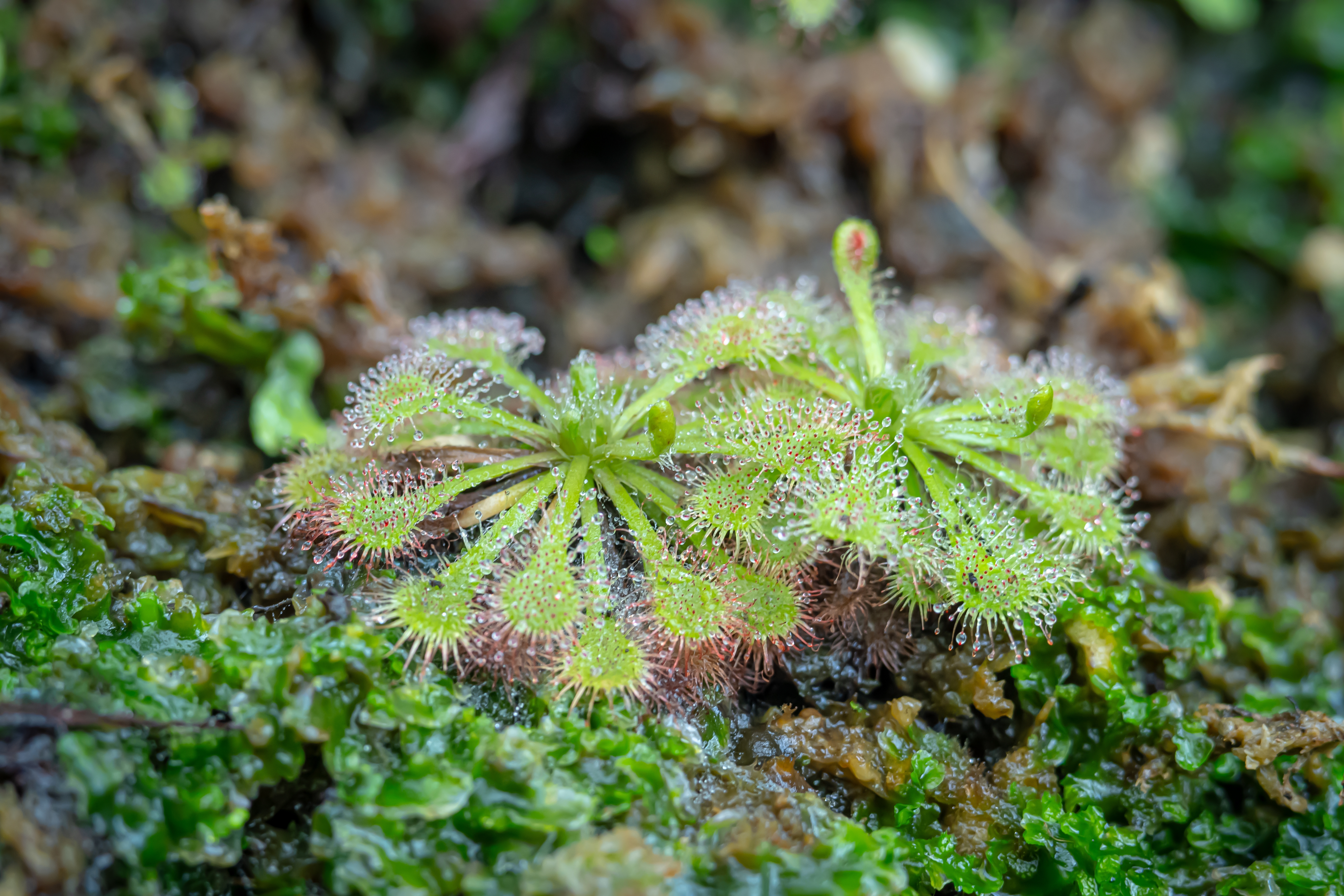
The father of Evolution considered the Venus flytrap (Dionaea muscipula, the famous species with jaw-like leaves) to be “one of the most beautiful plants in the world,” and once admitted he cared more about sundews (Drosera sp., plants with sticky hairs that trap insects) “than the origin of all the species in the world.”
In 1875, the British naturalist published a treatise on species he suspected were carnivorous. Among them were alpine plants of the genus Saxifraga, which he tried feeding insects to, but he was never able to prove his suspicions.
More than a century and a half later, Darwin has been vindicated by a study published in the journal Nature Communications, a discovery with both scientific and historical significance.
NEWSLETTER TABLE TALK
Never miss a story.
Subscribe now.
The most important news & topics every week in your inbox.
During field expeditions in the mountains of Yunnan province in southwestern China, researchers from the Chinese Academy of Sciences observed that Saxifraga candelabrum, a small perennial covered in hairs that grows in rock crevices, was covered with insects, more than 70 on average. Like Darwin, the researchers wondered whether the plant was trapping and consuming them.
Proving that a species is carnivorous isn’t simple, since the definition requires that the plant not only trap animals but also absorb their nutrients.
First, the research team found that S. candelabrum releases a substance that attracts insects. Smaller insects got stuck in the plant’s microscopic, sticky hairs, while larger ones, which the plant needs for pollinating its flowers, took off easily.
Next, the researchers found that the plant fluoresces when coated with a chemical marker that detects a characteristic digestive enzyme. And third, and most importantly, they detected a specific nitrogen isotope in the plant that came from specially enriched flies placed on its sticky stems. The plant took about two weeks to digest its prey.
The species is the first in the genus Saxifraga observed to be carnivorous, a trait that evolved independently in at least 14 plant families, since it supplies nitrogen and other nutrients when soil is especially poor, as in rock crevices.
The researchers said carnivory may be far more widespread than previously thought, and other hairy, seemingly harmless species could turn out to share the trait.