 Μake us preferred on Google
 The name of this little grocery shop on Charilaou Trikoupi Street in Exarchia is somewhat misleading. Because, beyond being delicious, the products lining its shelves are anything but sinful. Quite the opposite: they are among the purest and most authentic you will find anywhere in Greece.
The ‘sin’ of Konstantinos Hapsalis
In recent years, and especially since COVID-19, most of us have started paying closer attention to food. And I don’t mean cooking—which, admittedly, also became something of a forced hobby during the endless hours we spent confined to our homes. I mean the products we began putting in our refrigerators and on our kitchen shelves: the things we eat every day, the things we once had to wait in line to buy at the supermarket.
At the time, with our health suddenly much more front and center—and with considerably more time on our hands—we began reading labels, “scanning” ingredients and thinking more carefully about what was good for us and what wasn’t. We had a virus that had developed into a global pandemic threatening us, and we were walking around wearing masks. The least we could do to protect our bodies was eat properly. To rid ourselves, as much as possible, of chemicals, additives, preservatives and all the other demonstrably harmful things we have willingly, but almost unconsciously, consumed since childhood.
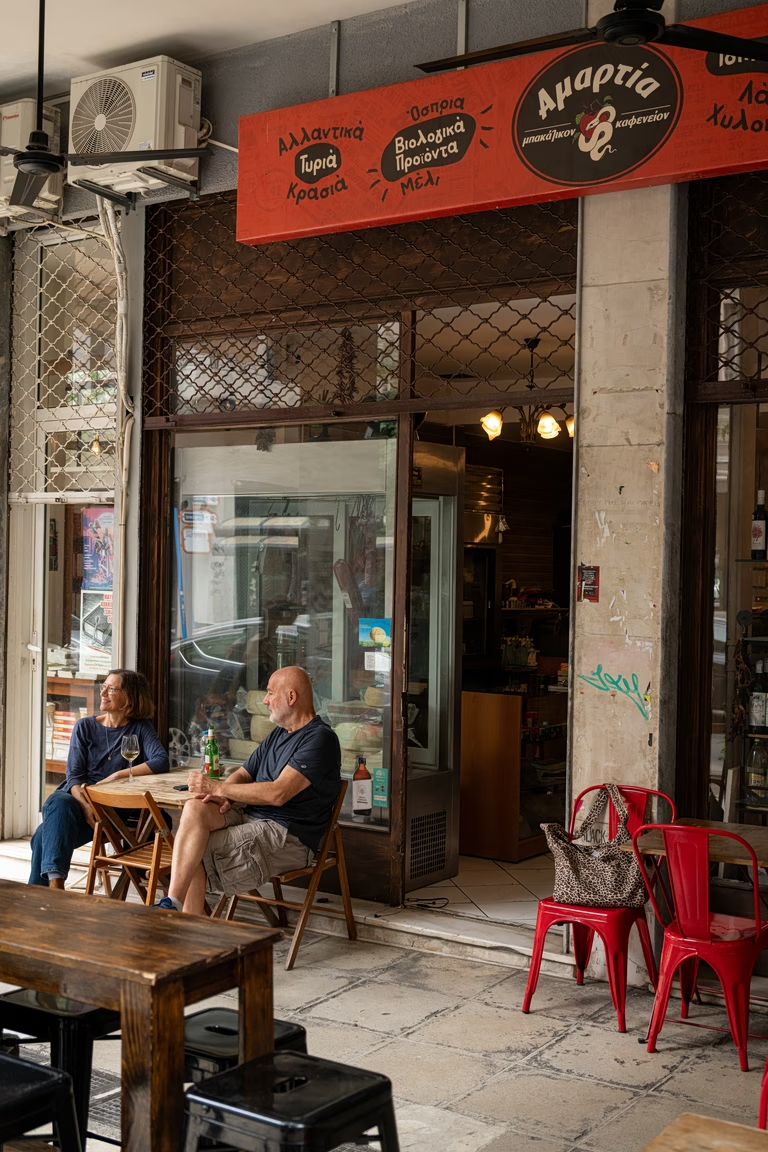
“Amartia,” Konstantinos Hapsalis’ little grocery shop, with a few outdoor tables on the sidewalk of Charilaou Trikoupi Street. Photo: Alexandros Alexandris
A lot changed during COVID and the time we were forced to spend with ourselves. Habits, attitudes toward life, relationships and even careers were reconsidered. For more or less everyone, it was a period of decisions, both big and small.
For Konstantinos Hapsalis, the decision was a major one, but from what I gather talking to him, it was almost an easy one.
“I wanted to leave the job I was doing,” he tells me matter-of-factly when I ask how “Amartia”—the small grocery shop on Charilaou Trikoupi Street that has become part of everyday life in Exarchia over the past four years—came into his life.
And, of course, it became part of his own everyday life, too. Once he got the idea to open a shop that would both sell and serve food products—a combination grocery store and traditional Greek café—it wasn’t long before he turned the idea into reality.
“I have a degree in animal production science,” he explains. “At the time, I was teaching at a butchers’ school while also working at my father’s butcher shop in Peristeri,” a western suburb of Athens.
Konstantinos knew the business from the inside. Years earlier, he had owned a bar. Now he wanted to do something completely different, with one thing in common: being in contact with people.
The story behind ‘amartia’
“I’ve been in Exarchia since 2012. I liked this particular shop because it was very bright. And our neighborhood doesn’t have many bright shops.”
That was how “Amartia” began to take shape, with shelves and refrigerators that slowly filled with products.
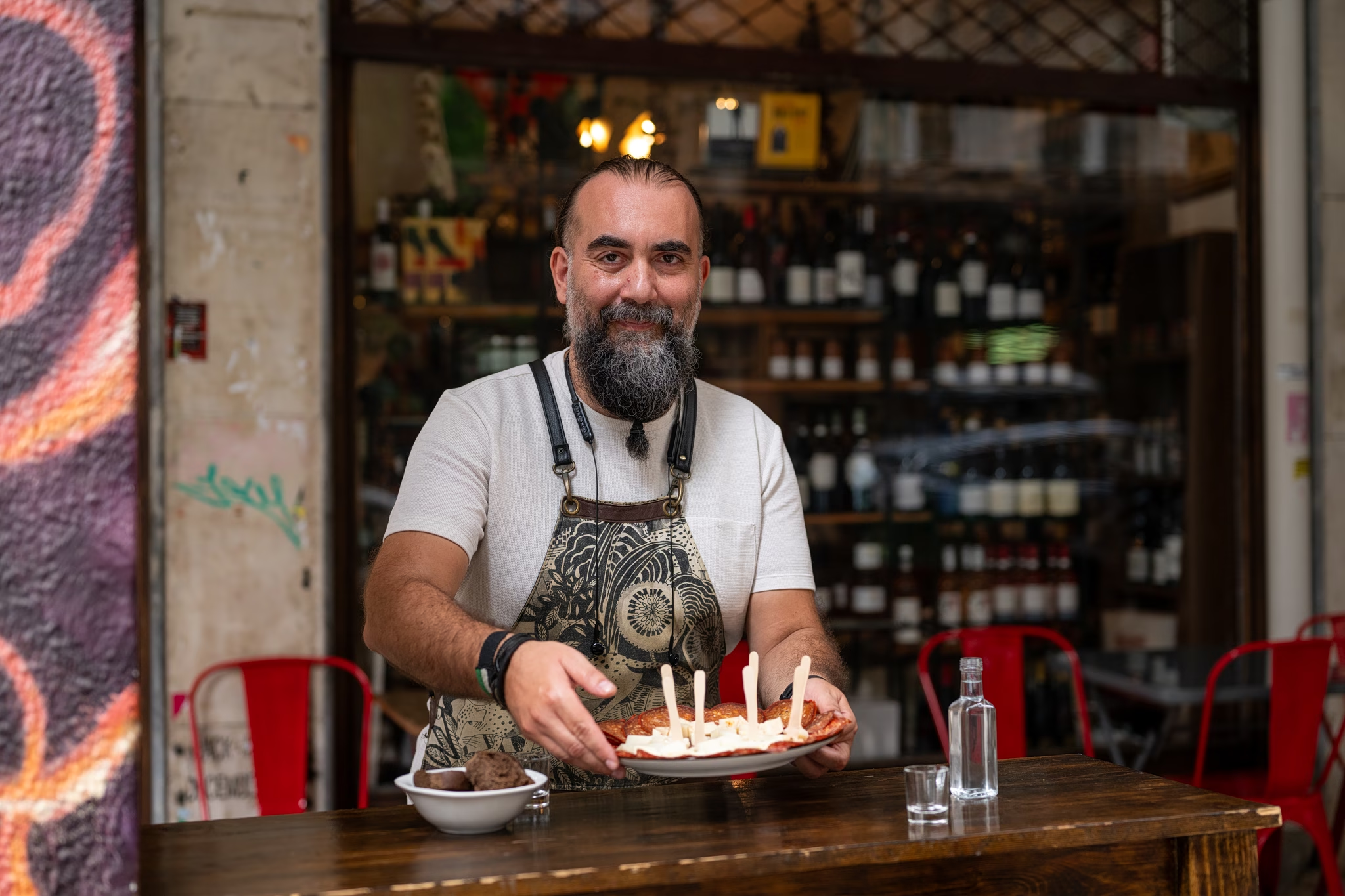
“We mainly have cured meats and cheeses. Special honeys that you won’t find elsewhere. Quite a few wines and tsipouros, jams, sauces and spreads. In general, we sell anything you can eat,” Konstantinos tells me.
He will gladly slice whichever cured meat or cheese you ask for and put together a platter with a little rusks, olives, something preserved in salt or brine, or whatever else you might want to accompany your wine, beer or glass of tsipouro—a traditional Greek grape spirit.
Whatever is sold can also be served. That’s the philosophy behind “Amartia”: the philosophy of the old-fashioned kafeneio, the traditional Greek neighborhood café where people gather, share food and drink, and spend time together.
But Konstantinos’ thinking goes deeper than that.
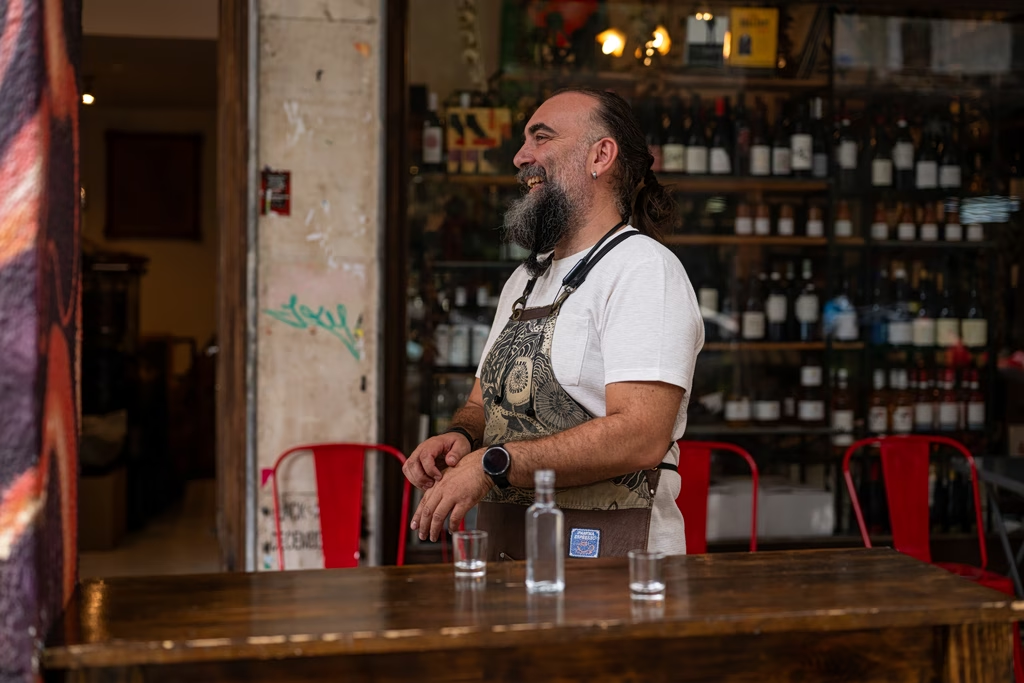
Almost everything sold at “Amartia” is also available to eat there, especially products that pair well with a glass of tsipouro or wine. Photo: Alexandros Alexandris
As we established, he already knew the business from the inside. He knew production, the processes and the people involved. He knew the producers who did things properly, making honest, good-quality products, and those willing to sacrifice quality to make more money.
He knew whom he wanted to work with, whom to approach, what to put in his shop and what to leave out.
“I knew the primary sector, and I knew cured meats and cheeses. I knew which products weren’t deceiving people when it came to price and quality.”
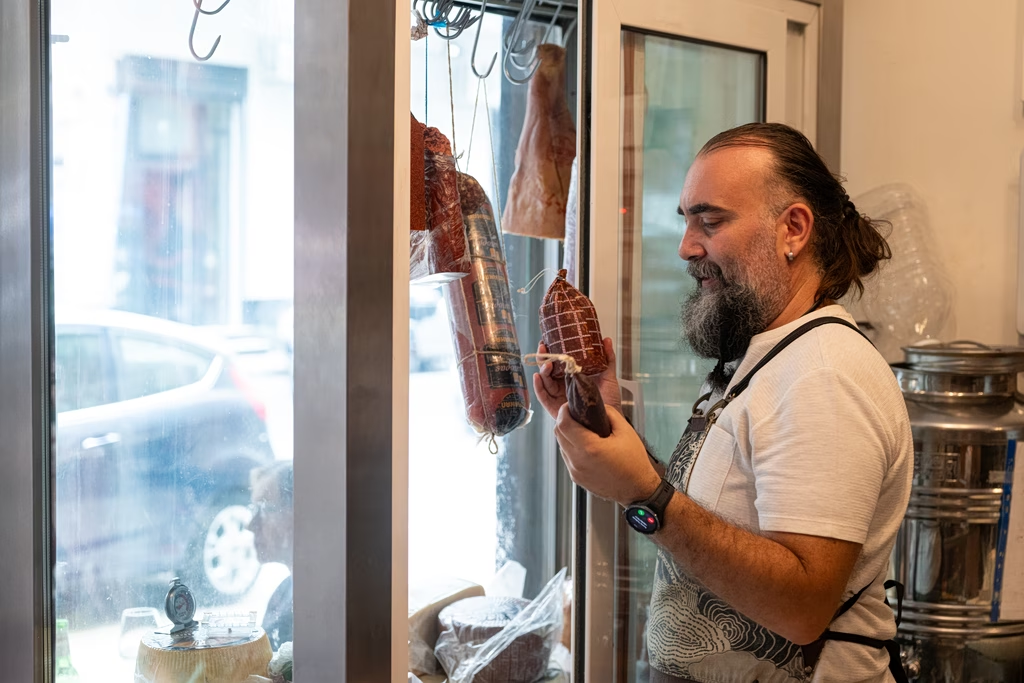
Konstantinos has extensive knowledge of meat and maintains relationships with producers he knows make quality products. Their cured meats and cheeses are sold at the shop. Photo: Alexandros Alexandris
Konstantinos is originally from Orestiada, in northeastern Greece. Naturally, his refrigerator features an excellent local kavurma—a traditional preserved meat product—and local feta.
“Then we move a little farther south, to Komotini and Xanthi, where we get more cured meats.”
These are Konstantinos’ great passion: cured meats and cheeses. He actually studied them, so he knows a great deal about things that we, as consumers, are only now beginning to learn about: nitrites, processed meats and their links to cancer, and the powders used instead of fresh milk.
And this is where the label of “expert” that we sometimes place on people really matters.
Konstantinos is a food expert—and here, there are no quotation marks around the word. He is the kind of person you want to turn to when you’re buying food that you and your family are going to eat.
The good ones are also the few
“I was born into a butcher shop, so I knew this business from childhood. Then I studied it, too. In other words, I moved away from the commercial side and into the theoretical side. And eventually I taught it, because during COVID I was a teacher at a butchers’ school.”
So what should we know when we buy cured meats? Is the demonization they have faced in recent years justified?
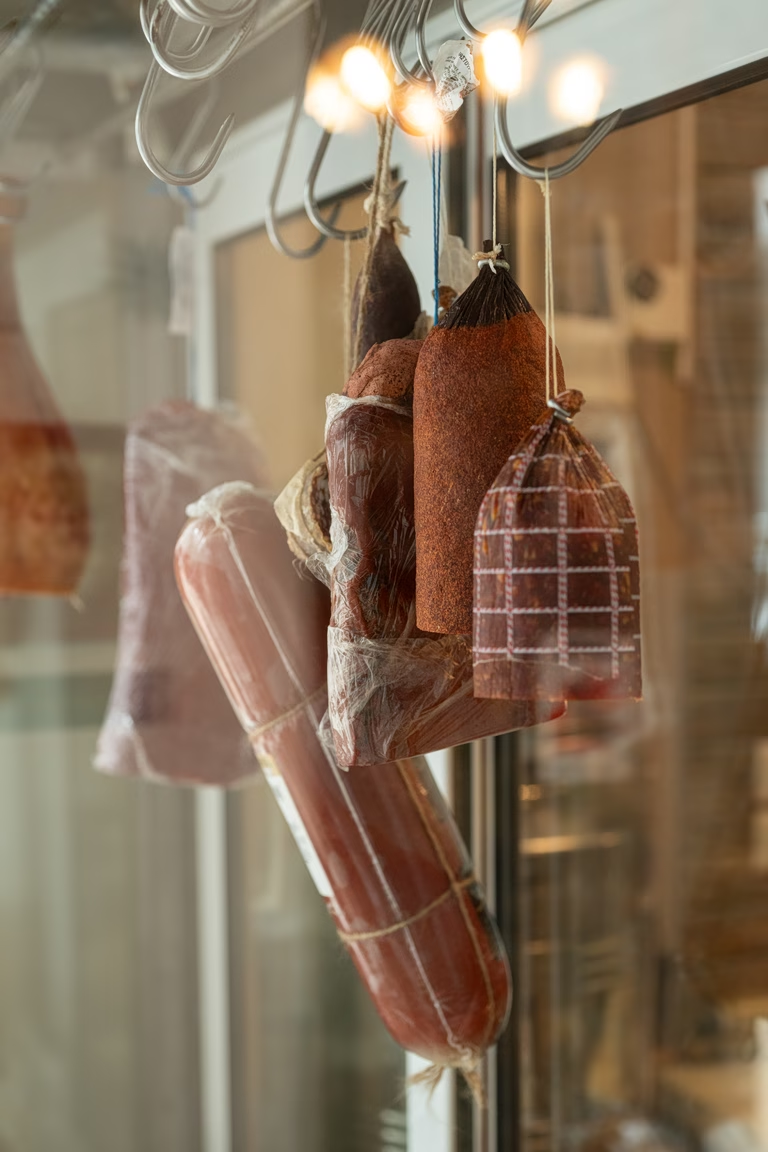
The cured meats at “Amartia” are carefully selected and made entirely from whole cuts of meat. Photo: Alexandros Alexandris
“There are very few cured meats that don’t contain nitrates and are made with carefully selected meat. And they are also extremely expensive.
“Most cured meats, when consumed frequently, can cause cancer. I’m not talking about the cured meat on your plate; I’m talking about the cured meat in your sandwich, the kind that is an everyday staple for so many people: processed cured meats such as Paris ham, mortadella, beer salami or turkey that isn’t made from whole cuts of meat. All of these are highly processed and very dangerous.”
As children, surely all of us ate plenty of Paris ham and salami—and some of us still do. At the very least, we should know that there are alternatives.
“There are also some very good cured meats that don’t have a negative impact on our health,” Konstantinos says, putting pastourma at the top of his list.
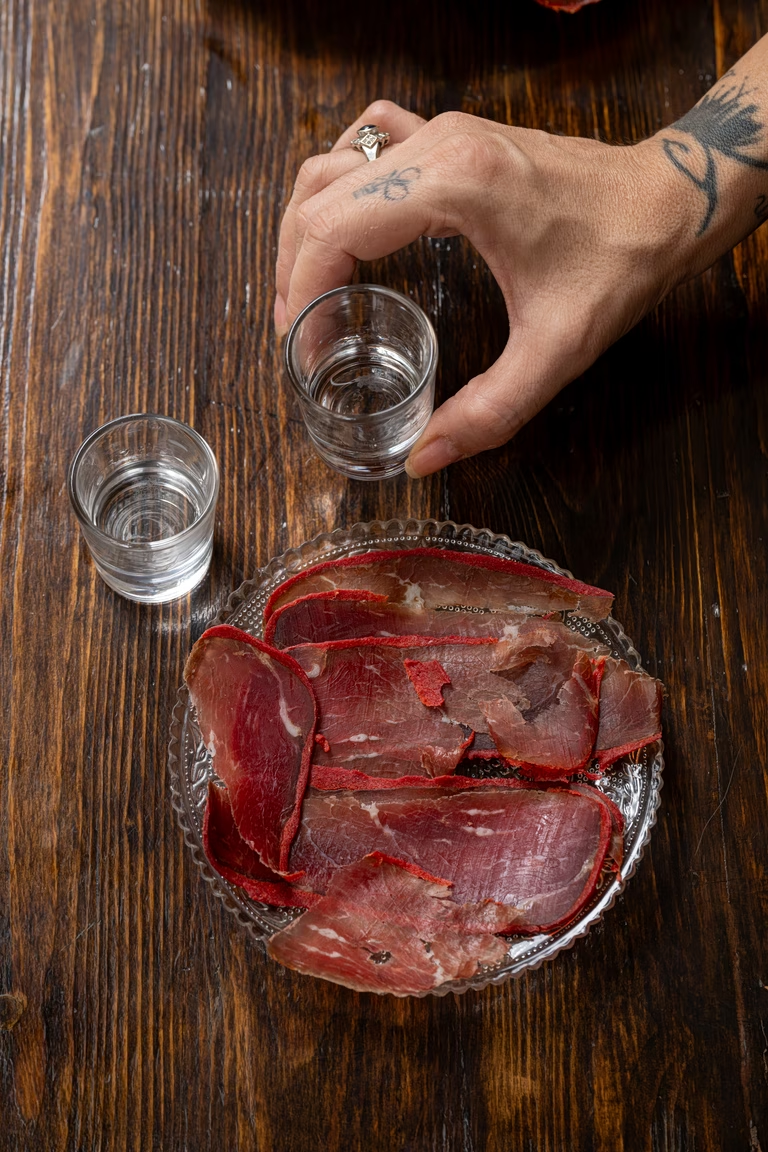
The traditional Greek pastourma: the perfect meze and a very healthy cured meat. Photo: Alexandros Alexandris
“All the spices on the outside—the fenugreek paste, known as çemen—only bring health benefits, while the meat itself is completely pure, with no additives whatsoever. It’s one solid piece of meat that contains nothing else, just salt.”
At “Amartia,” you can find an excellent buffalo pastourma, but the market also offers pastourma made from beef, lamb, horse and even camel.
Ruminants provide some of the healthiest meat—and that’s something we should keep in mind, particularly when it comes to our everyday cooking.
“The second healthy cured meat is jamón ibérico from Spain. It comes from pigs that feed on acorns, and its processing consists simply of salting, dehydration and drying.
“And third is prosciutto di San Daniele, also made from a whole cut of meat—in fact, an entire leg. It dries and develops mold in the proper way, in a way that benefits our microbiome. It’s a very good cured meat.”
And what about sausages?
Those should come only from a butcher—and a butcher you know and trust.
“Someone who puts in the meat, spices and salt and then lets the sausage dry under the right conditions. That sausage, yes, is worth eating.
“And fortunately, there are people like that, who do things properly. People who respect the product and their family.”
Konstantinos knows not only about cured meats but also cheeses. “Amartia” carries wonderful cheeses from both Greece and France. Photo: Alexandros Alexandris
It isn’t easy to find people like that: people who put quality and passion above everything else, even above the money they could put in their pockets.
Konstantinos, who is a merchant—a middleman between producer and consumer—and a business owner, is clearly one of them.
His first concern is selling something good, something properly made. Even if he sells less of it.
“These are expensive cured meats. That’s because they come in small quantities and they aren’t available all year round. The same thing happens with cheeses and yogurt.
“For three months, goats and sheep aren’t milked. There is no milk. We can’t keep producing cheese and yogurt. And yet, you can find them in supermarkets all year round.”
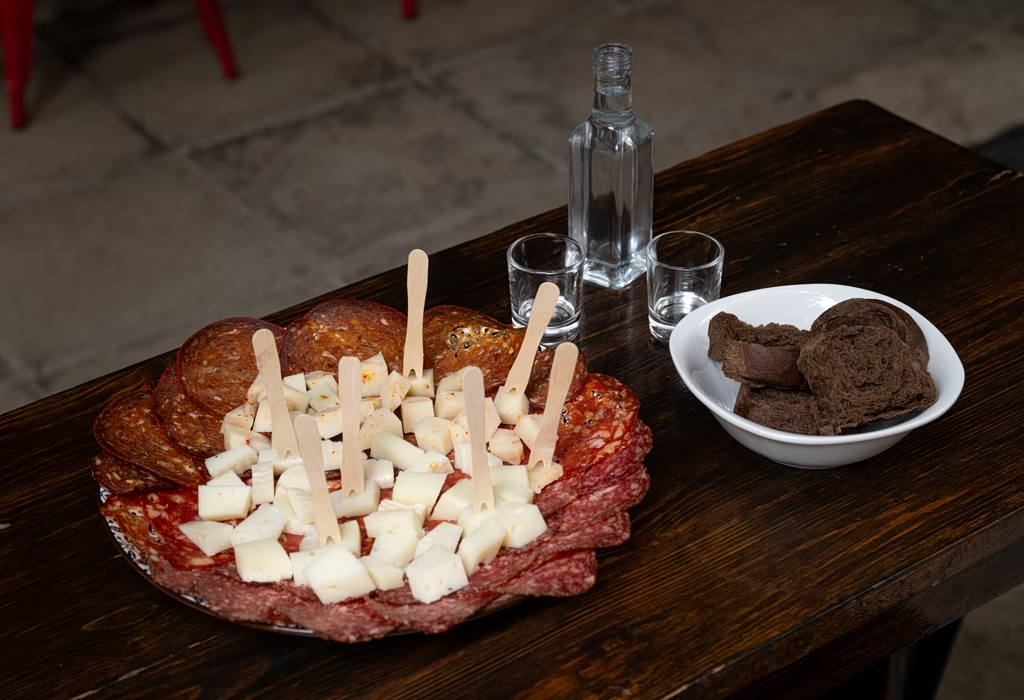
Konstantinos knows not only about cured meats but also cheeses. “Amartia” carries wonderful cheeses from both Greece and France. Photo: Alexandros Alexandris
Isn’t the same thing happening with vegetables? How do we have tomatoes in winter?
Seasonality disappeared years ago. We simply didn’t realize it had happened with some products.
“We have to learn to live with what nature produces and what each producer can give us during a particular period. We can’t eat air-dried sausages from the end of May until the end of September. They don’t dry properly; it’s unbearably hot outside. So they have been put in an oven.
“A butcher who respects his product wouldn’t do that.”
Glasses full, plates full
Just as he loves cured meats and cheeses, Konstantinos eventually fell in love with wine, too.
The question comes naturally, given the many bottles—mostly from Greek vineyards—that line the shelves of “Amartia.”
“Until 2017, I didn’t drink wine. I didn’t like it. Then I went to a wedding in Drama. The family had a vineyard, with different varieties. I tried them and was thrilled.
“So I started drinking and tasting wine. I began learning about it. And I decided to have a wine selection at the shop.
“It isn’t huge. I have around 60 labels. They’re all wines I like, from small wineries that don’t produce on an industrial scale.”
Wine has become a major trend on Athens’ food and dining scene, and Konstantinos serves every wine on his shelves by the glass as well. You can drink as much as you want and take the bottle home with you.
It’s a convivial approach, one that people appreciate, especially in a neighborhood like Exarchia.
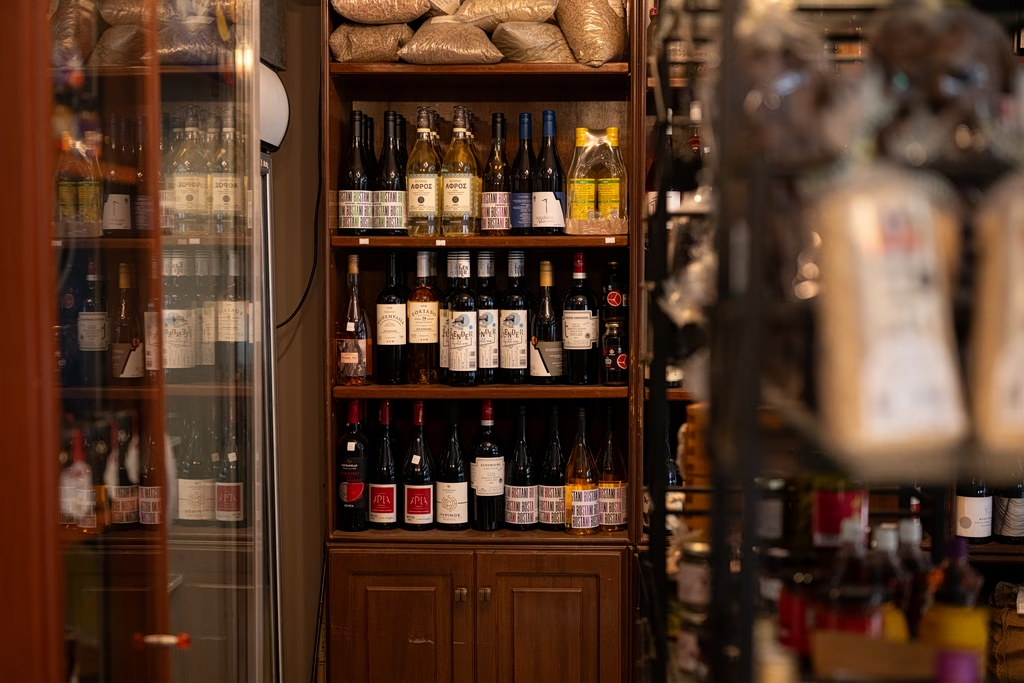
Wine has become one of Konstantinos’ passions in recent years. His shop carries around 60 labels from small wineries. Photo: Alexandros Alexandris
“If this shop were in another neighborhood, it wouldn’t work. This place has a deep character that other places don’t have,” Konstantinos admits.
I ask him what kind of people come in to shop. Are they educated consumers, or simply curious people who might ultimately leave empty-handed?
“People of all kinds come. There are those who know what they want to eat. They don’t set foot in supermarkets because they don’t want to support mass-produced products. They’re conscious consumers. They come to shops like mine to buy products like the ones I sell.
“Then there are those who are looking into it, who read, follow social media and start asking themselves: Can I afford to buy something better but more expensive?
“Because these products are expensive. That’s true.
“And then there are the others, who come in and get disappointed because they don’t even understand what you’re telling them. Essentially, they realize that what they’ve been doing all these years is wrong, that they need to change their habits. They get angry and leave.”
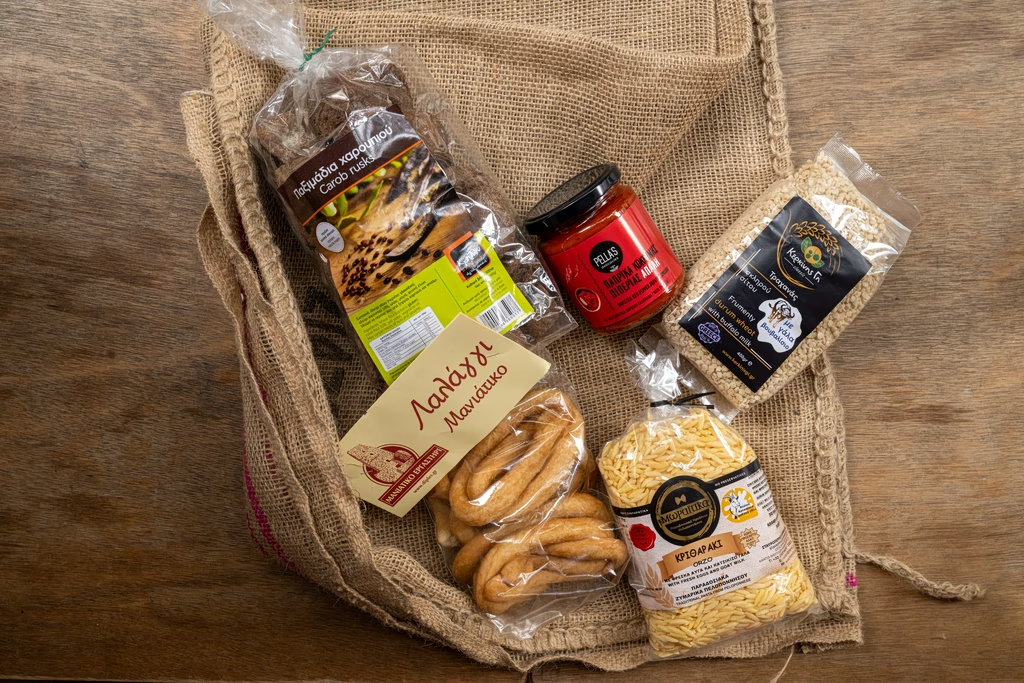
Products that genuinely respect consumers cost more, and those who make this choice know it well. Photo: Alexandros Alexandris
For consumers, the balance between health and what our wallets can afford can be a delicate one. For a business owner, it is a matter of survival.
“I sell what I sell. I don’t need to bring in something else just to make more money. If I wanted to make more money, I would have stayed where I was. I was making more money there,” Konstantinos says candidly.
“I like interacting with people. I like seeing the tables fill up and people laughing. I have a good time with them, too.”
Those who keep going
You can’t sit down for a meze at “Amartia” without feeling like you’re part of it—a part of one big gathering of friends.
And when you leave, even if you hadn’t planned to buy anything, even if you came in simply for a glass of wine, you’re almost certain to take something home with you.
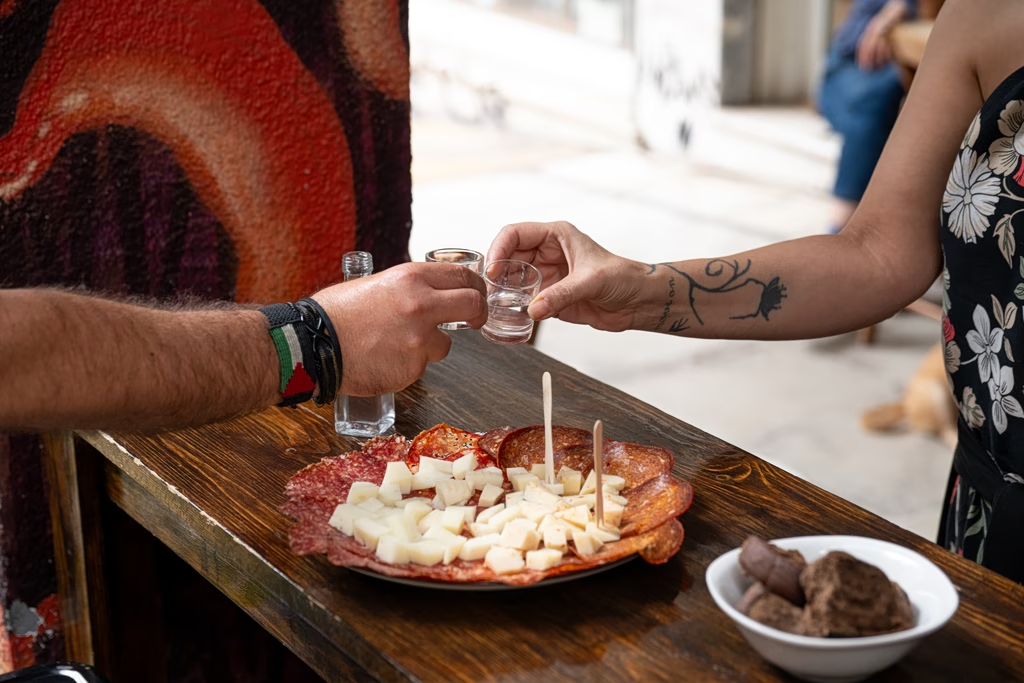
At “Amartia,” you immediately become part of a group. And that is such a beautiful thing. Photo: Alexandros Alexandris
“Most people buy wine and honey,” Konstantinos notes.
And when he mentions honey, I have the feeling he has saved the best for last.
“And here, you need a producer who loves what he does. And I—I’ll tell you straight—I have Jason Statham!” he says, laughing.
Then he explains:
“There’s a small producer, Ioannis Vassiliou, who looks exactly like the actor! He’s a shy guy and he’s obsessed with honey.
“He spends three days in Athens and 27 days running around the mountains and valleys! That’s his life. He travels all over Greece, from Drama to Nafplio.
“He doesn’t feed his bees. Whatever they produce, they produce. Instead, he follows the flowering seasons, the trees.
“I met him at a conference where he was trying to learn what was happening with the fir trees because they weren’t producing honey that year. He had come with a list full of questions!
“Ioannis produces a honey that nobody else in Greece produces. Carob blossom honey—not carob syrup made with glucose. Real honey, produced from the flowering of carob trees.
“It’s extremely difficult to produce. But it’s something he genuinely loves.”
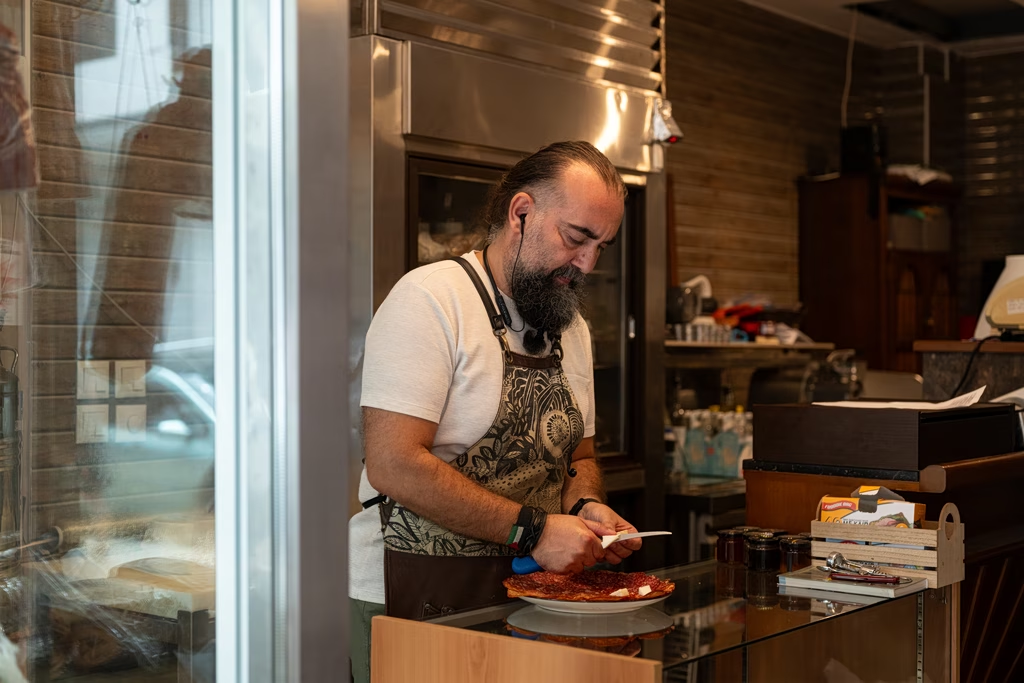
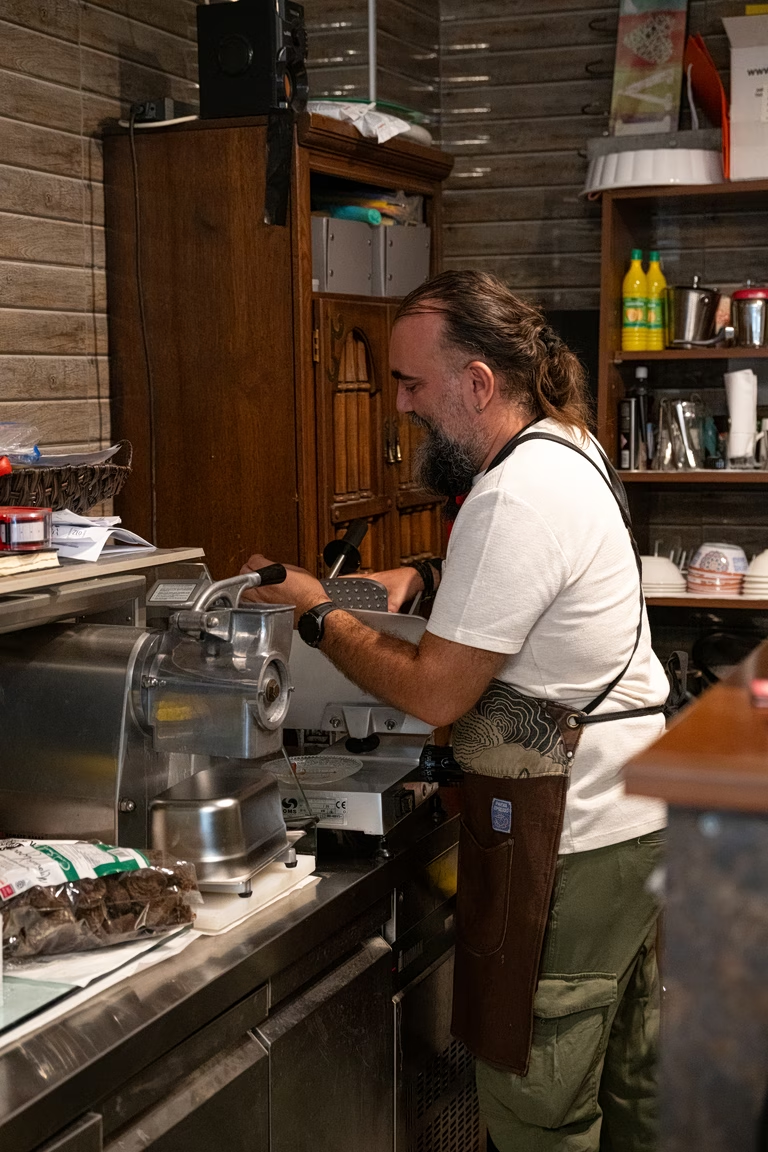
A man who knows his craft and enjoys it. You don’t need to know anything more to make your way to “Amartia.” Photo: Alexandros Alexandris
In the end, there are people who are drawn to difficult things. They enjoy them even when the financial rewards aren’t necessarily obvious.
For them, that doesn’t matter because “they genuinely love what they do”—and they gain a hundred times more in return.
That’s what I gained from my conversation with Konstantinos Hapsalis. I could have sat and talked with him for hours.
And I can assure you that if you stop by “Amartia,” there on Charilaou Trikoupi Street, you will feel exactly the same way.
Even if you spend a little more money on a beautiful piece of cheese, you’ll walk out of the shop much richer.