
 Μake us preferred on Google
 NASA’s Curiosity rover has detected a remarkable variety of organic molecules on the surface of Mars, including compounds considered to be fundamental building blocks for the origin of life on Earth and that could possibly allow for the existence of Life on Mars.
The results come from a chemical experiment carried out for the first time on another planet. The findings suggest that the Martian surface may harbor molecules that could serve as indicators of ancient life. However, the experiment is not able to determine whether these organic compounds originated from past life, from natural geological processes, or through meteorites.
What the Experiment Revealed
The research was conducted under the guidance of Amy Williams, a professor of geological sciences at the University of Florida and a member of the science teams for both the Curiosity and Perseverance rovers. Curiosity landed on Mars in 2012 with a mission to investigate whether the planet once had conditions suitable for microbial life. Perseverance, which arrived in 2021, is searching for direct signs of ancient life.
View this post on Instagram
“We believe we are observing organic matter that has been preserved on Mars for 3.5 billion years,” Williams said. “It’s very important to have evidence that ancient organic matter can be preserved, because that helps us assess the habitability of an environment. And if we want to look for evidence of life in the form of preserved organic carbon, this shows that it’s possible.”
The international research team published their study in the journal Nature Communications.
New Organic Compounds on Mars
The Curiosity rover collected three drilled rock samples from the Glen Torridon area, which revealed a variety of organic molecules. Among the discoveries was a nitrogen-containing molecule with a structure similar to compounds involved in the formation of DNA — something never previously observed on Mars.
The rover also detected benzothiophene, a large sulfur-containing compound with a ring structure that is often carried to planets via meteorites. “The same materials that fell on Mars through meteorites also fell on Earth and likely provided the building blocks for life as we know it,” the researcher noted.
The Significance of the Discovery and Future Missions
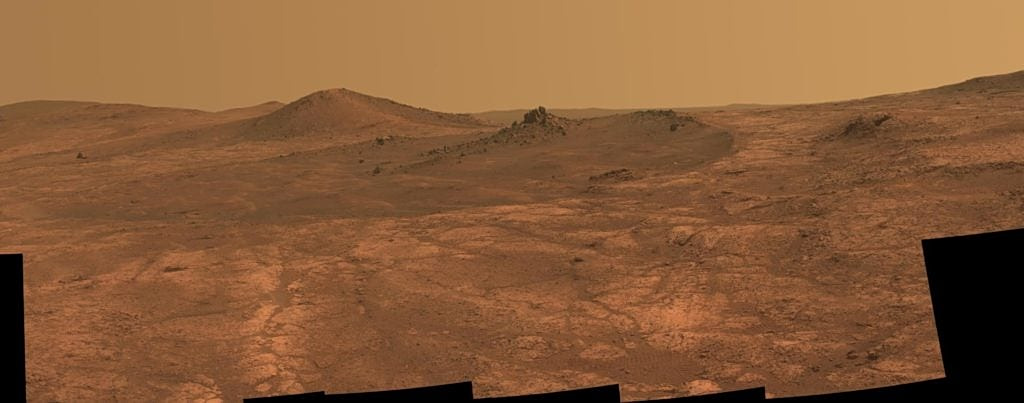
Curiosity landed in Gale Crater in August 2012, in a region that was once a lake. The experiment was carried out in 2020 in the Glen Torridon area, which is rich in clay minerals formed in the presence of water. These clays are particularly effective at preserving organic molecules, making the area ideal for this kind of research.
The work relied on the Sample Analysis at Mars (SAM) instrument, which has been central to Curiosity’s discoveries regarding Mars’ chemistry, atmosphere, and potential habitability. The experiment made use of the chemical TMAH, which breaks down larger organic molecules into smaller ones that can be analyzed by the rover’s instruments. Since Curiosity carries a limited supply of TMAH, the choice of sampling site was made with great care.
The success of this method is expected to influence future missions, such as the Rosalind Franklin mission to Mars and the Dragonfly mission to Saturn’s moon Titan, both of which will conduct similar experiments in the search for organic compounds.
“We now know that large, complex organic molecules are being preserved in the Martian subsurface, and that is incredibly promising for detecting molecules that could be related to life,” Williams concluded.