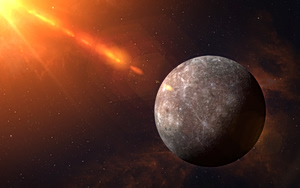
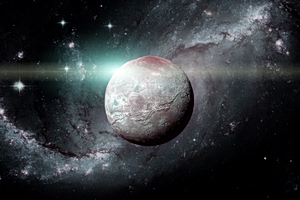
New research suggests the small planet's diameter loss could be 30% greater than earlier estimates showed
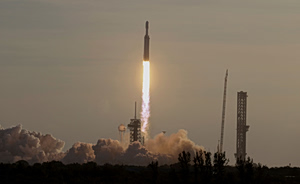
NASA launched the Nancy Grace Roman space telescope aboard a Falcon Heavy rocket from Florida, aiming to study dark energy, dark matter, and exoplanets
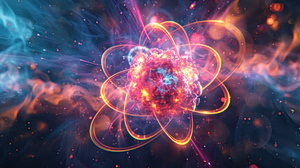
The new particle appears to be made almost entirely of gluons, massless particles that carry the strong nuclear force
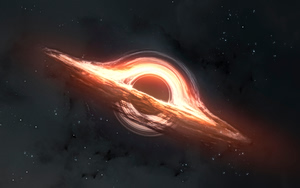
Astronomers spotted a star racing at over 15,000 miles per second around Sagittarius A*, offering new clues to the black hole's spin
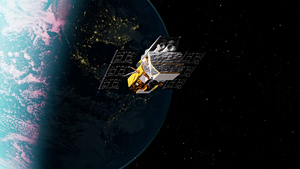
The Link spacecraft, sent to boost NASA's ageing Swift Observatory into a higher orbit, developed serious control problems and won't complete its rescue mission
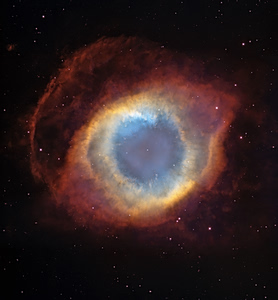
Astronomers watched the remains of a dead star dissolve back into interstellar gas, offering a preview of our own Sun's eventual fate
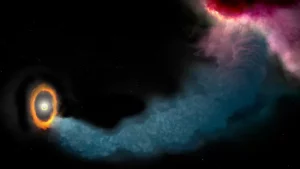
A rare planet-forming disk around a young triple star system in Orion has been knocked askew by a massive gas stream over 1.2 trillion miles long
Visitors can explore the history of Greek astronomy, tour the Geoastrophysics Museum and enjoy nighttime sky observation during English-language evening visits throughout August
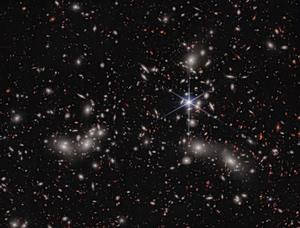
A supermassive black hole 50 million times the mass of the Sun was found just 700 million years after the Big Bang, puzzling cosmologists
A star's color is a direct window into its temperature, and summer skies offer a stunning palette for anyone who looks up
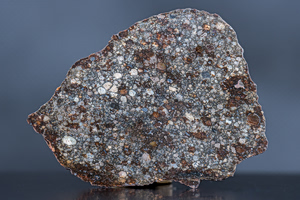
A rare rock found in the Sahara Desert appears to be the first solid evidence of a vanished planetary world, possibly as large as the Moon, that formed in the early solar system
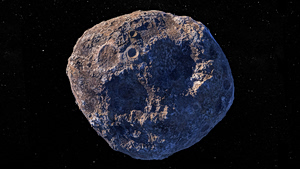
NASA confirmed that 99942 Apophis asteroid will pass near earth within roughly 20,000 miles of the planets surface on April 13, 2029, closer than many geostationary satellites. No impact risk exists
The Royal Astronomical Society is calling for urgent action on artificial light at night, urging that it be formally recognized as a pollutant
CERN's incoming director says machine learning is transforming particle physics, from detecting rare events to probing the future stability of the universe
Scientists detect an atmosphere on a tiny, frozen world beyond Pluto, rewriting the rules of the outer solar system
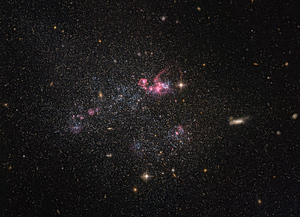
20 stars inside the Milky Way may be remnants of a long-lost dwarf galaxy called "Loki," swallowed in our galaxy's earliest days
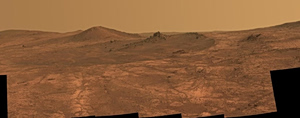
We now know that large, complex organic molecules are being preserved in the Martian subsurface, incredibly promising for detecting the existence of life on Mars
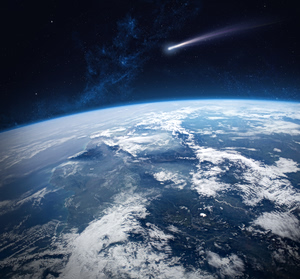
A comet will be visible in the night sky, bright enough to see, but will require binoculars, a telescope, or a camera to spot it
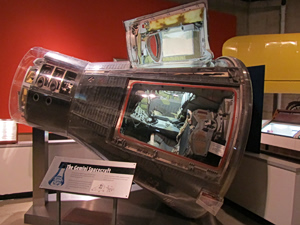
Six decades after Neil Armstrong narrowly averted disaster during the Gemini 8 mission, a collection of never-before-published photographs documenting his return have been given to the Ohio museum named in his honor
From Thessaloniki to the Cosmos: Menelaos Raptis speaks to TO BHMA International about his groundbreaking discovery and how young Greeks can turn their boldest academic dreams into reality.