 Μake us preferred on Google
 Giant prehistoric crocodiles dominated Colombia millions of years ago. Their mark was left on the bones of large plant eating animals. According to a recent publication in the Journal of Vertebrate Paleontology, researchers have identified the first direct physical evidence that massive crocodiles actively hunted large mammals at La Venta, in Colombia’s Tatacoa desert.
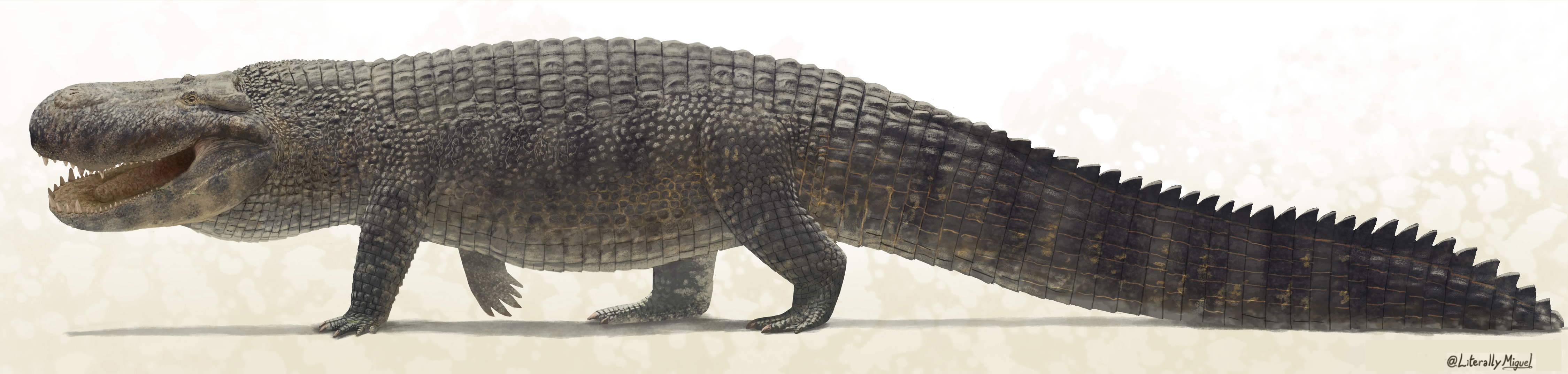
The study focused on four fossils from three large herbivore species, which showed tooth punctures, crushed areas and drag marks. Most of the findings point to one likely predator: a giant crocodile of the genus Purussaurus, estimated to have weighed around 1,793 kilograms and measured nearly seven meters long.
Today’s crocodiles compared to Purussaurus
For comparison, today’s largest crocodile, the saltwater crocodile, reaches 1,150 kilograms. Purussaurus was clearly heavier, longer and, as the fossils show, hunted animals far larger than any modern crocodile dares to take on.
Scientists analyzed four specimens from museum collections in Colombia, France and the United States, all originating from La Venta. It is one of South America’s best preserved prehistoric ecosystem sites, with 156 recorded species of ancient vertebrates, including nine crocodile relatives.
Among the findings was a partial skull from a large, thick skinned hoofed animal, Pericotoxodon platignathus, estimated to have weighed 931 to 982 kilograms. A hole nearly 30 millimeters in diameter was found on the skull, consistent with the teeth of a large crocodile. In addition, a partial leg bone, likely from the same species but a smaller individual, showed five additional punctures and cracks, evidence of enormous force applied to fresh bone.
To determine which prehistoric predator caused the marks, researchers compared their size and shape to every possible predator in the La Venta ecosystem. At that time, South America had no lions, wolves or large bear like carnivores. The predator role was filled by marsupials, giant birds and various crocodile relatives. Only Purussaurus had teeth large and cylindrical enough, with a diameter exceeding 30 millimeters.
Analysis of the puncture dimensions in the bones, combined with teeth from museum collections, showed an exact match with Purussaurus. Calculations of the bite force required produced values twice as high as those of a modern saltwater crocodile.
A second, different crocodile hunted alongside it
Two jawbones from different animals, so called litopterns, also showed deep punctures, crushed bone and, in one case, a curved scrape similar to the violent twisting motion modern crocodiles use to subdue their prey.
On one of these bones, researchers identified two distinct types of marks: on the inside, large holes from a Purussaurus attack, and on the outside, a small oval indentation with ten thin, parallel scratches attributed to a smaller, land dwelling crocodile relative with serrated teeth, most likely Langstonia huilensis. Scientists believe Purussaurus attacked the animal first, while Langstonia fed on the remains afterward.
Three of the four specimens showed bite marks around the head and jaw, the same area targeted by modern crocodiles when attacking large prey near water. None of the marks showed signs of healing, indicating the injury occurred at the moment of death.
Distant crocodile relatives were the top predators in the Americas
Before North and South America were joined, South American ecosystems worked very differently than they do today. Large herbivores were abundant, but their predators were not wolves or big cats. That role was filled by crocodile relatives, giant birds and marsupial predators.
Today, Nile and saltwater crocodiles hunt large mammals such as cattle, buffalo and even hippopotamuses. Purussaurus appears to have filled the same ecological niche at La Venta, but on a scale that surpasses any living species. This study provides rare, direct evidence of a predator prey relationship, preserved in bones that held onto their story for twelve million years.