 Μake us preferred on Google
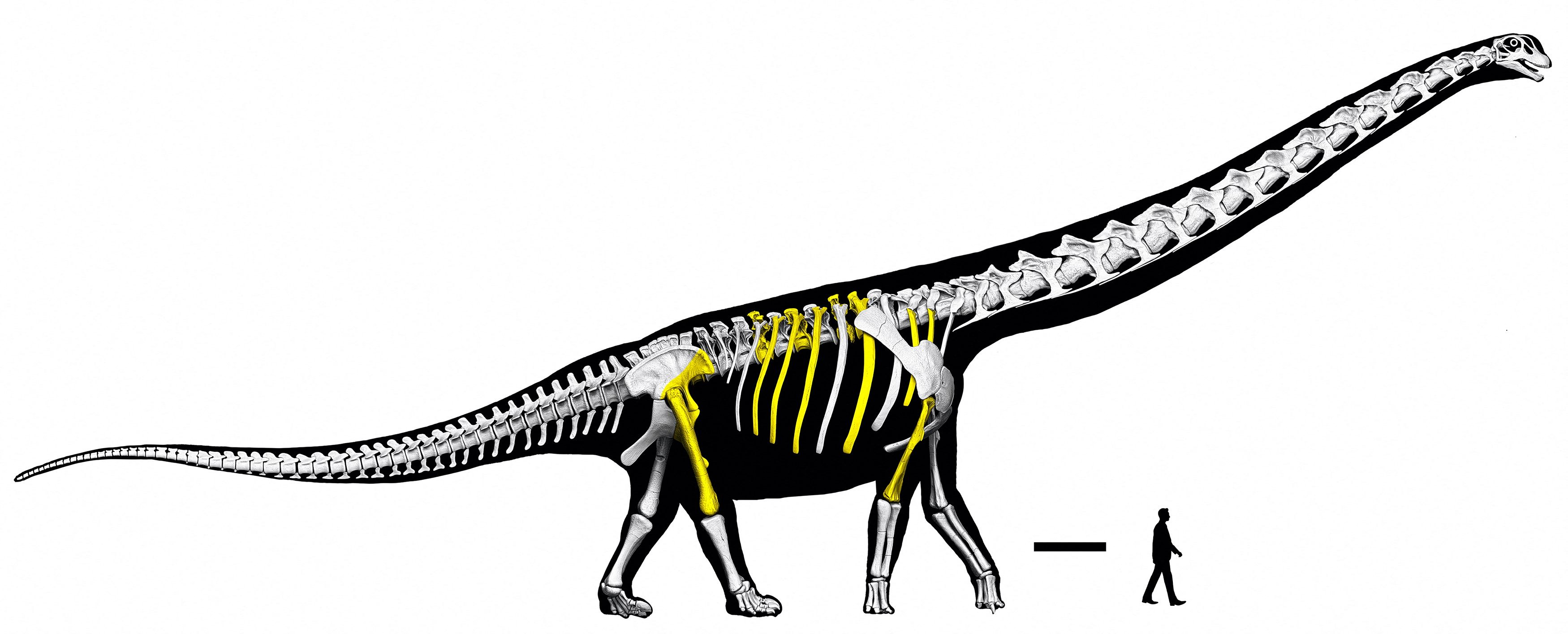
 On the banks of a river in what is now Thailand, 110 million years ago, a 27-meter giant browsed the treetops, too massive to worry much about predators. This was Nagatitan chaiyaphumensis, the largest known dinosaur of Southeast Asia.
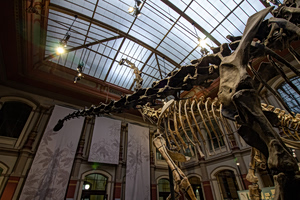
It was a sauropod, a group of dinosaurs characterized by long necks and tails, small heads, and thick, column-like legs.
Fossils of the Nagatitan were first spotted by a local farmer in Thailand’s Chaiyaphum province. Years of excavation followed before its spinal column, pelvis, a rib, and leg bones came to light, among them a humerus measuring 1.78 meters in length. Based on the size of the limb bones, researchers estimate the animal weighed between 25 and 28 tons.
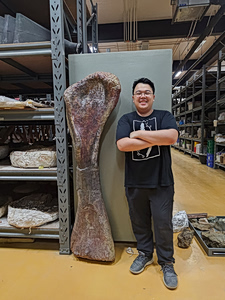
Researcher Thitiwoot Sethapanichsakul poses with a front leg bone, or humerus, of the Cretaceous Period sauropod dinosaur Nagatitan chaiyaphumensis at the Sirindhorn Museum in Kalasin Province, Thailand, in 2024, in a photograph released on May 14, 2026. Thitiwoot Sethapanichsakul/Handout via REUTERS
The Nagatitan most likely fed on conifers and ferns, which it swallowed without chewing, according to Thitiwoot Sethapanichsakul of University College London, lead author of the study published in Scientific Reports by the Nature group. The climate of the region at the time was probably subtropical, with forests and savanna-like shrublands. Crocodiles and freshwater sharks lurked in the rivers, while pterosaurs soared overhead.
The largest predator in that ecosystem was a relative of the African carnivorous dinosaur Carcharodontosaurus, roughly 8 meters long and weighing around 3.5 tons. Predators in the region may have hunted young or sick sauropods, but likely gave healthy adults a wide berth, since those could simply crush them underfoot.
“Sauropods are known to have grown very quickly after hatching, which was probably related to the risks of predation. The faster they could grow, the safer they were,” said Paul Upchurch of University College London, a member of the research team.
Sauropods as a group included the largest land animals ever to have lived on Earth. Even so, the Nagatitan was smaller than some South American sauropods such as Argentinosaurus and Patagotitan, which reached lengths of 30 meters.
The species name references the Naga, a serpent-like creature found in various Asian religious traditions and depicted in temples throughout Thailand. A total of 14 dinosaur species have been discovered in the country.
According to Sethapanichsakul, the Nagatitan was likely the last of the giant sauropods in Southeast Asia, as the region was gradually submerged beneath a shallow sea during the Cretaceous Period, at which point the sauropods disappeared.
The Nagatitan lived during a time when atmospheric carbon dioxide levels were rising and driving up global temperatures. “Sauropods appear to have become especially large-bodied during this period, with gigantic forms living in South America, China, and possibly North Africa,” said Upchurch. “This possible relationship between large body size and high temperatures is not fully understood, but it is likely that elevated temperatures influenced the vegetation that was important for sauropods.”