 Μake us preferred on Google
 Scientists and fashion designers have unveiled a handbag made from collagen derived from Tyrannosaurus Rex fossils found in the United States, a unique creation intended to demonstrate the potential of lab-grown leather
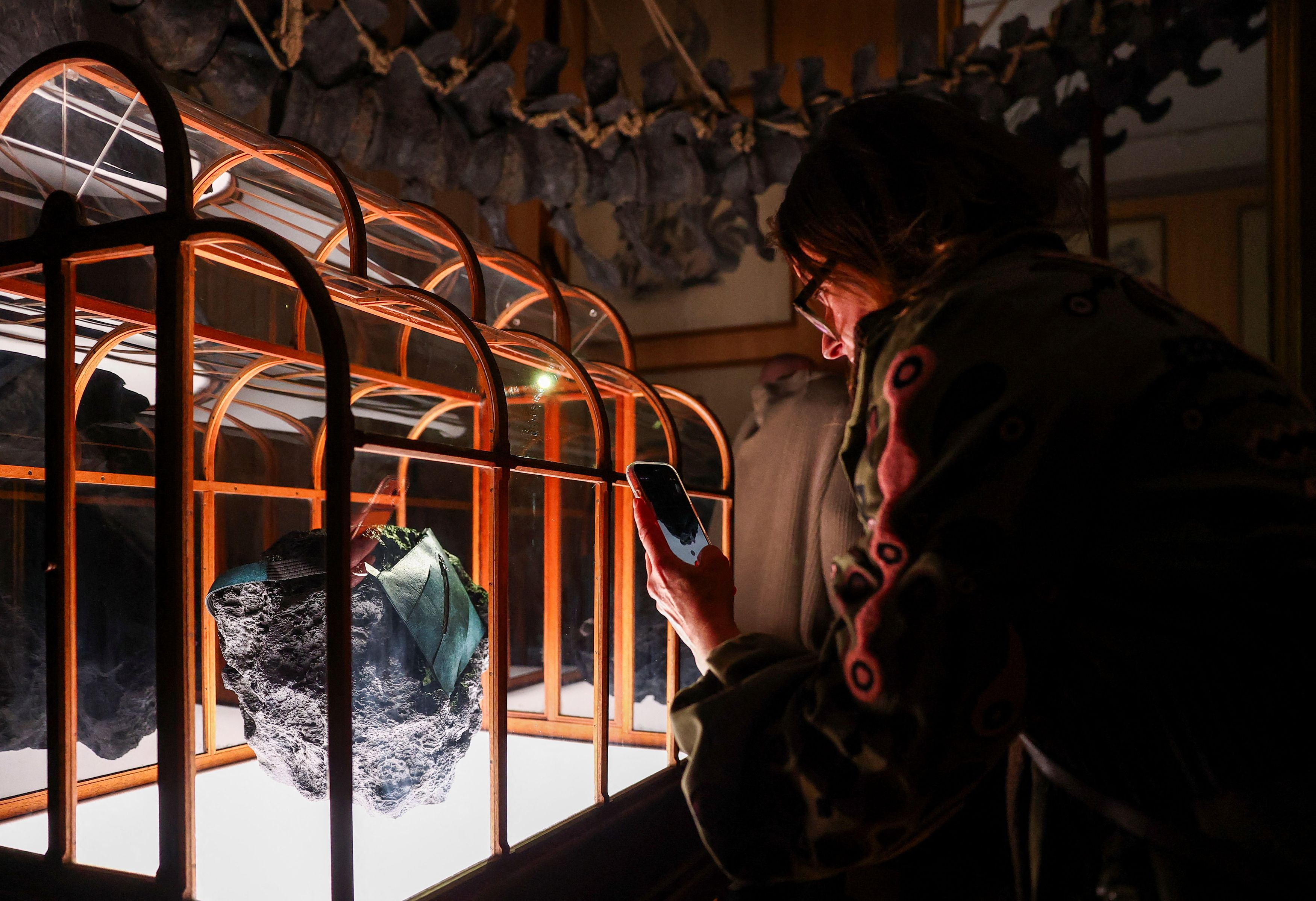
The teal-colored bag was displayed on a rock inside a cage, beneath a dinosaur replica at the Art Zoo museum in Amsterdam, where it will be auctioned next month with a reported starting price of over half a million dollars.
The scientists behind the project said the material was developed using ancient protein fragments extracted from dinosaur fossils, which were introduced into the cells of another animal (unspecified) to produce collagen and, from that, leather.
Three companies collaborated on the project: The Organoid Company, genomic engineering firm Organoid, and advertising group VML. VML and Organoid had previously worked together in 2023 to create a giant meatball by combining woolly mammoth DNA with sheep cells.
Che Connon, CEO of Lab-Grown Leather Ltd., which handled the production of the leather from the modified collagen, said the T-Rex origin gave the project additional impact, calling it “not just an eco-friendly alternative to leather, but a technological upgrade.”
Scientific Controversy
Some scientists unaffiliated with the project raised doubts about the term “T-Rex leather,” arguing that material from other animals was also required. Dutch vertebrate palaeontologist Melanie During from the Free University of Amsterdam argued that collagen can only survive in dinosaur bones as trace fragments, which cannot be used to recreate actual T-Rex skin. Similarly, Thomas R. Holtz Jr., a palaeontologist at the University of Maryland, explained that the collagen in fossils comes from inside the bones, not from the skin.
Thomas Mitchell, CEO of The Organoid Company, responded: “When you do something new for the first time, there is always criticism. And we are truly grateful for that criticism. It is the foundation of scientific research.”