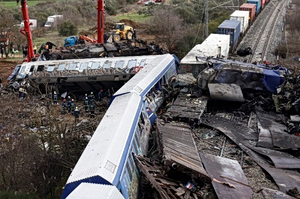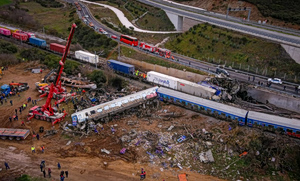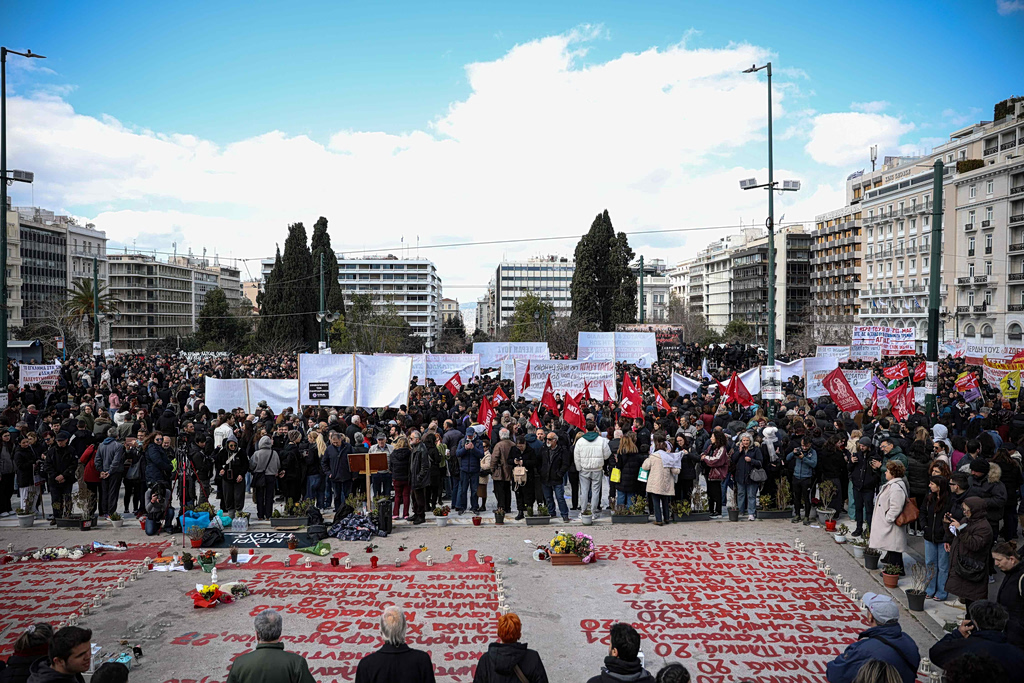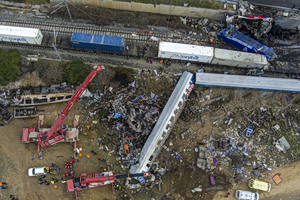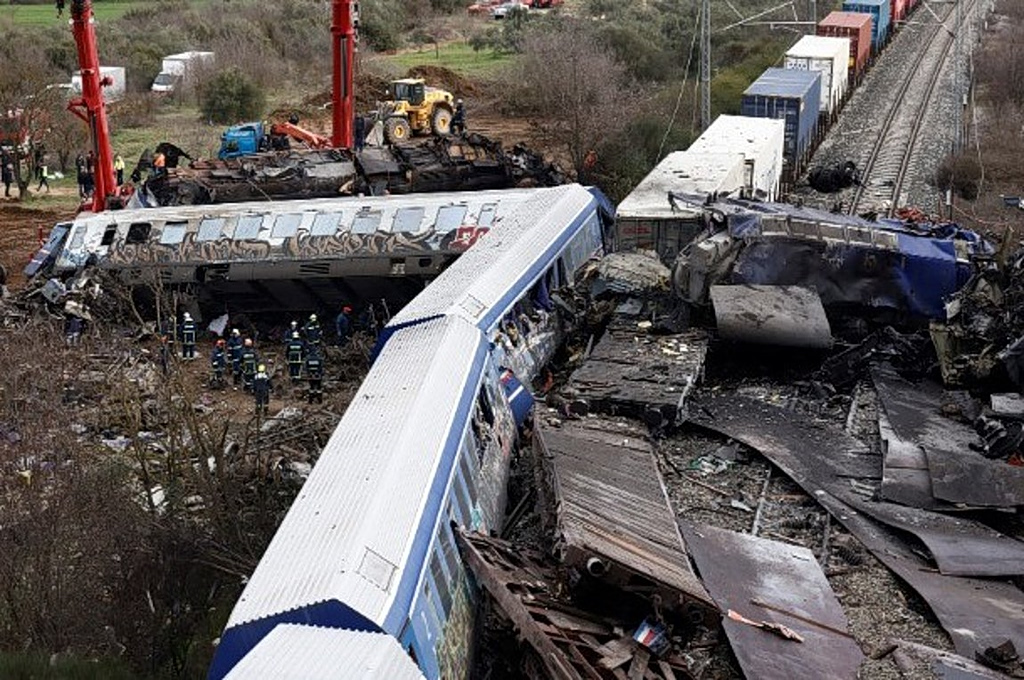
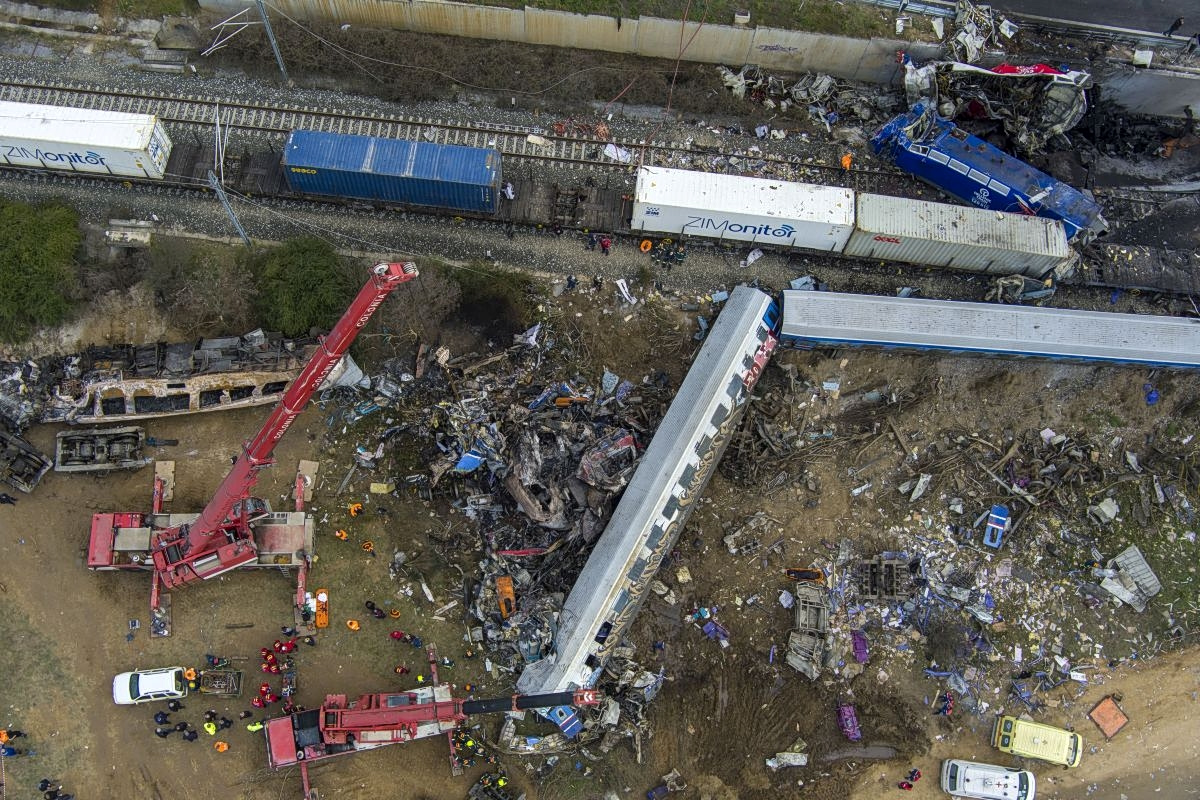
Saturday marks the three-year anniversary of the Tempi disaster, the deadliest rail accident in Greece, yet works to ensure safe railways operations on the primary Athens–Thessaloniki network are still unfinished.
At the same time, various problems plague regional lines, with several cities—mainly in central and northern Greece—remaining without rail service.
The situation is the result of decades of neglect, mismanagement and lack of funding of Greece’s paltry, by European standards, rail network. At the same time, even before the Tempi disaster, passenger traffic had been shrinking for decades. Before the sell-off of the state-owned rail operator monopoly Trainose to Italy’s FS group in 2018 by the then SYRIZA government, all rail operations in the country were state-owned and operated, with accumulated debts reaching into the billions of euros.
The state-run Hellenic Railways Organization (OSE) continues to own and manage rail traffic and infrastructure in Greece, with initial findings pointing to human error on the part of its staff at the Larissa station as responsible for placing two Hellenic Trains (as the FS subsidiary and successor to Trainose is called) on a collision course on the fateful evening of Feb. 28, 2023. Fifty-seven people died in the rail collision now known as the Tempi disaster.
According to rail workers’ union representatives, projects to ensure the proper operation of safety systems have been completed on 70%–75% of the Athens–Thessaloniki line.
“On a 100-kilometer stretch, from Lianokladi to Larissa, the works have not been completed. There is neither remote control nor signaling there. The infrastructure works carried out after the tragic Tempi accident in this area were destroyed by the floods from the storm Daniel,” Kostas Genidounias, the president of the Panhellenic (national) Union of Traction Personnel, told To Vima.
As a result, trains on this section of the railway network operate on a single track and reach speeds of only up to 80 kilometers per hour. They will continue to run this way until the three systems that suppoort safer transport are fully implemented.
Which systems are not functioning
The three systems pending on the line are remote control, signaling, and automatic braking.
Remote control (based at a train traffic monitoring center) exists across the entire Athens–Thessaloniki network, except for the section from Lianokladi to Larissa. The same applies to signaling (red, yellow, green signals and double yellow in some systems). However, the automatic braking system isn’t operational.
“For the automatic braking system to function, the other two systems—remote control and signaling—must be operating at 100%,” Genidounias explains.

Alternate Transport Minister Konstantinos Kyranakis.
What the ministry says
What wasn’t done in previous years for the railway network to ensure safe transport is now being implemented, with the Deputy Minister of Infrastructure and Transport, Konstantinos Kyranakis, pledging that by the summer of 2026 all three systems will be fully operational.
Alongside the works, retraining of train engineers is underway with the help of simulators.
Kyranakis also presented the HEPOS system (Hellenic Positioning System) last week, which is being integrated into the Greek railway system. HEPOS monitors trains in real time, tracking their exact location via satellite stations, and will be installed on all 148 trains by the end of April. “From the end of April 2026, when the system will have been installed on all 148 trains, it will be practically impossible for two trains to collide,” Kyranakis said in response to a press question.
Regional areas left without service
While intensive work continues to restore the Athens–Thessaloniki rail line, other provinces remain without service.
“Unfortunately, on regional lines in Thessaloniki, we have no trains to Serres, Florina or Drama due to the poor state of the infrastructure. After the Tempi accident, the line to Florina stops at Edessa. The railway line to Drama, after Serres, is in poor condition. The network needs a full restoration. Also, the railway connection between Thessaloniki and Alexandroupoli has been suspended since 2020. As a result, we currently have no connection to Xanthi and Komotini. As for Volos, Kalambaka and Lamia, they currently have no railway connection due to the destruction caused by Storm Daniel,” he said, adding:
“In other words, today the railway operates on the Athens–Thessaloniki line with two trains per day (two going up and two going down), on the Athens suburban line to Kiato and the (Athens) airport, and on the local routes Thessaloniki–Larissa and Larissa–Thessaloniki.”