 Μake us preferred on Google
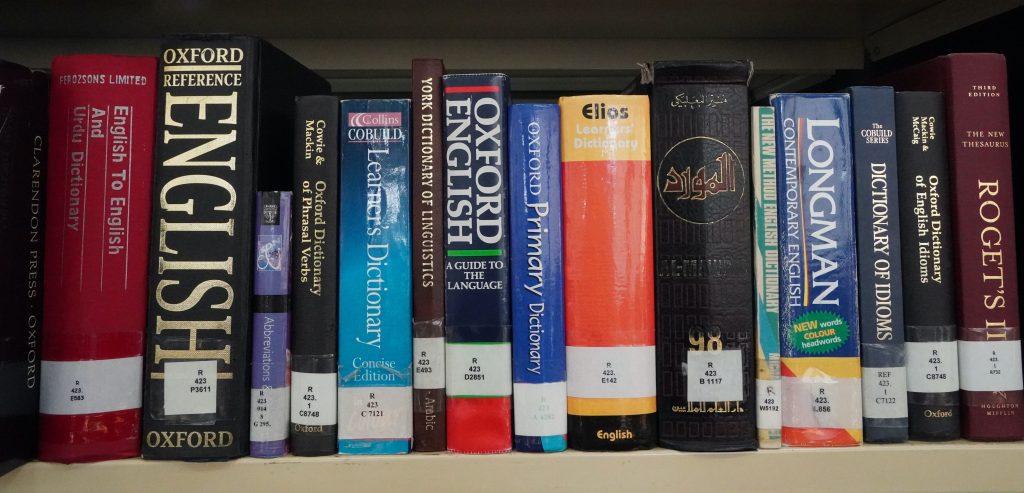
 It comes as no surprise that in 2025, artificial intelligence (AI) played a major role across social media, music, cinema, and beyond. Now, dictionaries are reflecting the trend, noting that many of the year’s most viral words are linked to AI. While some may feel oversaturated by the topic, for others the fascination only grows.
Cambridge Dictionary’s choice for 2025—“parasocial”—expands the term to include relationships not just with celebrities but with AI chatbots and digital companions.
One of the first announcements of the year came from Collins Dictionary, which selected “vibe coding” as its word of the year. The term refers to using AI tools to generate code instead of writing software manually. “When I first heard it, my initial reaction was that this is a very niche term, not widely used in most people’s everyday vocabulary,” says Gail Flanagan, a linguistics lecturer at the University of Limerick, in The Conversation.
Yet, she notes, the reaction echoes what happened in 2023 when Cambridge Dictionary chose “hallucinate”—referring to the false or absurd outputs produced by AI models. “Today, we regularly talk about the ‘hallucinatory’ qualities of AI outputs, often with a grimace of frustration at certain responses. Language can—and indeed does—change rapidly,” she explains.
Another AI-related term making waves is “slop”. This word describes low-quality AI-generated content, often error-prone and unsolicited, and was named 2025’s word of the year by Macquarie Dictionary. The Economist and Merriam-Webster also highlighted “slop,” signaling that even content that feels sloppy or off-putting is central to the adoption of this new technology.
“Clanker” has also appeared on multiple shortlists, used derogatorily to describe a source of AI content. Meanwhile, “glazing”—on Collins Dictionary’s shortlist—captures the experience of excessive, often undeserved praise, a phenomenon familiar to anyone who has asked ChatGPT for decision-making advice. Early in 2025, OpenAI even reversed a ChatGPT update due to the chatbot’s overly deferential responses.
The online world continues to feed the lexicon as well. Oxford Dictionary chose “rage bait”—social media content deliberately designed to provoke anger or negative reactions. These posts and comment threads manipulate emotions, but the very naming of the behavior reflects growing awareness—and perhaps a collective resistance—to online manipulation.
Other shortlist favorites include “memeify”, the act of turning content into memes, recognized by Cambridge Dictionary, and the basketball-inspired meme term “67”, chosen by Dictionary.com as its word of the year.
In 2025, our language is evolving alongside AI, capturing both the fascination and the frustration of living in an increasingly digital and algorithm-driven world.