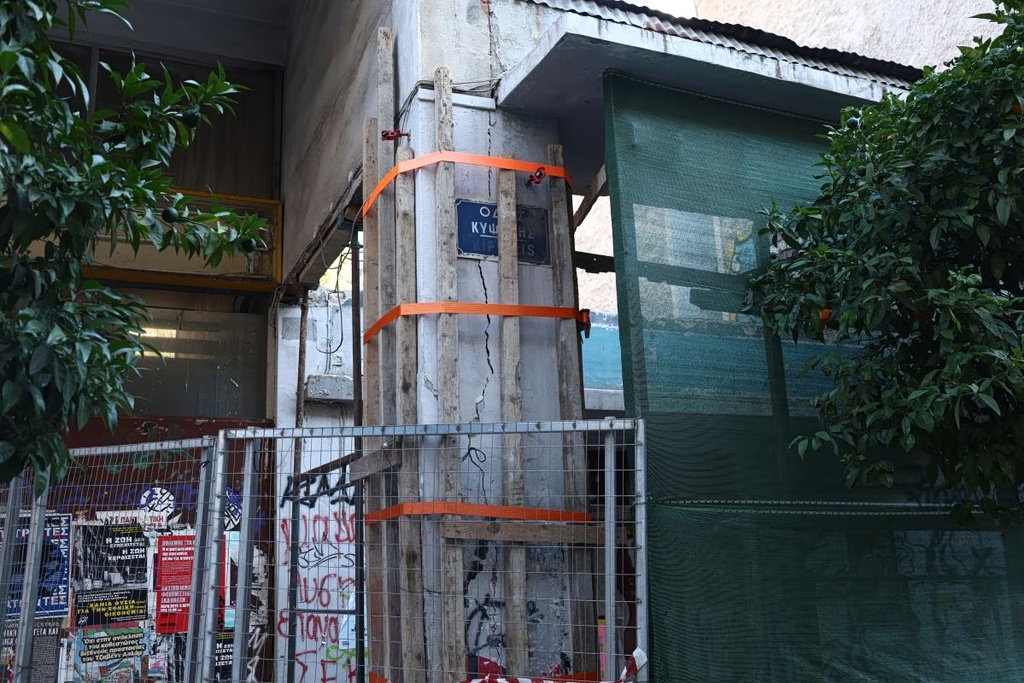
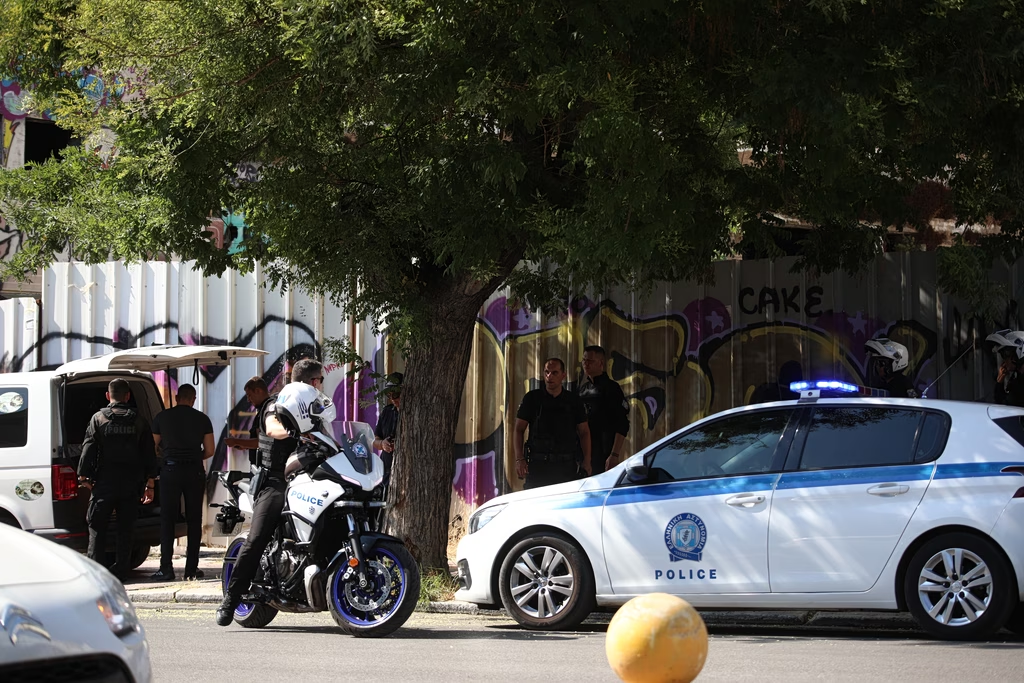
The investigation into the body found inside a suitcase in an abandoned building on Evelpidon Street, in the Athens neighborhood of Kypseli, is developing into a complex and troubling mystery.
Detectives from the Homicide Division are now trying to piece together an increasingly complicated puzzle, as new evidence suggests that the person or persons responsible may have gone to great lengths to stage the victim’s “disappearance” and buy time before the crime was discovered.
The Phone That Kept “Talking” After Her Death
One of the most puzzling aspects of the investigation centers on the 38-year-old woman’s mobile phone.
According to a report by the Daily Mail, as well as information confirmed by the Greek authorities, the phone remained active and continued transmitting a signal until the morning authorities officially announced the identification of the body.
Even more striking, text messages were reportedly sent from the 38-year-old’s phone after she had already died.
“The phone was being used. Messages were being sent, apparently to make her loved ones believe she was still alive and delay the discovery of the crime,” a Greek police officer said.
The victim’s last confirmed communication with a friend took place on July 15, just three days before the case came to light, when a homeless man discovered the suitcase at midday on Saturday, July 18.
The Black Shorts and the Role of U.S. Authorities
Identifying the victim initially proved extremely difficult because she was not carrying any travel documents, while the advanced state of decomposition complicated the forensic examination.
However, what appeared to be a minor detail ultimately proved crucial: the black shorts the woman was wearing bore the emblem of a French university.
Investigators from the Hellenic Police immediately shared that information through international law enforcement channels, and the alert reached Interpol’s office in Washington.
Because the 38-year-old had previously worked in the United States, her biometric data and fingerprints were already stored in U.S. databases.
U.S. authorities were therefore able to officially confirm that the victim was 38-year-old Scottish national Elizabeth Jane Ross, born in February 1988, who had traveled to Athens via Edinburgh.
The Key Questions and the “Missing” 24 Hours
Now that the victim has been identified, investigators have shifted their focus to the final days and hours of her life.
Authorities estimate that she died five to seven days before her body was discovered. During the initial external examination, forensic experts found no obvious injuries or signs of a struggle.
The exact cause of death is expected to be determined by toxicology tests.
Meanwhile, investigators are examining:
- Airline records, to determine whether the 38-year-old traveled alone or was accompanied by another person.
- Her accommodation and contacts, as she is believed to have been staying at the home of a friend in central Athens.
- The movements of potential suspects, with investigators analyzing mobile phone tower data to reconstruct the route taken by the victim’s phone after the crime.
The British Embassy in Athens and the victim’s family have already been informed of the latest developments. Greek authorities are also working closely with their British counterparts to obtain statements from her relatives.