
 Μake us preferred on Google
Donald Trump has not achieved the goals set out when he and Benjamin Netanyahu launched the Iran war eight months ago. The Islamic republic remains in control of the country; it has not made commitments on its nuclear programme; and its missiles and drones can still strike US assets and allies.
Now, in the final days of a US midterm election campaign driven by voter frustration over high energy and commodity prices stemming from the war, Trump and the Israeli prime minister are threatening to bomb Iran again.
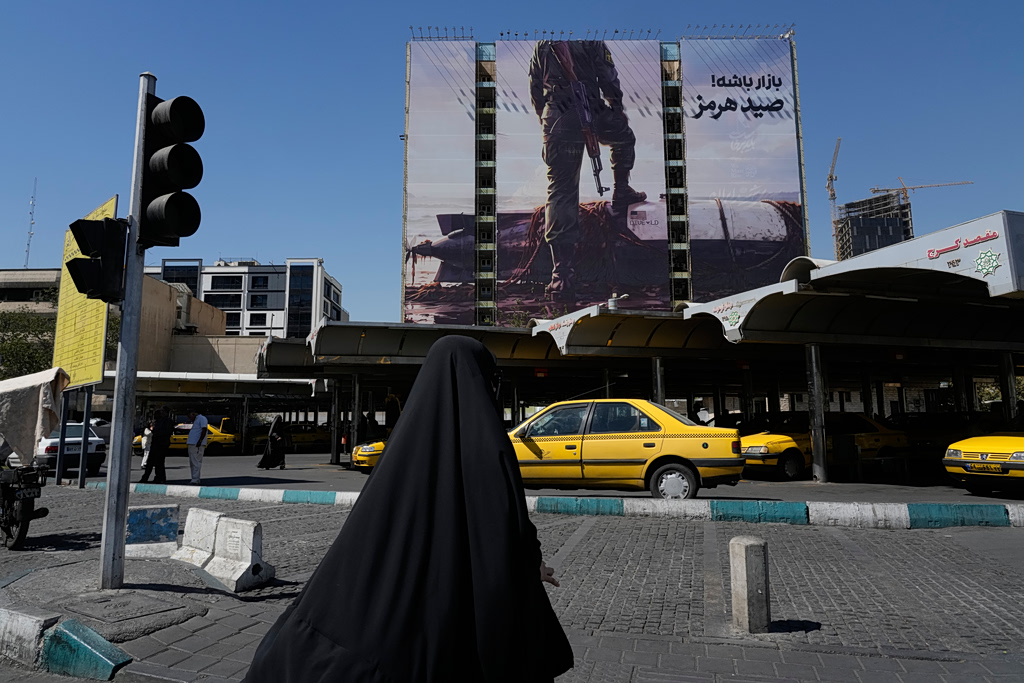
A woman walks past a billboard depicting a member of Iran’s Revolutionary Guard placing his foot on a U.S. unmanned underwater vehicle that Iran claimed to have seized in the Strait of Hormuz at a square in northern Tehran, Iran, Wednesday, Sept. 23, 2026. The writing in Farsi reads: “Hope business is good!”, “Hormuz catch.” (AP Photo/Vahid Salemi)
“I have a decision to make,” the US president said on Fox News this week. “Do I finish it off, which would be very easy to do, or do I make a deal?”
But despite mounting expectation from Washington to Tehran that Trump and Netanyahu will restart strikes, former US military leaders and defence analysts say there would be nothing “easy” about such a campaign. The threats have sparked frantic regional diplomacy over fears that Iran would retaliate in the Gulf and beyond.
“Only the president knows what he’s thinking,” Trump’s former defence secretary Mark Esper told the FT. “The administration needs to articulate a clear set of objectives that they want to achieve in this next phase, and a credible strategy to achieve them.”
Any assault on Iran could range in length, scope and ambition. Israel has pushed for days of heavy bombardment. Trump last week said he was weighing “another little Epic Fury”, referring to the weeks-long offensive that started the war in February. But the president is constrained, partly, by resources.

A bird flies low over the water as cargo ships lie at anchor in the Strait of Hormuz off Bandar Abbas, Iran, early Saturday, Oct. 24, 2026. (Amirhosein Khorgooi/ISNA via AP)
Joseph Votel, a former commander of US Central Command (Centcom), which oversees Washington’s military operations in the Middle East, said a more limited option would be “expanded maritime strikes”.
“These would be strikes on coastal radars, anti-ship missile launchers, drone sites, small boat bases, things like that,” Votel said: a “mowing-the-lawn” exercise to counter Iranian attacks on commercial shipping through the Strait of Hormuz.
This “probably carries a relatively low escalation risk because we’ve done a lot of this”, he said. But Iran could also “probably rebuild” fairly quickly.
However, Trump and Netanyahu have made clear they are considering more ambitious alternatives. Though the president already claims to have “obliterated” Tehran’s nuclear programme with strikes on the three main sites during the 12-day war against Iran in June 2025, the US could launch new attacks on nuclear targets.
With Iran’s stockpile of highly enriched uranium believed to be buried under the rubble of the previous US bombardment, Trump has suggested the most likely target would be Pickaxe Mountain, the site of a deeply buried facility that has not been attacked.
Trump in October threatened to deploy the most powerful non-nuclear bomb in the US arsenal, known as the massive ordnance air blast bomb — or the “mother of all bombs” — against the underground facility.
But the MOAB, which weighs 21,000 pounds and is too large to fit on traditional bombers, would have to be dropped from the hold of a slow-moving C-130 cargo plane, which would be risky to fly deep into Iran.
The US had used a different weapon — the massive ordnance penetrator, or Mop — in previous strikes on the underground nuclear facilities of Natanz and Fordow because of its ability to tunnel through rock and concrete shelters, analysts said.
David Albright, a physicist and a nuclear weapons expert who heads the Washington-based Institute for Science and International Security, said the US and Israel likely know far less about the state of Iran’s nuclear programme than they did in 2025.
However, he said there was likely “a whole category of facilities and people that Israel and the United States would know about, but that haven’t surfaced publicly”. Several weaponisation facilities were not known publicly until Israel attacked them, he added. “I expect some more surprises.”
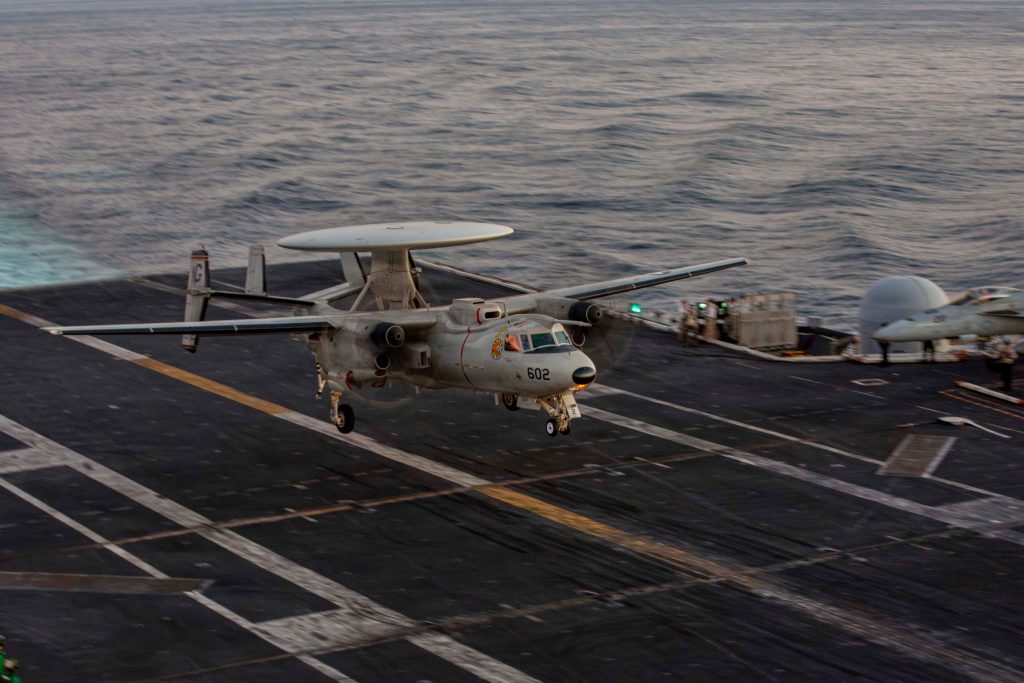
This image provided by U.S. Central Command shows a An E-2D Hawkeye preparing to make an arrested landing on the USS Abraham Lincoln (CVN 72) in support of Operation Epic Fury, on Saturday, Feb. 28, 2026. (U.S. Navy via AP)
A more expansive option would involve a multi-day campaign with targets ranging from Pickaxe Mountain, assassinations of Revolutionary Guard commanders and reconstituted drone and missile capabilities to civilian infrastructure such as factories, oil refineries and power plants, defence analysts say.
Netanyahu had prepared such a bombing campaign last month, the FT reported, but did not proceed because of opposition from Trump. Israeli officials recently presented US defence secretary Pete Hegseth with an updated list of Iranian targets that they said was based on new intelligence.
The objective of broader targeting “would be to put more pressure” on the regime to accede to Trump’s demands, said Votel, the former Centcom commander, who sees this option as the most likely.
Publicly, Netanyahu has called for a joint military offensive devastating enough to cause the Iranian regime’s collapse. Military analysts are doubtful that another air campaign could accomplish that goal, however.
Jonathan Schanzer, Middle East expert at the Foundation for Defense of Democracies, a think-tank that is hawkish on Iran, said: “This regime has proven to be resilient. It has taken a beating, but it is still somehow hanging on, despite all the economic pressure and the military pressure.” It’s “unclear” what kind of strategy would change that, he said.
Centcom declined to comment on potential strike plans. The White House declined to comment on war options presented to Trump by his top military brass. “We do not comment on sensitive military plans that may or may not exist,” a senior administration official said. “It is the job of the Pentagon to prepare options for the Commander-in-Chief, who has all options on the table to ensure that Iran can never have a nuclear weapon.”
A more expansive campaign carries far more risk to the US and its allies. The need for manned aircraft to hit certain targets would heighten risks to US pilots, analysts say.
The US military has lost or suffered damage to 81 aircraft since the war began, including some that crashed after coming under Iranian fire, according to the Congressional Research Service. Twenty-one US military personnel have been killed in the war.
Iranian authorities have warned that any renewed campaign would lead to an unprecedented response, which could include targeting seabed cables in the strait and data centres.
The regime has also indicated it could strike bases in Europe used by US forces, including one in Bulgaria, raising the prospect of a direct Iranian attack on a European country for the first time.
Mohsen Rezaei, Iran’s top security official, has threatened in recent weeks to deploy “new operational plans”, open “new fronts” and deliver “bigger surprises” that the US and Israel have not seen in the conflict.
Iran in September claimed the regime tested a new missile in the Sea of Oman. According to Tehran’s military, the missile was a Qassem Basir, unveiled in 2025 with a 1,200km range and a manoeuvrable warhead with an electro-optical seeker. The US military said its warships evaded multiple ballistic missile attacks by the regime in September.
Danny Citrinowicz, Iran expert at Israel’s Institute for National Security Studies, said US and Israeli targeting of the Islamic republic’s critical infrastructure, in particular, would “fundamentally change the nature of the war, dramatically increase the likelihood of Iranian retaliation against similar infrastructure across the Gulf, and make an already dangerous conflict far more difficult to contain”.
Strikes that deprive Iran’s population of basic services are likely to have severe humanitarian consequences for a population already reeling from international sanctions and a US naval blockade.
“If you went after the refineries . . . then they don’t have fricking gas to put in cars,” said Robert Harward, a retired Navy vice-admiral who served as deputy Centcom commander. This would “really just bring the country to its knees without having to go after military targets”, he added.
But experts say that, while this would exacerbate pressure on the regime, it also carries a significant chance of backfiring.
It would almost certainly prompt a “like-for-like” attack on Gulf energy infrastructure, worsening the global energy crisis and driving fuel prices higher, said Lynette Nusbacher, a former senior adviser on security to the British government. She added that the US “has no realistic options that would rob Iran of the ability to launch ballistic missiles and drones”.
Votel said it could also trigger renewed attacks on US targets by Iran-backed Iraqi militias and escalate attacks by Yemen’s Houthi militants on Saudi Arabia and shipping through the Red Sea.
US officials, analysts and defence industry professionals add that the US has badly depleted its stockpiles of certain critical munitions — particularly the interceptors used to defend against incoming Iranian drones and missiles — and that these are difficult to replenish.
Esper, the former US defence secretary, said: “If a new campaign is initiated, we should expect asymmetrical responses by Iran, including drone and missile attacks against military and civilian infrastructure in the region.”
“An important question is whether our partners have the interceptor inventories needed to defend against these attacks over an extended period,” he added.
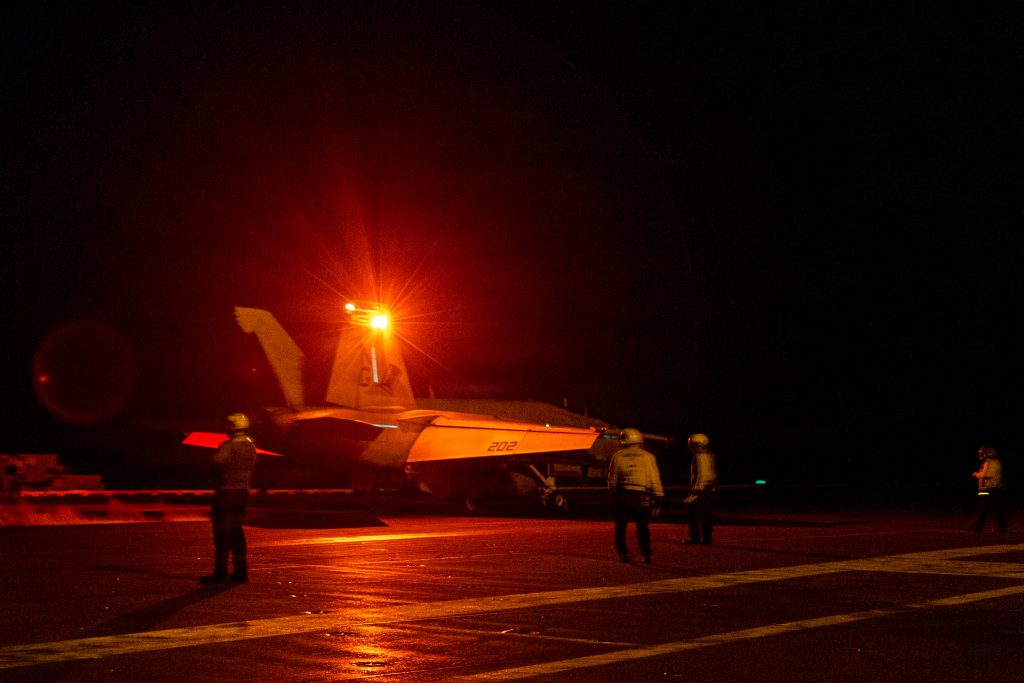
This image provided by U.S. Central Command shows a F/A-18E Super Hornet aircraft launching from the USS Abraham Lincoln (CVN 72) in support of Operation Epic Fury, on Sunday, March 1, 2026. (U.S. Navy via AP)
A July report by the Washington-based Center for Strategic and International Studies estimated US inventories of Patriot interceptors had fallen below 1,000 from a prewar stockpile of 2,330, while stocks of the more sophisticated Thaad interceptors stood at less than 280, down from 452 before the war.
Mark Cancian, co-author of the CSIS study, said the totals had not changed appreciably since then. He added that long-range, ground-attack missiles such as Tomahawks and the new Precision Strike Missile were heavily used in the conflict and replenishing them would take one to five years.
The Pentagon is particularly concerned about having enough for any potential conflict with China, Cancian said. He added that substituting long-range weapons with short- or medium-range missiles and bombs would involve greater risk because they would need to get close to targets.
Democratic Congress member Jason Crow, an Army veteran who sits on the House intelligence committee, said Trump has fallen for the old military adage that “we just got to solve this by escalation”.
The thinking that one more “sortie of air strikes and we’ll get it done” is deeply flawed, Crow said. “That’s what led us to 25 years and over $3tn in Iraq and Afghanistan.”
Copyright The Financial Times Limited 2026
© 2026 The Financial Times Ltd. All rights reserved. Please do not copy and paste FT articles and redistribute by email or post to the web.