 Μake us preferred on Google
Regardless of the image the government sought to project publicly, the reality is that the ratification of the Turkish-Libyan memorandum by Libya’s House of Representatives in Benghazi caused considerable alarm within the Greek government.
Its first line of defense was to play down the development, arguing that the agreement remained null and void, illegal and lacking international standing. Confirmation of Turkey’s position, however, and recognition of Greece’s limited influence in Libya, combined with the perception that the balance of power in the eastern Mediterranean was shifting, prompted Athens to respond more forcefully.
The reactions and the map at the UN
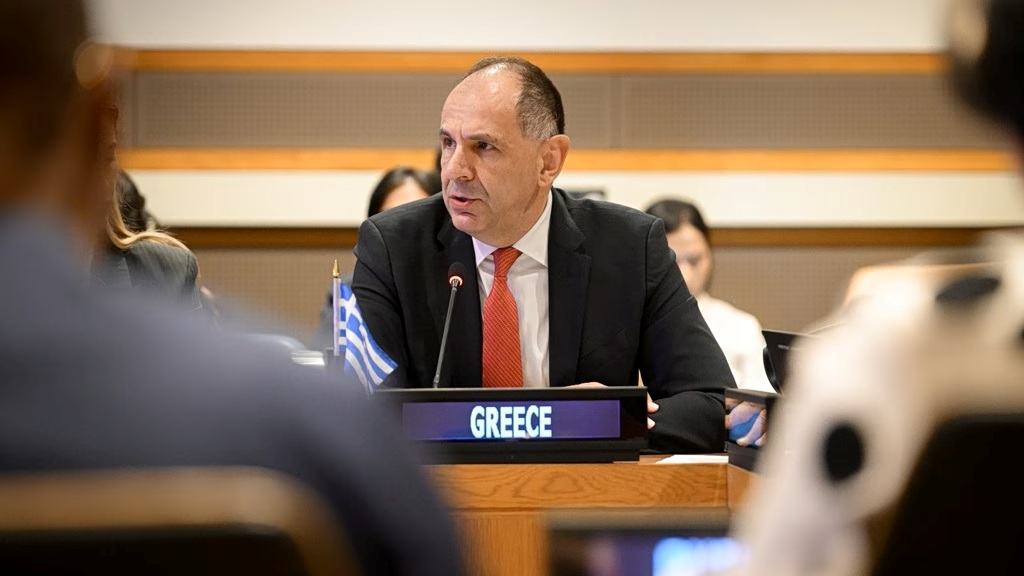
Within a short period, following initiatives by Foreign Minister George Gerapetritis, the main players in the eastern Mediterranean whose interests were affected — including the European Union, major Arab states and, ultimately, Washington — again condemned the memorandum.
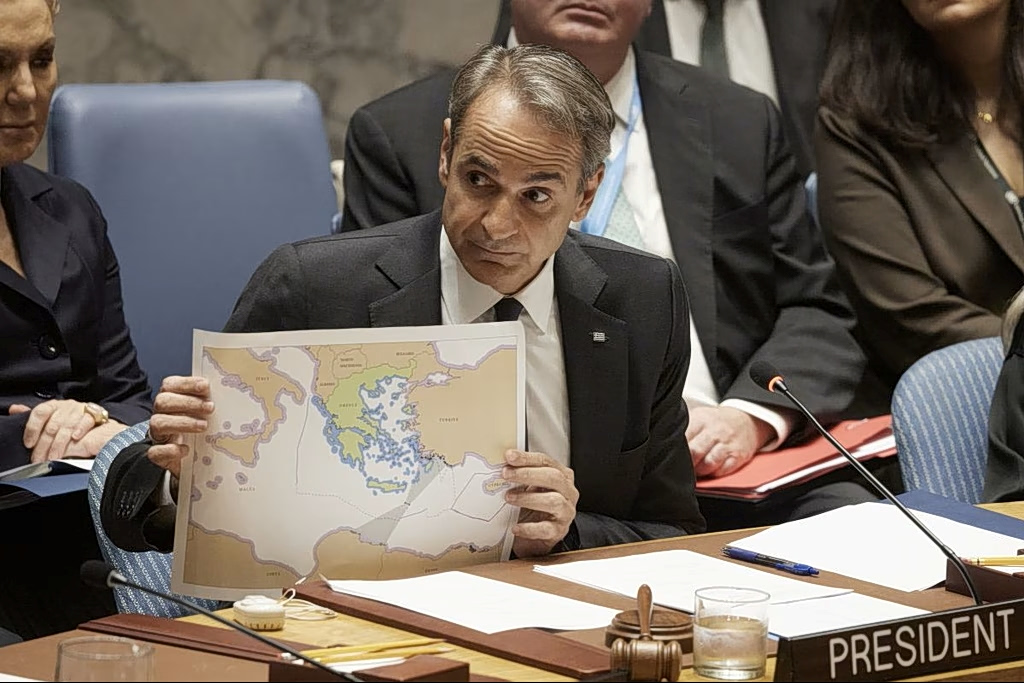
Greek Prime Minister Kyriakos Mitsotakis holds up a map illustrating Greece’s maritime claims during a meeting of the United Nations Security Council in New York on Oct. 29, 2026. Handout / Prime Minister’s Office
The culmination was Prime Minister Kyriakos Mitsotakis’ decision to bring Turkey’s provocative actions before the United Nations Security Council, the principal international body responsible for maintaining international peace and security. Mitsotakis presented a map illustrating Ankara’s revisionist positions in their entirety.
“Geography cannot be rewritten. Sovereign rights cannot be erased by drawing arbitrary lines,” he said.
Meanwhile, Greece and Egypt are advancing discussions on extending the geographical scope of their agreement delimiting their exclusive economic zones (EEZs). Across the Aegean, the Turkish government is facing criticism from the opposition over what it describes as an inadequate foreign policy in the eastern Mediterranean.
“The ratification of the memorandum by the House of Representatives adds absolutely no substantive value. That is why Erdogan and Fidan are being targeted: because, in the end, everyone except Libya turned against Turkey,” a senior diplomatic source said.
In Athens, officials may claim to have “turned the game around,” but they know that everything, including the Turkish-Libyan memorandum, will ultimately be decided on the ground. Both the expected resumption of surveys for the electricity interconnection cable and, above all, the planned operations by US energy giant Chevron south of Crete have become strategically vital undertakings for Greece’s position in the eastern Mediterranean.
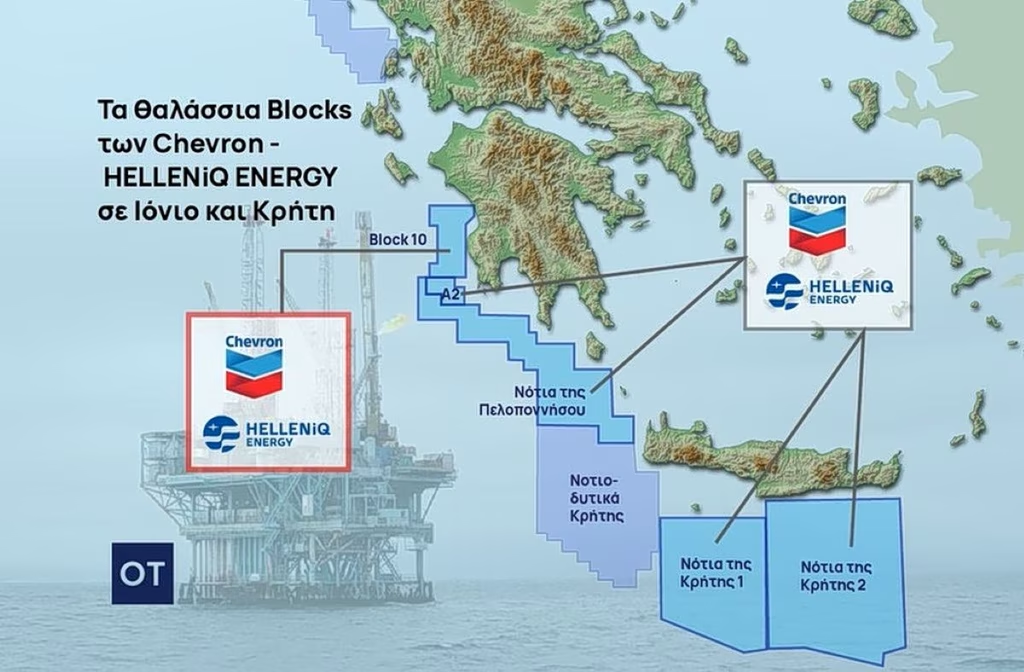
According to corroborated information, Chevron is expected to begin seismic surveys around mid-December in the Ionian Sea, south of the Peloponnese and in the disputed offshore blocks known as Crete-1 and Crete-2. The surveys will be conducted by a single vessel expected to move from west to east.
Since parts of the two blocks, which the vessel is expected to approach in early 2027, fall within the area claimed under the Turkish-Libyan memorandum, the government believes Chevron’s presence would provide the strongest possible affirmation of Greece’s sovereign rights and of the principles governing maritime delimitation under the law of the sea.
“Chevron’s arrival is of decisive importance. It is the strongest blow against the memorandum,” a senior government official said.
Although the activities of private companies do not establish or confirm sovereignty or sovereign rights, it is worth recalling that Turkey and Libya worked systematically together to prevent Chevron from participating in the tender for exploration rights south of Crete.
In two diplomatic notes issued in May and July 2025, the Libyan side used long-standing Turkish arguments to challenge the Greek median line and present its own approach to EEZ delimitation. Under that interpretation, more than 80% of the area covered by Crete-1 and Crete-2 falls within Libyan jurisdiction. Libya also rejected Greece’s right to invite bids for exploration and exploitation in the specific areas.
Libya’s two faces
The campaign to intimidate Chevron, orchestrated by Ankara, initially failed. Since then, however, the US company has signed a memorandum of understanding with Libya’s National Oil Corporation (NOC), in January this year, and a contract for Chevron exploration in offshore areas was reportedly signed in August. Libya’s offshore blocks have been delineated south of the Greek median line.
“The Libyans observe international law when delineating their own blocks precisely to avoid a confrontation, while doing the exact opposite with Crete-1 and Crete-2. In other words, together with the Turks, they are seeking to drive Chevron out of Greece,” a source familiar with the issue said.
The source also disclosed that Chevron had shown NOC executives a map of the Greek exploration blocks to ensure that all parties were aware of its activities.
Officials at the foreign and environment ministries expect the seismic surveys to proceed as scheduled. Industry executives, however, have expressed understandable concerns. US companies are uncomfortable when their projects become the focus of public attention, particularly when they are drawn into disputes between states, as could happen with the planned operations south of Crete.
What is becoming clear is that Turkey is once again making an assertive effort to impose its revisionist agenda in the eastern Mediterranean, seeking to restrict Greece’s sovereign rights to a limit of six nautical miles.
Against this backdrop, one possible compromise would be to begin seismic surveys in the northern sections of the two blocks, closer to the coast of Crete, where no unlawful Turkish claims have been asserted. Such a move would, however, limit the collection of scientific data and consequently reduce the project’s chances of success.
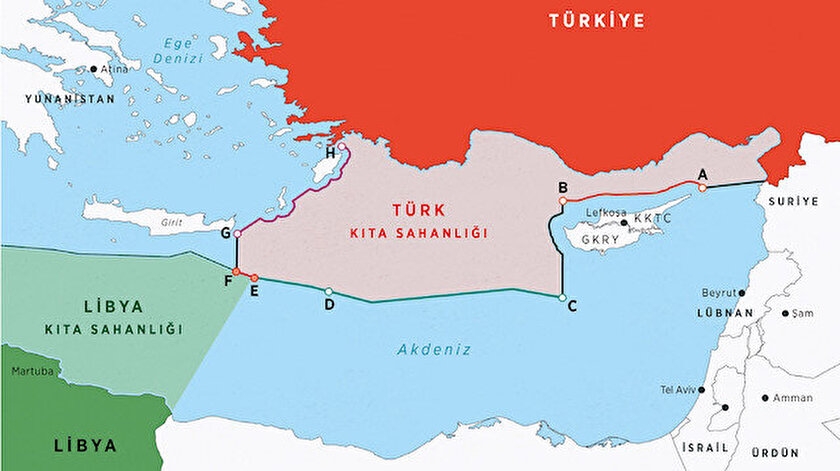
A map showing delimitated exclusive economic zones (EEZs) between Turkey and the provisional government in Tripoli, which Athens and the EU consider as baseless and illegal.
The cable and a ‘modus vivendi’
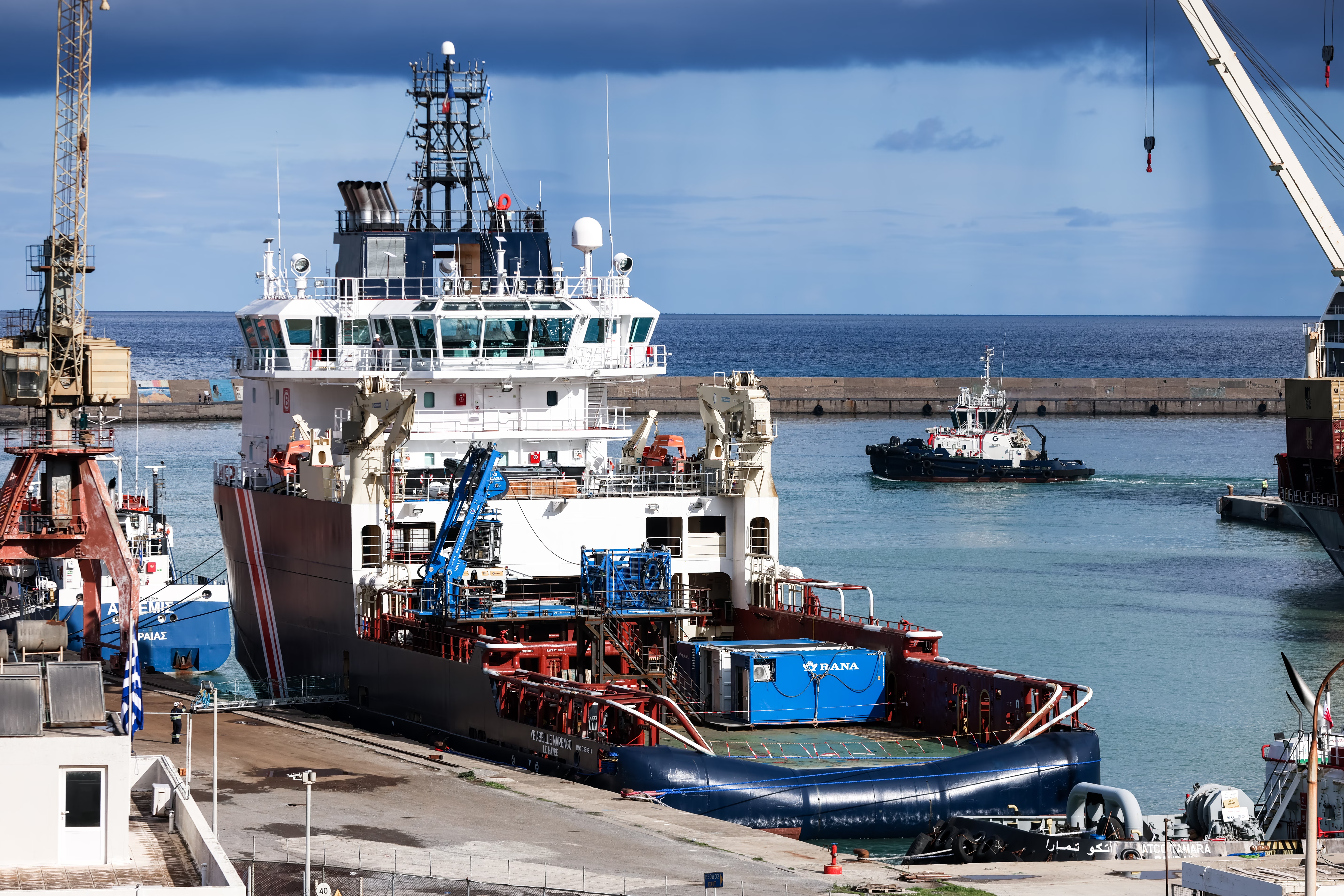
Before Chevron arrives off Crete, surveys for the Greece-Cyprus electricity interconnection cable must resume. Some of the planned work concerns areas covered by the Turkish-Libyan memorandum, as well as waters that Ankara claims fall within the Turkish continental shelf.
Diplomatic efforts involving France, Turkey and Greece to establish a modus vivendi — a way of coexisting — rather than a “compromise” are continuing, including communication between French President Emmanuel Macron and Turkish President Recep Tayyip Erdogan.
Diplomatic sources have denied reports that the issuance of a NAVTEX notice has been delayed, pointing instead to the administrative process. The competent interministerial committee is expected to meet in the coming days, after which the authorization decision will be forwarded to the Ministry of National Defense so that the notice can be issued.
What cannot be overlooked, however, is the hardening of Turkey’s position. In a clarifying statement early last week, Turkish Foreign Minister Hakan Fidan reiterated that Ankara’s positions had not changed.
Indeed, official statements by Turkish government representatives make clear that Ankara has said the French vessel’s surveys can proceed unhindered only if there is “coordination” and the activities are “authorized.”
Although this may appear to be a game of words, Turkey is seeking more than simple notification. Ankara wants to establish that no energy project in the eastern Mediterranean can be completed without its “permission or approval.”
This is the context in which Fidan’s concluding statement should be understood: “We will continue to protect our legitimate rights in the Aegean and the eastern Mediterranean without making any concessions.”
The coming days will show whether Ankara would accept notification by the French company to all coastal states, allowing the dispute with Greece to remain confined to the familiar “war” of NAVTEX notices, through which both sides would set out their established positions on sovereign rights and jurisdiction.
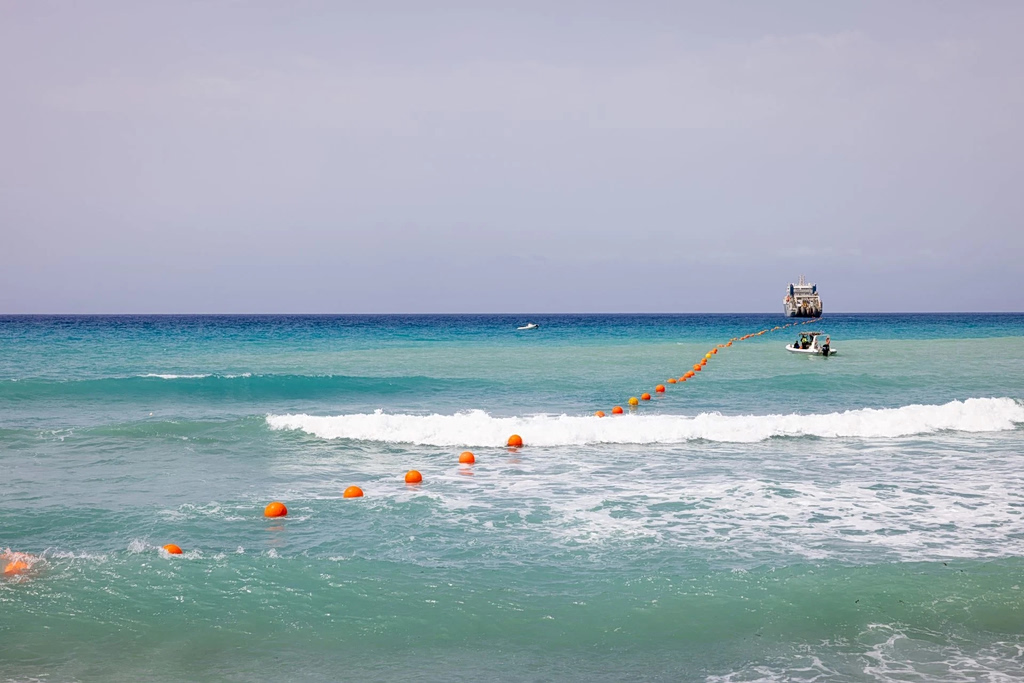
Otherwise, Greek authorities could face the militarization of the area, as happened near Kasos in July 2024.
Finally, the irritation in Ankara warrants attention. It reflects both the internationalization of Turkey’s provocative actions and the failure of Turkish diplomacy to entice Egypt with what Greece regards as an unlawful, overly generous EEZ delimitation agreement.
On several occasions in the recent past, Turkey has sought to recover lost diplomatic ground by shifting the confrontation from diplomacy to action on the ground.