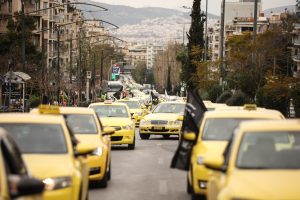
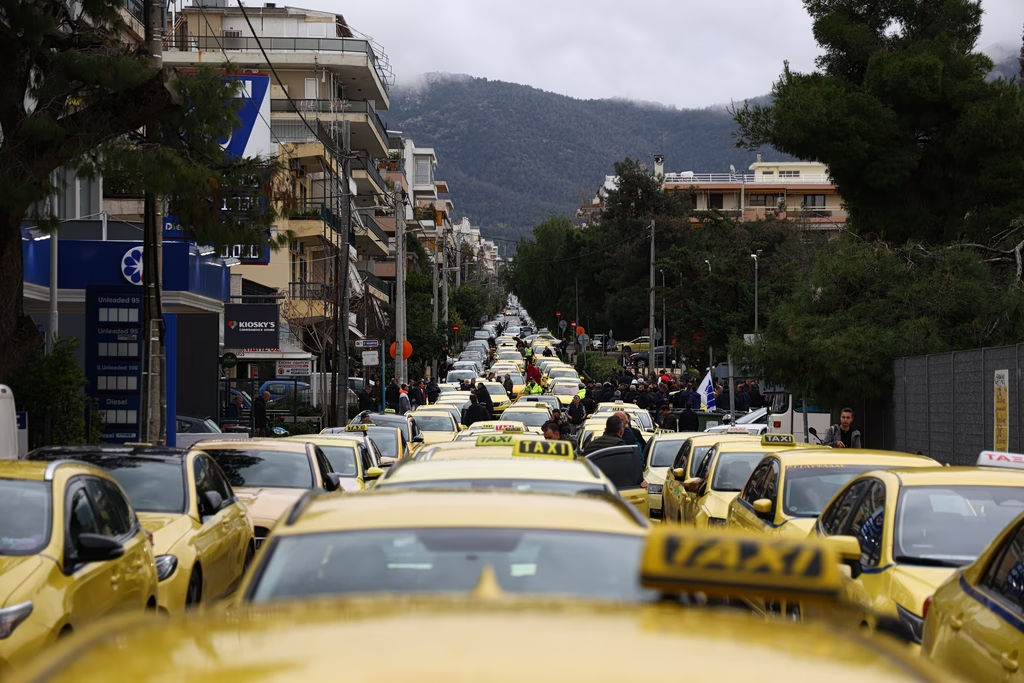
A fresh surge in fuel prices is putting Greece’s road passenger transport sector under severe pressure, with taxi and bus operators calling on the government for additional measures.
Transport operators say they have exhausted their ability to absorb repeated cost increases and are warning of either new fare hikes or even cuts to scheduled services.
Just days after a decision adjusting certain taxi charges was published in the Government Gazette, and before taxi meters have even been updated, the Panhellenic Federation of Taxi Owners (POEIATA) is back with a call for further increases.
In a letter to the prime minister, the federation is seeking an average 12% increase across the entire fare structure nationwide. It argues that the government’s recent intervention applies to only a limited number of services and does not offset the rise in operating costs from fuel, spare parts, tires, lubricants, repairs, maintenance and insurance.
Under the new pricing structure, the basic fare and the €4 minimum charge remain unchanged. The increases focus on airport trips and time-based charges. In Athens, the fixed fare for trips between the airport and the city center will rise from €40 to €50 under the single tariff and from €55 to €65 under the double tariff. In Thessaloniki, the corresponding fares to and from Makedonia Airport will rise to €28 and €38, from €25 and €35 respectively.
The time-based charge will increase from €15 to €20 per hour, while the maximum amount that can be freely agreed for time-based billing will rise from €25 to €40.
POEIATA points out, however, that the changes mainly benefit drivers operating in major urban centers and serving airport routes. By contrast, a large share of taxis in regional areas is effectively left out, as the higher time-based charge mainly applies during heavy traffic congestion or lengthy waiting periods.
The federation is renewing its proposal for a permanent and objective mechanism for adjusting fares, linked to changes in operating costs.
Double demand
At the same time, the pressure is spreading to the intercity public transport bus service (KTEL). The Panhellenic Federation of Urban Public Transport (POAS) is seeking €5 million in emergency financial support to ensure the uninterrupted operation of urban bus services. The request concerns 1,022 buses providing urban transportation through Urban KTEL companies and other KTEL operators across the country.
According to POAS, the companies have absorbed successive increases in operating and maintenance costs for more than a decade. However, the latest rise in diesel prices is placing even greater pressure on already stretched budgets.
A similar request for support has been submitted by the Panhellenic Federation of Urban and Intercity Transport (POAUS), which is warning that services could even be reduced or suspended. It says the price of diesel has exceeded €2.17 per liter, with even higher costs in island and mountainous areas.
According to POAUS, many KTEL shareholders, most of whom are self-employed drivers, now say they are unable to absorb the additional costs. The sector has a total of 4,597 buses and more than 20,000 employees, with the federations directly linking the financial viability of the businesses to the preservation of jobs.
It should be noted, however, that over a period of two years, KTEL fares have been increased twice, by a total of approximately 19%.