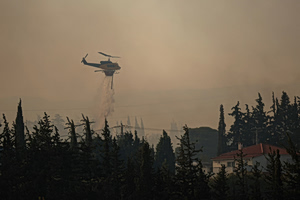
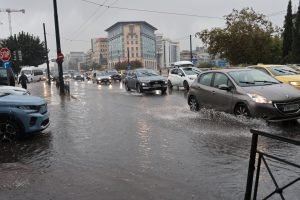
Summers in southeastern Europe are growing longer and more oppressive with each passing year. In cities, coastal areas, and rural and forested regions alike, heat lingers further into the calendar and reshapes the rhythms of everyday life. This summer is not expected to be any different. Scientific models for the region indicate a trend toward sustained above-normal temperatures, driven by ocean warming and global climate mechanisms such as El Nino, which may be amplifying the worldwide thermal anomaly.
A steady, year-round rise in temperatures has been observed in recent years. “The Mediterranean is a place where the sun doesn’t merely shine; it shapes the climate, life, and culture. But that light has begun to burn in ways we can no longer manage. Since the summer of 2023, the planet has exceeded the 1.5 degrees Celsius threshold above pre-industrial levels, the target set in the Paris Agreement,” said Christos Zerefos, head of the Research Center for Atmospheric Physics and Climatology at the Academy of Athens.
And Greece, he emphasized, is not merely a bystander to this shift. “Our country is one of the most exposed points on the planet, one of the global hot spots where warming hits the hardest and always strikes first at the most vulnerable: the elderly, young children, those with chronic conditions, and those who cannot afford to retreat into a cool room,” he told the paper.
Researchers at the Academy of Athens and faculty from the Athens University of Economics and Business, working under the Climate Change Impacts Study Committee of the Bank of Greece, analyzed daily mortality data from all 13 of the country’s regions over 23 years (1999-2021). Their findings are clear. “Every 1 degree Celsius increase in maximum temperature corresponds to roughly a 2% rise in excess mortality from natural causes and around 1.9% from cardiovascular disease. Death lags by two days, as if the heatwave tallies its victims at its own pace,” said Zerefos, who is also Secretary General of the Academy of Athens, noting that the Attica region shows the highest sensitivity.
He also issued a stark warning: “If this trajectory does not change, by 2040 every summer is expected to cost between 1,400 and 2,000 additional human lives, a loss estimated at 5 to 8 billion euros based on the European statistical value of a life. Nature speaks in numbers. We are obligated to listen.”
The “Inferno” of Attica
Equally alarming are the findings from the third edition of the Lancet Countdown report, recently published, which documents shifts in public health, social cohesion, and the economy linked to the climate crisis across 55 countries in the European region.
The report places nearly all of Greece among the European zones with the greatest increase in heat-related mortality. Across most of the country, more than 120 additional deaths per million inhabitants per year were recorded during the period 2015-2024, compared to the decade 1991-2000. Attica is particularly hard hit. Across most of the region, the figure stands at 100 to 109 additional deaths, forming a geographic arc that wraps around the central part of the prefecture, extending from the southwestern borders with Corinthia northward through the suburbs and continuing into Eastern and Southeastern Attica. The remaining central portion, bounded by the coastal stretch from Megara to Voula and extending northward to the Marousi area, falls into the highest category, with more than 120 deaths.
The picture is equally concerning in Crete. The regional unit of Lasithi falls into the highest mortality category, with more than 120 deaths per million inhabitants, while Chania shows an increase of 110 to 119. Heraklion records 70 to 79 additional deaths and Rethymno 50 to 59. The Euboea region records 100 to 109, and Evrytania 90 to 99.
Across Europe more broadly, the Lancet report shows that 62,775 deaths were attributed to heat in 2024, with projections indicating a significant increase by 2050. Heat-related mortality rose in nearly all regions studied, with the largest increases in Southern and Southeastern Europe. It is no coincidence that heat warnings have more than quadrupled in recent years.
Drought
The report also documents worsening drought conditions. In Greece, Lasithi experiences up to 2.5 months of extreme drought per year, while other parts of Crete also record elevated drought periods, up to two months in Heraklion and Rethymno and one month in Chania. Elevated drought is also seen in the Peloponnese, up to one month in Arcadia and half a month in Argolis, and in the Evros region, up to 15 days.
Overall, during the decade 2015-2024, 936 out of 1,435 European regions experienced summer drought of extreme or exceptional intensity, while 983 recorded longer drought durations compared to the 1981-2010 baseline.
The consequences extend to the workplace as well. Attica is among the European regions with the highest number of working hours lost to heat stress. The rise in average annual temperatures is estimated to have reduced the labor supply by approximately 24 hours per worker per year in Europe during the period 2000-2023, compared to 1965-1994. The steepest declines in work activity were recorded in Athens, the Canary Islands, and Cyprus. Across Europe as a whole, the number of hours during which heat exposure made even light or moderate physical activity unsafe rose to an average of 60 per year, an increase of 88%.
Climate change has also accelerated the spread of mosquito-borne infectious diseases. In Europe, dengue fever transmission increased by 297% during the period 2015-2024 compared to 1981-2010, and by 74% in Southern Europe specifically. As for West Nile virus, 1,112 cases were recorded in 2025, above the average for the previous decade. In Southern Europe, the risk of epidemics rose by 127%. Similar trends are being observed for chikungunya and Zika, both also transmitted by mosquitoes.
Even more troubling is the unequal distribution of these impacts. Low-income households face greater risk of food insecurity due to heat waves and drought, while outdoor workers are more exposed to heat stress. Poorer communities are more frequently affected by wildfires and have less access to green space. Researchers stress that coordinated action and increased funding are urgently needed to adapt healthcare systems to the realities of the climate crisis.
They also highlight the pressing need for a transition to a carbon-neutral economy, while noting a troubling paradox: at the same time that renewable energy use is growing, fossil fuel subsidies surged sharply in 2023 and 2024 in response to the energy crisis triggered by the war in Ukraine and ongoing geopolitical instability. In 2023 alone, net fossil fuel subsidies exceeded 10% of national health spending in 12 European countries and surpassed entire health budgets in four of them.