Greece’s wildfire season is off to a troubling start, with Western Attica emerging as the country’s most fire-prone zone and authorities warning that human activity is behind the overwhelming majority of incidents.
Of the approximately 2,880 fires recorded across Greece since the beginning of the year, 710 have broken out in Western Attica, the broader area encompassing Megara, Aspropyrgos and Elefsina, west of Athens. Local officials and the fire service have both raised the alarm.
In Aspropyrgos, a fire that broke out in a low-vegetation area was brought under control quickly, but early assessments indicated it started in a site littered with tires, waste and bulky discarded items. Aspropyrgos Mayor Giannis Ilias, speaking to public broadcaster ERTnews, described a recurring pattern of uncontrolled illegal dumping that has steadily changed the character of the area. “Every year we spend over one million euros cleaning up the area,” he said, adding that waste reappears despite repeated interventions. He called for stronger policing, noting that multiple arson incidents are being recorded in the area on a daily basis.
Kostas Tsigas, president of the Union of Fire Service Officers, confirmed that human activity is the root cause of most fires. He said 15 percent involve deliberate arson, with the remainder attributed to negligence, and urged the public to avoid any use of open flame in the countryside. Tsigas added that dozens of arrests for arson have been made since January and that hundreds of administrative fines have been issued. “It is a shame that these events occur when they can be avoided,” he said.
To bolster the response, new investigative units dedicated to arson cases have been activated. This year, 37 such units will operate across the country. Greece has also secured assistance from abroad: 777 firefighters from 14 countries will be available to be deployed through the European Civil Protection Mechanism, throughout the summer season.
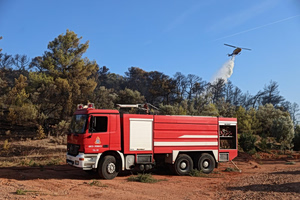
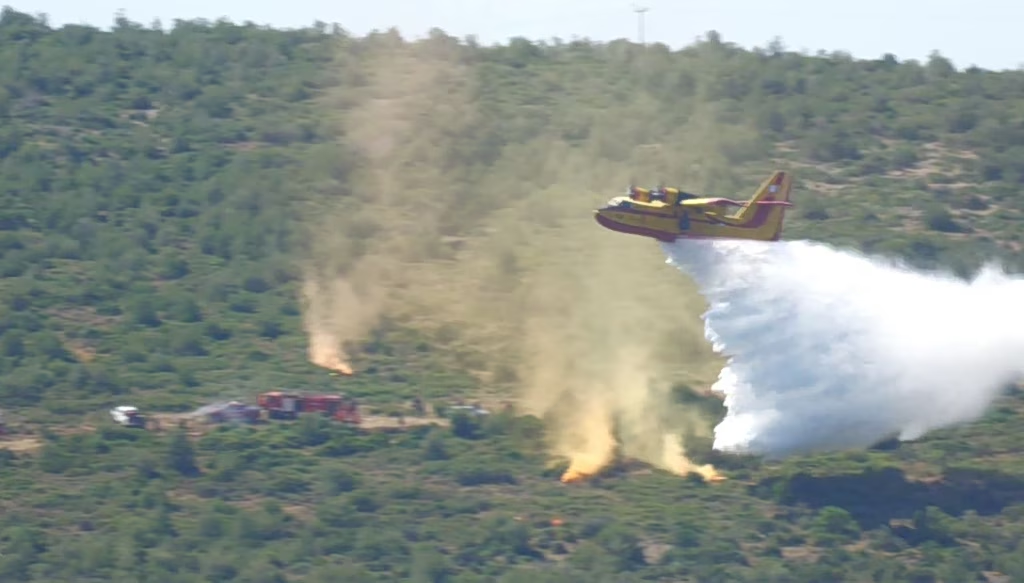
On the ground, 21 Special Forest Operations Units have been deployed nationwide. Greece’s total firefighting personnel for 2026 stands at 18,804. The aerial fleet available this season, combining state-owned and leased aircraft, ranges from 80 to 85 aircraft depending on daily availability.
Funding to municipalities has increased. This year, 332 municipalities across Greece are receiving a combined 47.5 million euros for fire protection measures, with an additional 2.5 million euros allocated to municipal associations. The total represents a 25% increase since last year.
A stricter framework for land clearance is also in effect. Property owners are required to clear their plots between April 1 and June 15 each year and maintain them through the end of the fire season on October 31. Minister for Climate Crisis and Civil Protection Evangelos Tournas has stressed the importance of cleared land, noting that during the previous fire season, fires stopped where plots had been cleared and spread uncontrolled where they had not. Authorities are already conducting inspections, issuing fines and making arrests under the tightened framework.
Despite relatively favorable weather conditions so far, experts caution that above-average rainfall this spring has produced dense vegetation growth, which could act as additional fuel in the months ahead as temperatures rise.
Source:ot.gr