When Davy Adams arrived at a hotel near Seattle last November, the room her husband stayed in was stripped bare.
Paper and paint were scraped from the walls. Furniture had been pushed to the center and enveloped in plastic. Davy fell to the floor and cried.
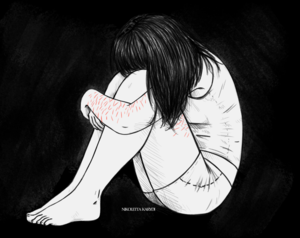
Eight days earlier, in that same room, her 38-year-old husband Joshua Adams had died by suicide.
Joshua worked as an air-traffic controller for the Federal Aviation Administration for more than a decade. He struggled with symptoms of depression, but concealed his condition out of fear that it would disqualify him from directing traffic, said Davy, who recounted her and Joshua’s story in interviews over several months. His initial love for his work gave way to chronic stress and exhaustion, she said.
“Babe, I can’t talk to anybody,” Joshua told her. “Please don’t talk to anybody about how I’m feeling. I don’t want to lose my job.”
Each day, thousands of controllers monitor flight paths and direct pilots in the high-stress work of keeping U.S. skies safe. But behind the crackle of commands issued from towers and facilities, many controllers are silently struggling, according to interviews with more than two dozen current and former controllers, medical experts, industry officials and lawmakers.
Controllers said they often hide mental-health issues because they worry that reporting a diagnosis or receiving treatment could cost them their livelihoods.
The National Air Traffic Controllers Association, the labor union representing the federal workers, has tracked the number of controllers who die by suicide.
An estimated 12 controllers died by suicide in 2024 out of roughly 10,700 fully trained controllers, according to NATCA president Nick Daniels. That is a rate eight times higher than the national suicide rate of 13.7 per 100,000 people, which is based on provisional data from the Centers for Disease Control and Prevention.
In the two years prior, an estimated total of 12 controllers died by suicide, Daniels said. Those estimates exclude trainees or retired controllers.
The FAA, which tracks suicides based on applications for benefits from relatives of the deceased, is aware of nine controllers who died by suicide between 2022 and 2024, a spokesman said.
Other industries, including construction and mining, also have suicide rates that are higher than the national average, federal data show. Public health researchers said that job strain and long work hours can increase the likelihood of suicidal ideation among workers.
In recent years, controllers say they have grown increasingly frayed and fatigued due to chronic staffing shortages and frequent equipment outages. Last fall’s government shutdown also left employees working for weeks without pay .
“We strongly encourage controllers to get the help they need early,” a FAA spokesman said. The FAA has stringent medical disclosure requirements to ensure that controllers are stable when they coordinate thousands of flights. It also tightly regulates the medications that controllers can take for certain conditions.
The FAA continually updates its standards based on the best medical science available, the spokesman said.
Angel Toro, who worked as a controller for the FAA for eight years, said he never felt free to talk to mental-health professionals about his depression.
Toro eventually quit in 2021 after having an incident of stress-induced fainting and chest pain.
“I’ve been slowly coming back to being that person that I was in the past,” he said.
First contact
One evening in September 2012, early in Joshua’s career, he was out with some controllers at a Seattle brewery. There, he met an outgoing woman named Davy Desmond, who worked at a different bar.
A week later, Joshua showed up at Davy’s bar, and Davy gave him her number.
Joshua had grown up in Spokane, Wash., and his father and one of his grandfathers worked as controllers. He dropped out of Washington State University and enrolled in the FAA’s controller-training academy in Oklahoma City.
Davy was drawn to Joshua’s loyal character and varied interests. He loved the New Orleans Saints, playing the clarinet and thrift shopping, but could also untangle thorny math equations in minutes.
About a month after the two met, Davy moved to Uganda to work at a nonprofit. They stayed in touch through daily Skype calls. When Davy returned to the U.S. several months later, Joshua was waiting at Seattle-Tacoma International Airport to pick her up.
Joshua and Davy married at the brewery where they first met and started a family that would grow to include two sons.
The family moved to Denver and then back to a town near Seattle in 2022, and Davy took a job as an emergency nurse.
But the work got harder for Joshua as an air-traffic supervisor, Davy said. He complained about low staffing at his facility that, at times, required him to work eight to 10 hours a day, six days a week. He was constantly tired. He missed Christmas vacations and his sons’ basketball games and swim meets. In private, Davy said, he often broke down in tears.
‘Bottle it up’
For controllers, the FAA acts both as employer and as the arbiter of their physical and mental fitness, with access to their medical history.
At least once a year, controllers must report all visits made to health professionals, including psychologists or psychiatrists, for treatment, exam or evaluation in the prior three years.
A newly disclosed diagnosis or treatment could prompt officials to request additional information and require controllers to undergo rounds of psychological evaluations, which can cost thousands of dollars out of pocket. Controllers may risk losing medical clearance to work for months or longer.
The FAA spokesman said 58 controllers were permanently disqualified from working in 2025 due to a mental-health condition. The FAA didn’t disclose how many controllers were temporarily disqualified last year.
A controller who receives a temporary mental-health disqualification can ask to be assigned other duties at their facility or another location, the FAA spokesman said. If none are available, the controller can use paid or unpaid leave, he said.
Still, many controllers opt out of what they describe as an onerous examination process that could culminate in losing their careers.
“Controllers bottle it up,” said Brian Vogelsinger, who spent two decades as a controller before quitting in January, citing fatigue.
That sentiment was shared by John Turke, who worked as a controller for 17 years at towers in Oklahoma City, Las Vegas and Dallas, his sister Cathy Axelsson said. His passion for the profession eventually buckled under the weight of mandatory overtime and pressure to never make a mistake, Axelsson said.
When Axelsson visited Turke and his family in October 2024, she could tell he was stressed. Turke admitted he was getting very little sleep. Despite her pleas, Axelsson said, he refused to see a doctor because he feared an anxiety or depression diagnosis could cost him his medical clearance.
Turke died by suicide in December 2024 at the age of 41, leaving behind a wife and two sons.
After Turke’s death, more than a dozen controllers from across the U.S. wrote to Axelsson to share their own struggles with stress on the job and the stigma around seeking support.
In 2024, a panel of aviation and medical experts concluded that the industry had a culture “that contributes to the problem of not reporting medical disorders, particularly those linked to mental health.” The group, which was convened by the FAA, issued the agency 24 recommendations.
The FAA has addressed nine of the recommendations and is working on 12 others, according to the agency spokesman. The FAA said it has worked to make it easier for controllers to report mental-health conditions, including allowing controllers with some forms of anxiety and depression to be more quickly cleared by medical examiners.
New federal legislation, known as the Mental Health in Aviation Act, would require the FAA to implement the remaining recommendations, train more medical examiners and raise awareness about mental health in the industry.
After passing the House in September with bipartisan support, the bill was unanimously cleared by a Senate committee earlier this month. The bill’s backers expect a floor vote in the next few months.
Growing anxious
Joshua didn’t seek treatment for depression, Davy said. He worried that would risk his medical clearance.
At times, Joshua contemplated quitting, but the idea never felt practical. Air-traffic control was all he had known, and he thought his skill set wouldn’t be easily transferable to another career. His family depended on him. So he kept showing up to work.
About a month before he died, Joshua woke Davy at midnight. “I just had a realization,” he told her. “Air-traffic controllers can’t have families. It’s impossible.”
Joshua grew increasingly anxious during the government shutdown last fall, fretting about bills and whether he would ever be paid. “We don’t know when it’s going to end,” he told Davy repeatedly.
Toward the end of the shutdown, Joshua broke down in the office of one of his supervisors and requested sick leave, Davy said. He was granted several days of leave.
On Nov. 8, while Joshua was on leave, he took Davy to an Italian restaurant in Seattle. Davy had scallops, and he ate lasagna. Later that evening, they explored the city and stayed overnight in a hotel.
The following evening Joshua sent an email to Davy, who was out with friends. “I want to be there for you when you’re sad or uncertain or anxious,” he told her. “I know we can do difficult things together.”
Joshua died on Nov. 10, the morning before he was scheduled to return to work. Two days later, the government shutdown ended.
The art of repair
Davy said she wants to spread awareness about mental-health issues among controllers and to raise her sons, ages 9 and 11, to be honest about how they are feeling.
About a month before he died, Joshua surprised Davy with a gift. She had received an award from her workplace for exceptional performance as a nurse, but the figurine had fallen and shattered.
Joshua fused the pieces together, following an ancient Japanese art form of repairing broken pottery. Instead of hiding the cracks, he marked them with gold-colored glue.
The sculpture has become a symbol to Davy that something can be beautiful, not in spite of its flaws but because of them.
She plans to display it in her living room for all to see.
Help is available: Reach the 988 Suicide & Crisis Lifeline (formerly known as the National Suicide Prevention Lifeline) by dialing or texting 988.
Write to Christopher Kuo at chris.kuo@wsj.com , Dean Seal at dean.seal@wsj.com and Allison Pohle at allison.pohle@wsj.com