 Μake us preferred on Google
 Libya is standing at a “critical crossroads,” the Special Representative of the Secretary-General, Hanna Tetteh, warned the UN Security Council, stressing that progress on the political roadmap remains insufficient. As she put it, maintaining the current situation “inadvertently legitimizes the status quo instead of encouraging serious negotiations.”
The Head of the United Nations Support Mission in Libya noted that “some Libyan actors continue to ignore public expectations,” while the creation of “parallel structures outside existing agreements” is complicating the United Nations’ efforts to reunify the country’s institutions—a reference to the ongoing fragmentation that has plagued Libya since the fall of Muammar Gaddafi in 2011.
Political Dialogue and the Path to Elections
Briefing the Council on the political process, Tetteh said the “Structured Dialogue” is ongoing across four key pillars—security, governance, the economy, and national reconciliation/human rights—with the goal of holding national elections and strengthening state institutions. She announced that a final report with recommendations will be presented by early June to both political leaders and the public, warning that if no progress is made, “I will return to the Council in June with proposals to move the process forward.”
Economic Strain and Social Pressure
On the economic front, the Special Envoy described a worsening situation marked by “currency pressures, rising prices, fuel shortages, uncontrolled and opaque public spending, and increasing poverty.” She emphasized that “the current economic model is no longer sustainable,” warning that national wealth is being absorbed by a distorted political economy that exploits oil revenues.
She welcomed as a positive step the April 11 agreement on a unified framework for public spending, but cautioned that its success will depend on “effective implementation and independent oversight of expenditures.”
Fragile Security and Institutional Challenges
Turning to security, Tetteh acknowledged that while no formal violations of the 2020 ceasefire have been recorded, “the security situation remains fragile.” She pointed to clashes in western Libya and the continued flow of weapons “in violation of the arms embargo.”
At the same time, she highlighted a rare sign of progress: a joint military exercise in Sirte involving forces from eastern and western Libya, describing it as “a building block for advancing the unification of military and security institutions.”
Justice System and Human Rights Concerns
Tetteh also raised serious concerns about the fragmentation of Libya’s judicial system, noting that the existence of “two parallel Supreme Judicial Councils” is deepening institutional instability. She further cited “reports of arbitrary detentions, intimidation and reprisals,” as well as attacks against the Sufi community—developments that threaten religious freedom and social cohesion.
She called on the Security Council to use its collective influence to ensure that “Libyan leaders fulfill their obligations to unify institutions and advance national elections,” warning that tolerance of the status quo will undermine the country’s unity and its path toward peace and development.
Greece’s Position at the UN
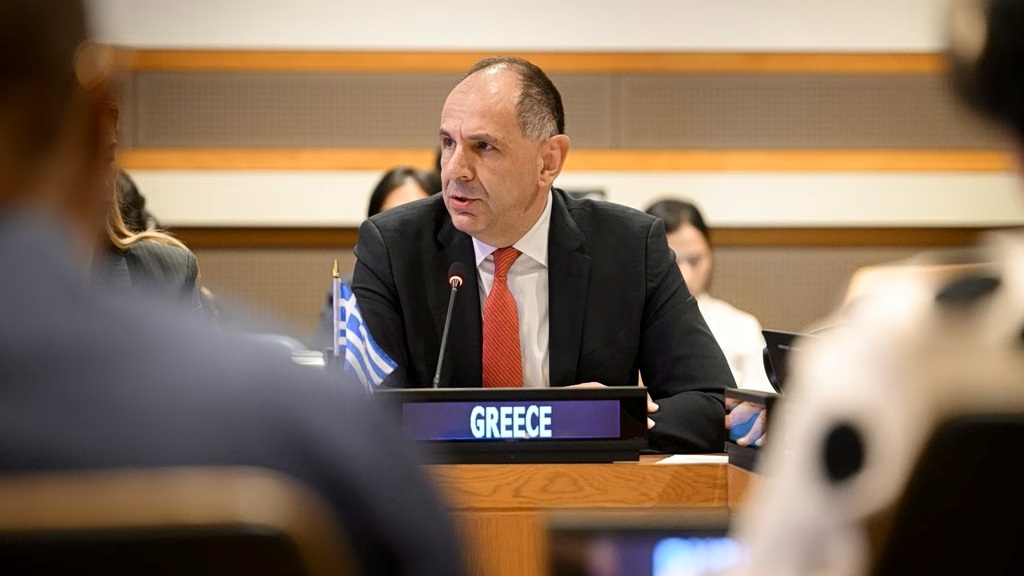
Greece’s Permanent Representative to the United Nations, Ambassador Aglaia Balta, underlined that the UN political roadmap—as presented by the Special Envoy—remains the most viable path toward unifying Libya’s institutions and achieving comprehensive peace.
She welcomed initiatives that encourage dialogue between rival sides, noting that they complement and strengthen UN-led efforts. Balta also expressed satisfaction with progress in the structured dialogue, the agreement on a unified budget, and joint military exercises facilitated through US mediation.
She further welcomed the unanimous adoption of UN Security Council Resolution 2819, which renews sanctions on Libya and calls for oversight of the Libyan Investment Authority (LIA). “It is now essential to finalize without delay the Assistance Notification for the implementation of paragraph 14 of Resolution 2769—whose issuance was requested by Greece,” she stressed.
Concluding her remarks, Balta reaffirmed that Greece, as a “long-standing partner of Libya,” fully supports the country’s sovereignty, independence and territorial integrity, aiming for a stable, prosperous and unified Libya—free from foreign interference and with full control over its sovereign institutions.