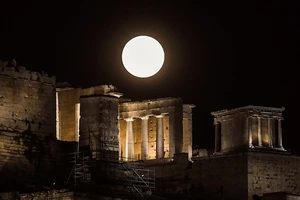
July’s full moon, known as the “Buck Moon” or “Red Deer Full Moon,” is one of the year’s most striking astronomical phenomena.
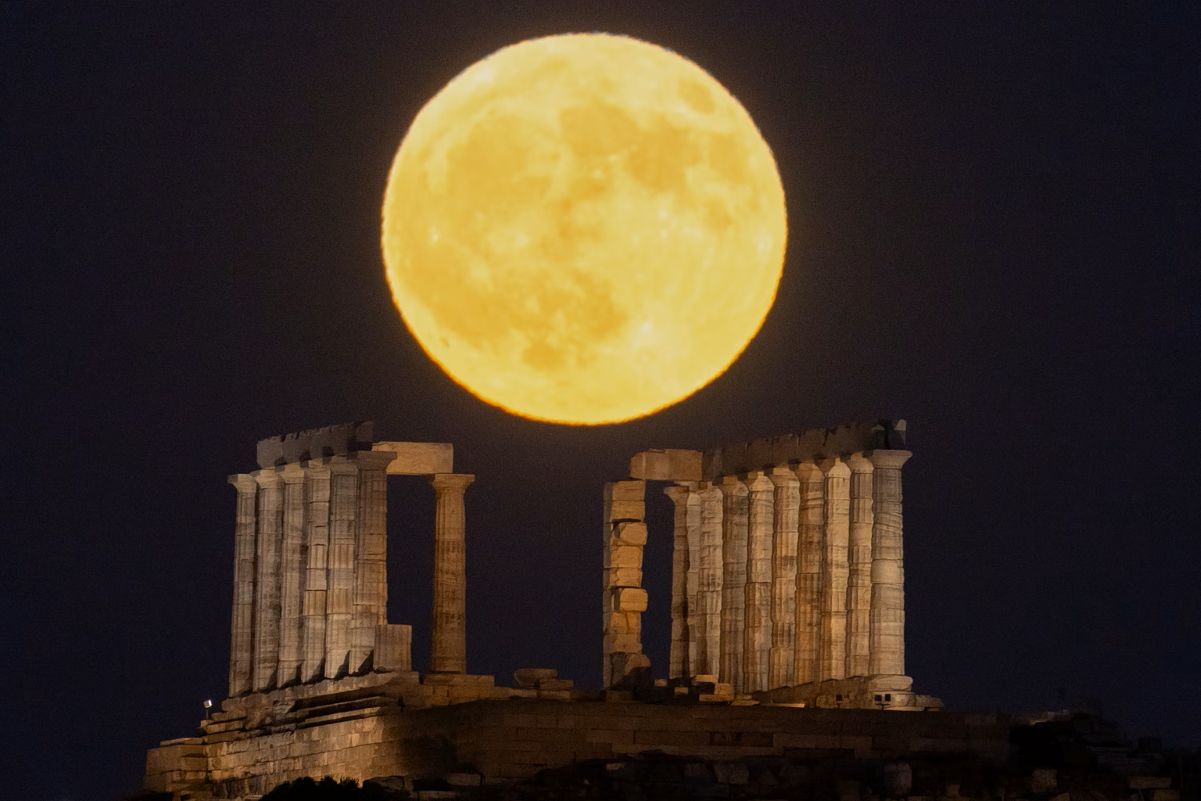
Sounio
The July full moon illuminated the sky over Greece on Wednesday evening, July 29, reaching peak brightness at around 3:30 a.m. on July 30. Those hoping to admire the full moon could see it by looking toward the southeast.
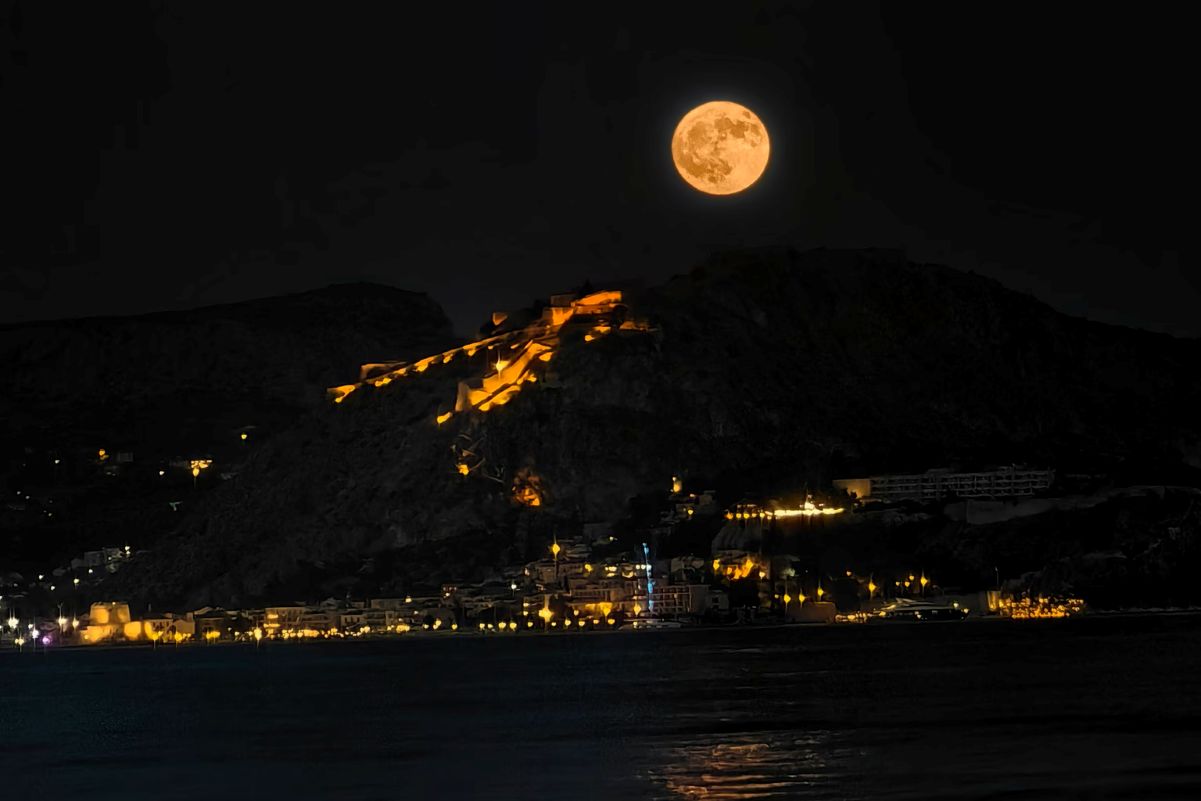
Nafplio
The name “Buck Moon” is linked to the antlers of male deer, or bucks, which begin to grow during this time of year. As new antlers develop, they are initially covered in a soft, velvety layer of skin that protects them until they are fully formed. Male red deer shed and regrow their antlers every year, ensuring they are strong and fully developed by the breeding season.

Corfu
The July full moon is also known as the “Red Deer Full Moon,” while a number of other traditional names are associated with animals and seasonal changes. These include the “Feather Moulting Moon” and the “Salmon Moon,” reflecting the time of year when salmon return to certain areas and become ready for harvesting.
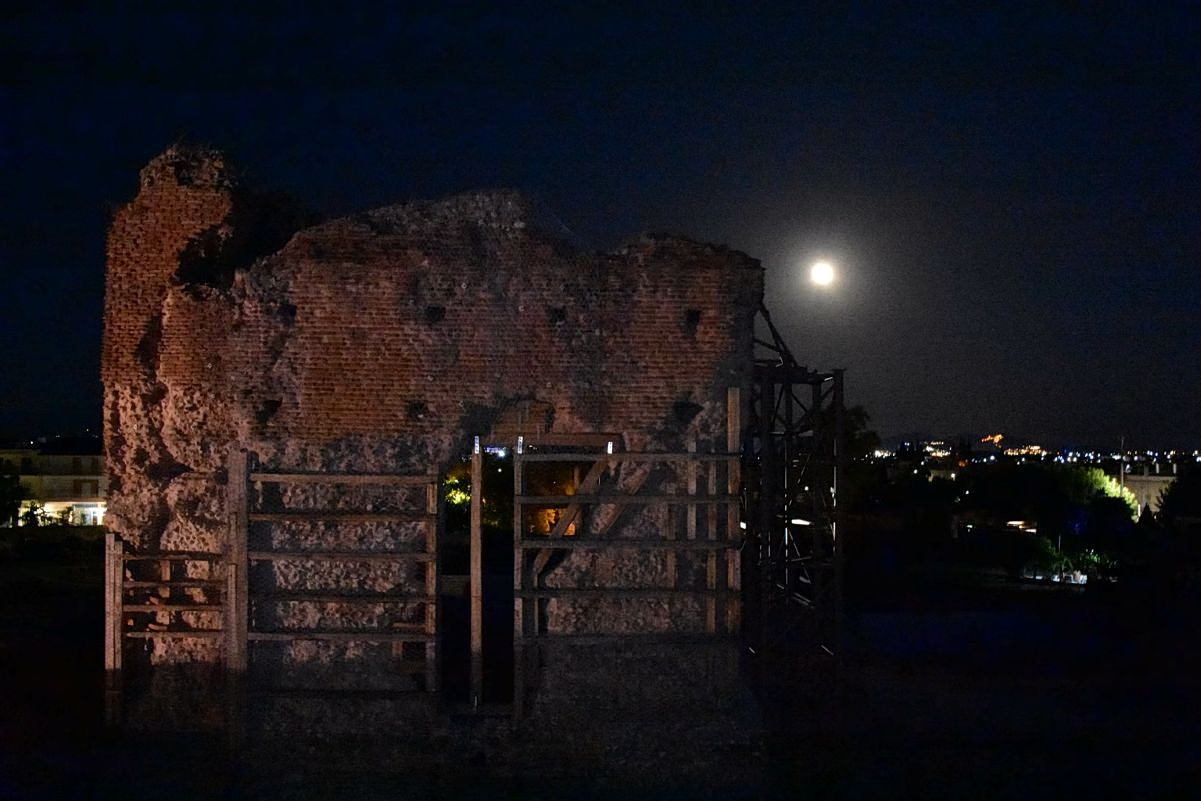
Argos
Plants also feature prominently in traditional names for the July full moon. Among them are the “Berry Moon” used by the Anishinaabe, the Dakota’s “Moon When the Chokecherries Are Ripe,” the Cherokee “Month of the Ripe Corn Moon,” and the “Raspberry Moon,” associated with the Algonquin and Ojibwe.