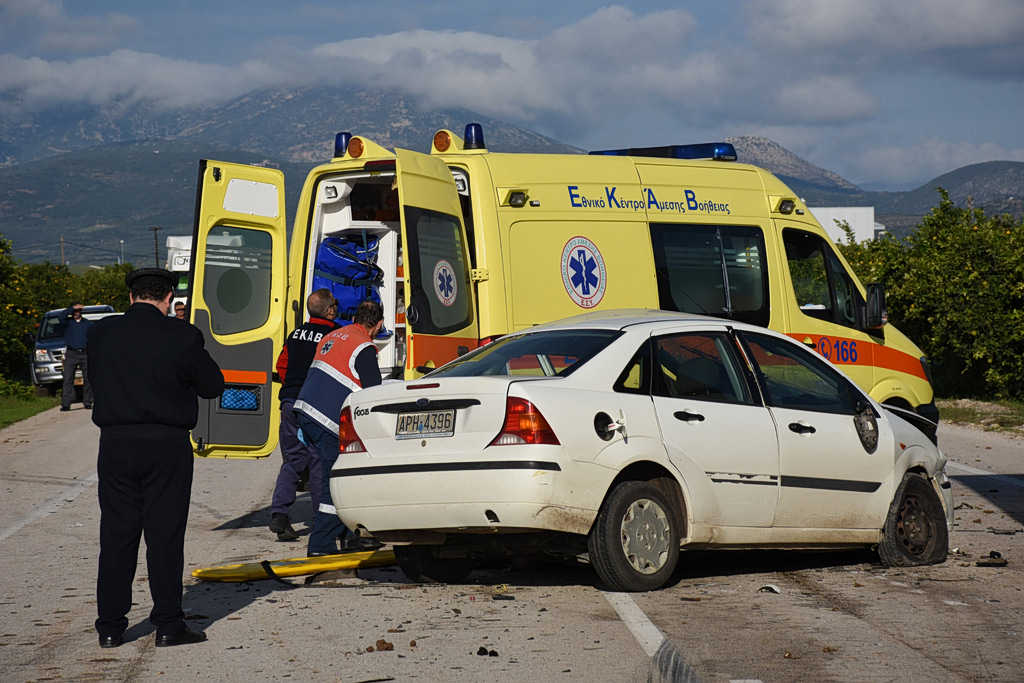
Traffic violations have ranked among the most common forms of juvenile delinquency in Greece in recent years, with thousands of cases recorded annually, according to police data.
Although a revised traffic code, which took effect last September, has reduced the number of criminal cases and arrests involving minors, the risks associated with underage and unsafe driving remain a daily concern.
The most common violation involving underage drivers is operating a vehicle without a license. Police sources noted that in most cases, those stopped have never obtained a license.
In 2025 alone, police recorded 2,651 traffic-code violation cases involving minors nationwide, corresponding to 2,670 offenders. During the first five months of 2026, 633 such cases and 620 offenders were recorded.
The minimum age for a passenger-car driving license in Greece is 18, while licenses for certain low-powered mopeds can be obtained from age 16.
Besides driving without a license, most other violations involve minors on motorbikes or behind the wheel of a car driving dangerously; riding without a helmet and, in some cases, illegal street racing.
The police figures also reveal a striking change in the number of arrests. During the first five months of 2025, authorities recorded 1,298 arrests of minors for traffic violations. In the corresponding period of 2026, the number fell to just 53.
The sharp decline is linked primarily to a stricter traffic code, which came into force on Sept. 13, 2025. The new framework introduced a more graduated system of penalties, with greater emphasis on administrative sanctions and tougher consequences for repeat offenders.
Under the new rules, driving without a license does not automatically result in criminal prosecution in every case. Criminal penalties apply in specific circumstances, including when an unlicensed driver is responsible for a serious crash or when the person has previously had a driving license revoked because of another traffic violation.
The change applies to adults and minors alike, which combined with higher administrative fines and more intensive enforcement, has contributed to the sharp fall in arrests. The new code also strengthened penalties for dangerous driving, helmet violations, speeding and illegal street racing.
Recent cases involving teenagers have underscored the potential consequences. In April, a 16-year-old motorcycle rider was charged with dangerous driving and leaving the scene after allegedly hitting a teenage girl in Athens and fleeing. The girl was critically injured but later showed signs of recovery.
In June, a 17-year-old without a driving license was reportedly behind the wheel of an agricultural vehicle that overturned in northern Greece, killing a 16-year-old passenger. Four of the five people in the vehicle were minors.
The broader road-safety picture makes the issue particularly significant. Young people aged 16 to 24 are disproportionately represented in traffic-death and injury statistics in Greece, making prevention and driver education an important complement to enforcement.