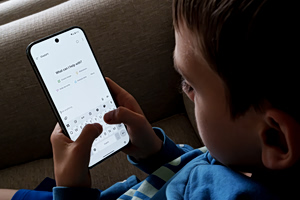
Artificial intelligence is moving from pilot testing to formal regulation in Greek schools. It started in September 2025, when an agreement was signed between the Greek government and OpenAI aimed at piloting ChatGPT Edu in secondary education. The “AI in Schools” program was rolled out in 20 high schools, 14 Model and Experimental schools and six Onassis schools, beginning with teacher training and, this year, extending to student access.
The new school year opens under a fresh regulatory framework for AI use in education. For the first time, specific rules define how artificial intelligence tools can be used inside the classroom, with emphasis on protecting personal data, ensuring transparency, and preserving the teacher’s central role in the learning process.
AI use stays optional for both students and teachers. It has to happen under teacher supervision and cannot substitute for a student’s own effort. Every school will get an AI Use Coordinator, a teacher who acts as the reference point for proper use of the tools, safety, and data protection. AI systems are banned during written exams, assessments and tests, and separate guidelines apply to assignments. Each school must also hold at least one information session for students and parents every school year, along with subject-specific teacher training.
At a special event held alongside the 90th Thessaloniki International Fair, Education Minister Sofia Zacharaki said AI is already part of children’s daily lives, and that it falls on the ministry to make sure students use it with knowledge, safety and critical thinking. She said clear rules are being set, teachers are being trained, and the rollout is proceeding gradually, with “AI in Schools” being piloted in 20 high schools while EduAI is being developed as part of the Digital Tutoring program.
She added that AI can help a student learn and a teacher teach better, but it cannot replace a child’s own effort or a teacher’s judgment and responsibility.
Even so, the ministry’s choices have drawn questions. In April 2026, the PASOK party filed a parliamentary question about the cooperation agreement, the data-protection impact assessment, and the criteria used to select participating schools. Civil society groups have also asked whether open-source alternatives were considered before OpenAI was chosen.