
 Μake us preferred on Google
SÃO PAULO—Brazilian President Luiz Inácio Lula da Silva , a former shoeshine boy born to illiterate parents, has made a life of defying expectations. But his shock victory on Sunday, securing him a fourth term and a place among the world’s longest-serving elected leaders, surprised even those in his own party.
Just three weeks ago, da Silva was politically all but written off after losing the first round to Flávio Bolsonaro, the son of his bitter rival, former President Jair Bolsonaro , by a 45%-47% margin. Never before in Brazil’s democratic history had a presidential candidate lost the first round and gone on to win the runoff. Abstention was at its highest level since 1998, and polls—which have historically overestimated da Silva’s support—showed him narrowly trailing Bolsonaro. The right had already begun selecting ministers for a new government.
But in one of the most dramatic electoral upsets in Brazil’s history, da Silva secured a fourth term with more than 64 million votes on Sunday, the most ever won by a presidential candidate in the country. Da Silva, who turns 81 on Tuesday, is now on course to spend a total of 16 years in office.
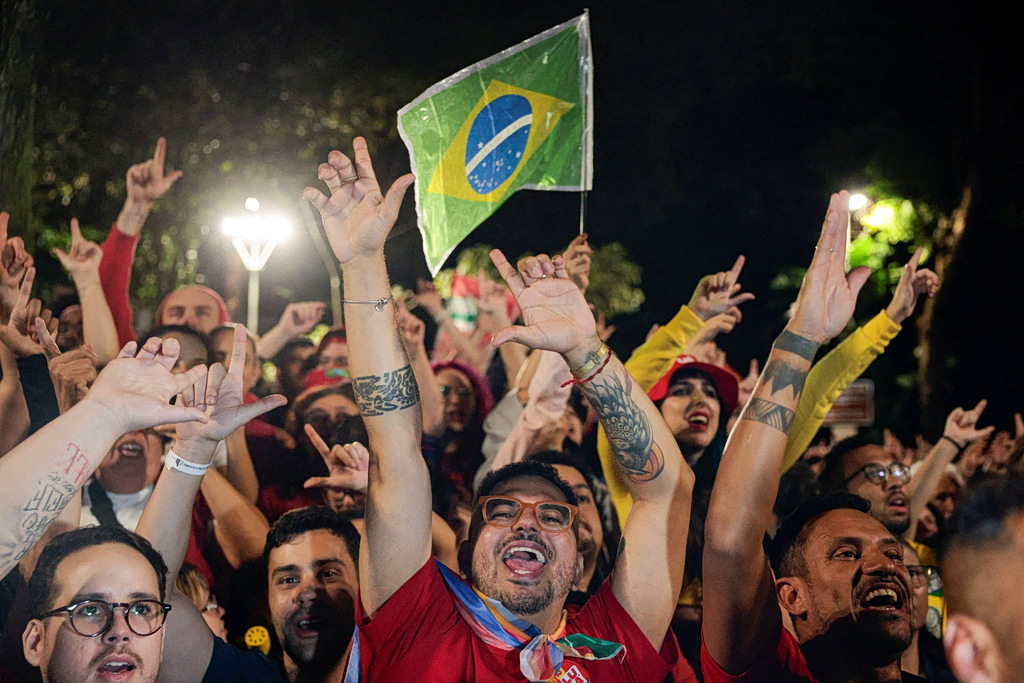
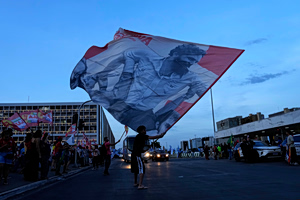
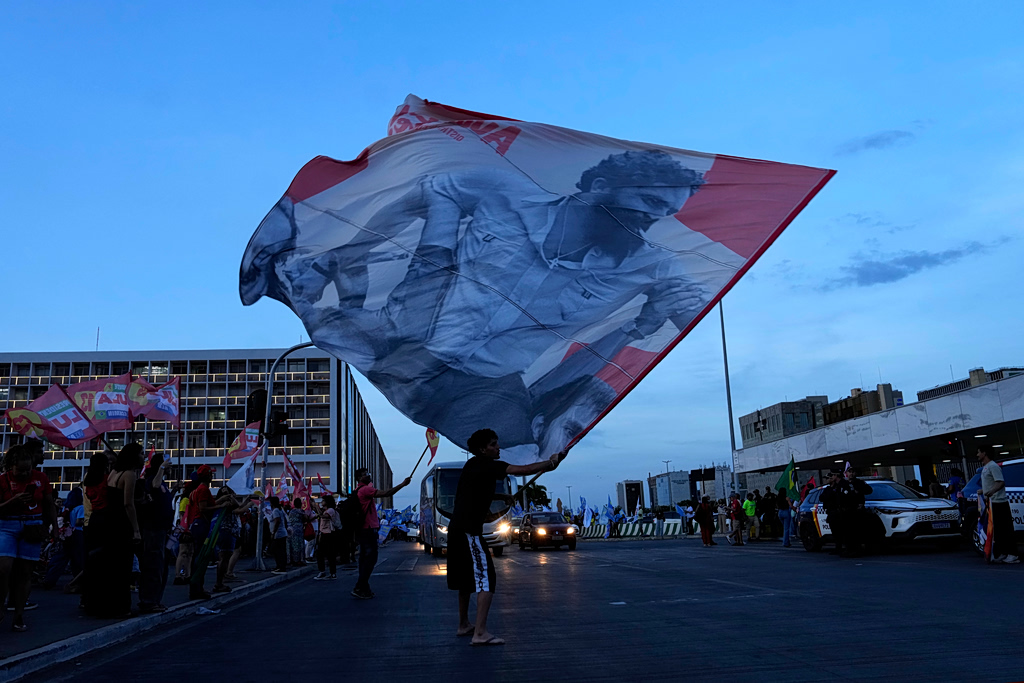
Supporters gather to watch Brazil’s President Luiz Inacio Lula da Silva, the Workers’ Party (PT) candidate for re-election, speak after his victory in the presidential runoff election, at Paulista Avenue, in Sao Paulo, Brazil, October 25, 2026. REUTERS/Brian Snyder TPX IMAGES OF THE DAY
As investors reacted to da Silva’s unexpected resurgence and the prospect of another leftist government, Brazil’s currency plunged and stocks lost almost 20% early Monday. Pollsters scrambled to explain how da Silva had revived the left in just three weeks in a region where conservatives have taken control of every major country except Mexico.
Bolsonaro and his supporters had one explanation: fraud. As conspiracy theories spread online, Bolsonaro refused to concede on Sunday, vowing to seek an annulment over a last-minute Supreme Court decision to extend voting by two hours.
Bolsonaro, who is under investigation for alleged money laundering and over efforts to secure financing for a film about his father from a banker embroiled in a fraud scandal, said police had ordered him to surrender his passports Monday over concerns he might flee the country after his election loss.
While world leaders rushed to congratulate da Silva on the victory, Washington has yet to recognize the result, with President Trump telling reporters Monday that the race “looked like another rigged election.”
But the explanation for da Silva’s seemingly miraculous comeback, according to political scientists, pollsters and the president himself, lay in a potent mix of hope—and, above all, fear. A fierce grassroots mobilization brought young and elderly voters to the polls, many of whom had stayed home in the first round. Fearmongering stoked concerns among poorer Brazilians that they could lose government benefits under a right-wing administration.
Much of that last-minute mobilization was driven by André Janones, a former bus conductor turned combative congressman allied with da Silva’s Workers’ Party, who brought his aggressive social-media tactics to da Silva’s struggling campaign.
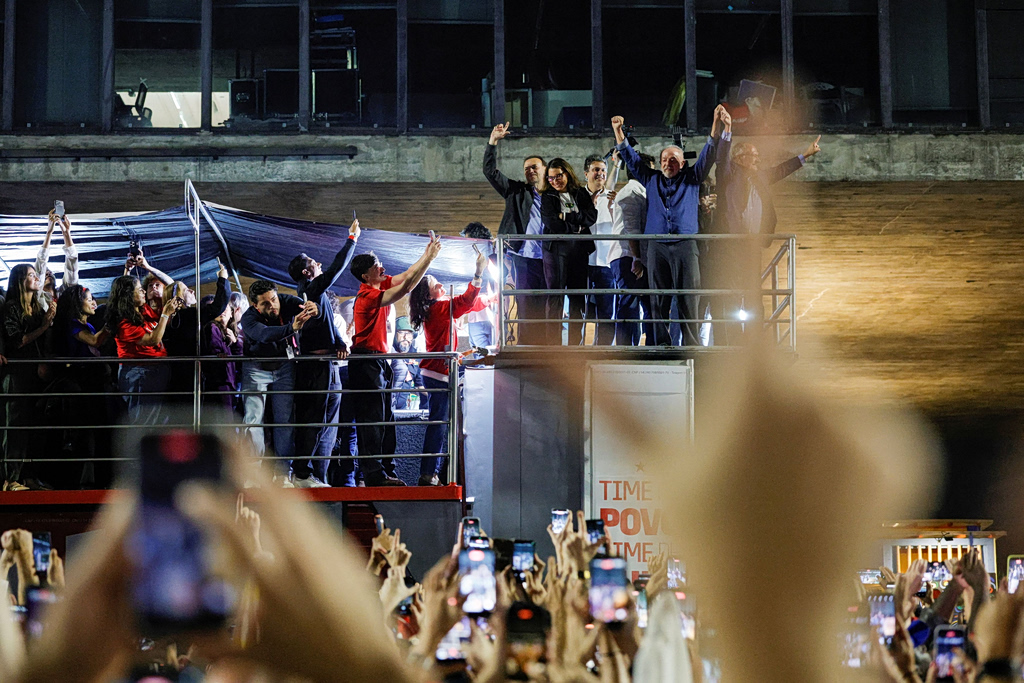
Brazil’s President Luiz Inacio Lula da Silva, the Workers’ Party (PT) candidate for re-election, greets supporters after his victory in the presidential runoff election, at Paulista Avenue, in Sao Paulo, Brazil, October 26, 2026. REUTERS/Brian Snyder
Janones is hardly an unblemished hero: He has faced corruption allegations and accusations of threatening to release intimate photographs of his ex-girlfriend, who obtained a protective order against him—allegations he denies. But his barrage of viral videos and personal attacks against the Bolsonaros helped energize the campaign, while his pro-da Silva WhatsApp channel surged from 50,000 followers to nearly 11 million in the three weeks after the first round.
Da Silva, who at 80 had only recently acquired his first smartphone, praised Janones as his “general” Sunday night for keeping campaign morale high “morning, afternoon and night.”
Da Silva also rapidly changed tack after his first-round loss. Gone was his signature Panama hat and the Workers’ Party’s trademark red; in came Brazil’s national colors of green and yellow, long associated with the Bolsonaro movement. He also reversed his longstanding stance on crime, backing a proposal to try 16-year-olds as adults for serious offenses such as murder and rape.
“He was not re-elected tonight because he doubled down on leftist ideology,” said Kevin Ivers at StratComms , a political-analysis newsletter. “In the end, Lula scrambled to do or promise things he failed to deliver this term, almost running against himself.”
Da Silva picked up an additional 10.4 million votes between rounds. Higher turnout helped: Nearly three million more Brazilians went to the polls in the runoff, despite torrential rains and flooding in parts of the country Sunday. While voting is compulsory for most citizens, the fine for not doing so is less than a dollar, and around a fifth of the adult population stayed home in the first round on Oct. 4.
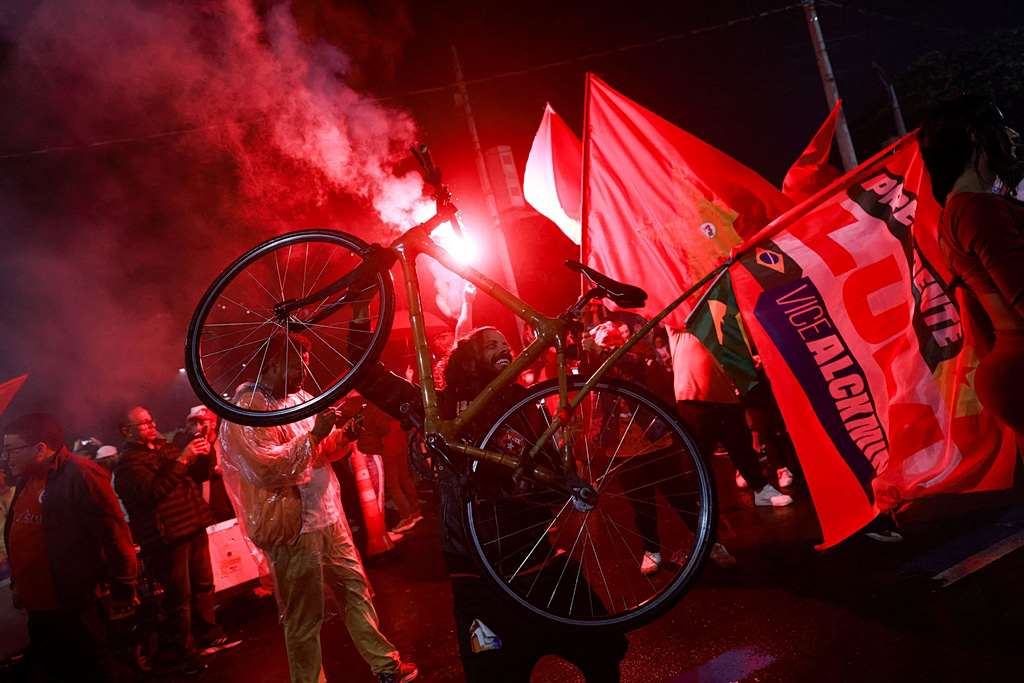
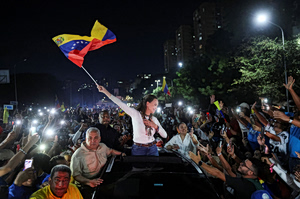
A man holds up a bicycle as supporters of Brazilian President Luiz Inacio Lula da Silva, the Workers’ Party (PT) candidate for re-election, react to the early results of the presidential runoff election, in Porto Alegre, Brazil, October 25, 2026. REUTERS/Diego Vara REFILE – CORRECTING LOCATION FROM “SAO PAULO” TO “PORTO ALEGRE” AND FIXING BYLINE IN CAPTION
Another 1.8 million voters who had cast blank or invalid ballots in the first round, often used by Brazilians to express dissatisfaction with the candidates, chose one in the runoff.
But even if every additional voter had backed da Silva, more than 5.5 million votes would still be unexplained. That suggests da Silva also drew substantial support from voters who had backed lesser-known candidates who were defeated in the first round, including those on the right.
It is also possible voters switched from Bolsonaro to da Silva in a country where the electorate is often swayed by pragmatic questions rather than ideology, political scientists said.
“The most convincing explanation is that da Silva managed to build a coalition driven more by opposition to Bolsonarismo than by identification with the president himself,” said Leandro Gabiati, a political scientist and director at Dominium Public Affairs.
In Minas Gerais, the home state of da Silva’s internet general, Janones, da Silva overturned his first-round loss to win the state, a bellwether that has backed the winner of every presidential election since 1989. He also won the huge cities of São Paulo and Rio de Janeiro, even as Bolsonaro carried both states.
For Bolsonaro and his supporters, though, such a turnaround was inconceivable, with many seizing on the chaos of election day to allege foul play.
Torrential rains dumped nearly 5 inches of water on some towns, flooding roads, disrupting public transportation and forcing polling stations to relocate. In Paraná state, authorities deployed boats and tractors to help voters reach the polls.
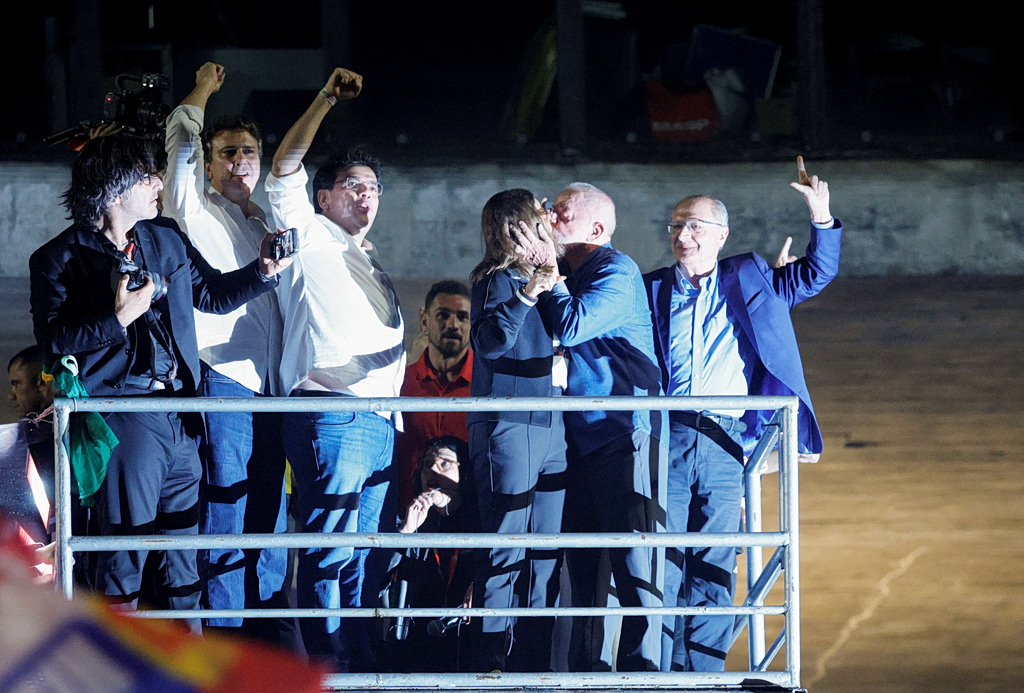
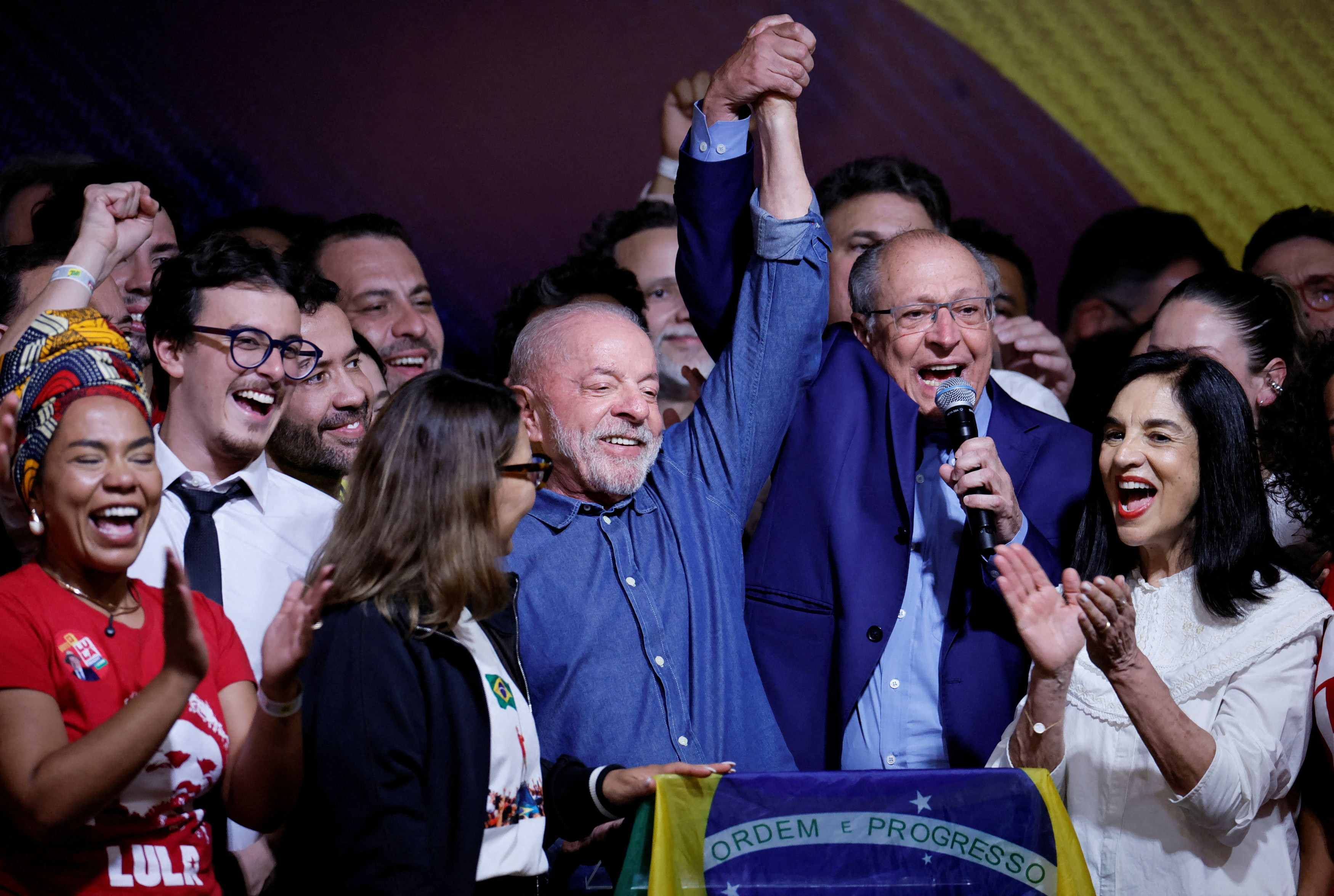
Brazil’s President Luiz Inacio Lula da Silva, the Workers’ Party (PT) candidate for re-election, kisses his wife, Janja Silva, as Vice President Geraldo Alckmin signs “L” next to them, during his address to supporters after his victory in the presidential runoff election, at Paulista Avenue, in Sao Paulo, Brazil, October 26, 2026. REUTERS/Brian Snyder
Meanwhile, da Silva’s allies accused local officials sympathetic to Bolsonaro of deliberately reducing bus services in poorer neighborhoods. In Salvador, authorities found hundreds of buses sitting idle. An electoral judge ordered the arrest of the city’s transportation chief. The city denied trying to obstruct voting.
Both campaigns sought a two-hour extension from Brazil’s electoral court—Bolsonaro’s citing the storms, da Silva’s the bus shortages. With no ruling forthcoming, da Silva’s coalition also petitioned the Supreme Court, where the case was randomly assigned to Justice Cristiano Zanin, da Silva’s former personal lawyer, who had defended him in his corruption cases.
Just after 5 p.m., Zanin ordered voting extended nationwide until 7 p.m., an unprecedented intervention that sowed confusion as many electronic voting machines had already been closed and couldn’t be reopened.
Constitutional lawyers and the electoral court itself, currently headed by a Bolsonaro-appointed justice, said the decision was lawful, dismissing Bolsonaro’s claims that the move somehow favored da Silva.
But years of controversial rulings and accusations of judicial overreach have eroded public confidence in Brazil’s highest courts. At a moment when the country needed the judiciary to provide certainty, its intervention instead fueled further political unrest, said Ivar Hartmann, an associate professor at Insper, a São Paulo business school.
“The Supreme Court justices themselves have generated this distrust over the years,” he said. “Democratic institutions need the public’s trust to function. And Brazil’s judiciary has lost that.”
Write to Samantha Pearson at samantha.pearson@wsj.com