A homeland is not lost; it moves silently with people when they change place and is rebuilt elsewhere. And where they eventually settle, they leave a material imprint—on buildings, on streets—and silently the city is transformed together with them, absorbing the traces of their presence. But they themselves do not remain unchanged either; they become part of the place that receives them. Thus, diaspora communities are formed not only by memories and origin, but by their living relationship with the urban fabric—a relationship that is reciprocal and constantly evolving.
“In Cairo, the Greek presence was not formed as a closed community, but as part of a multinational urban endeavor. And architecture was one of the ways in which this presence was inscribed in the space and memory of the city,” says Despina Tzova, an official at the Greek Embassy in Cairo, speaking to To Vima. At her initiative, MONUMENTA’s program began for the documentation of buildings housing institutions and associations of the Greek Community of Cairo, as well as those managed or used by Greek communal associations in the city.
In Cairo of the late 19th and early 20th centuries, urbanization, major public works, and the vision of a modern metropolis created a dynamic field of public life. “Scenes” of this transition are captured in areas such as Ezbekieh and later Heliopolis, in the northeastern part of the city.
Participation in Economic and Social Life
Within this environment, according to Ms. Tzova, the Greek presence was organically integrated into the city, participating in its economic and social life. And in 1904, the Greek Community of Cairo held its founding General Assembly at the famous Club des Princes, a building “oriented” toward the future, as it was among the first to make use of the Hennebique reinforced concrete system. “The choice of such a modern building for an institutional act is not accidental: it reflects the community’s position within the city’s modernity,” she notes.
In the years that followed, the Greek Community of Cairo turned toward the acquisition and exploitation of real estate, investing in land as a means of economic and social support. The “window of opportunity” opened at the threshold of the 20th century, when ownership of land in central Cairo passed from Galal Pasha to the Société Belge-Égyptienne de l’Ezbekieh, with the aim of developing undeveloped plots.
Thus, in 1905, the Greek Community of Cairo purchased a plot on Soliman El Halabi (Doubreh) Street, a property with a clearly income-generating character, as Ms. Tzova notes. In 1948, parts of the plot were sold and with the proceeds an apartment building was erected, which remains to this day.
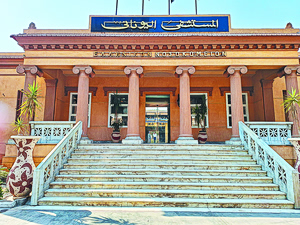
Hospital (original building):on 23 June 1901, the Greek Orthodox Community of Cairo purchased the plot of land for the construction of its own hospital. From 1912 onward, it has continued to operate to this day, playing an important role as the main source of income for the Greek Community of Cairo.
This had been preceded in 1901 by the purchase of a 15.4-stremma plot by the Greek Orthodox Community of Cairo for the construction of its own hospital, funded by Konstantinos Achillopoulos, based on a bequest from his father Evangelos. The contract was signed between the then Deputy Minister of Finance Ahmed Mazloum Pasha and Patriarch Photios, acting as president of the Community. The plans for the original building were drawn up by Periklis Xoukas, and the foundation stone was laid in 1906. The project was completed in 1912, when the inauguration took place, marking the beginning of a new era for the Greek community and its social contribution to the city.
During the period 1942–1944, the hospital was ceded to the Greek Royal Air Force for the needs of the Greek armed forces. Today it operates under the “umbrella” of the community, in ultra-modern facilities, maintaining its long historical and social role.
However, the “heart” of the Greek Community in Cairo from the outset was the Greek church. Its construction was financed by Nestor Tsanaklis, together with a loan from the Greek Community, on a plot donated by the Kyriazis brothers, Greek merchants and benefactors. The foundation was laid in 1907, completed in 1914, and renovated in 2019, remaining a central point of spiritual and social life.
The 20th Century of Development
In the first decades of the 20th century, construction activity in the city was at its peak. And the Greek Community of Cairo did not merely observe developments, but participated, left traces, and was transformed together with the space it inhabited. And it invested. In the period after the Crash of 1929, when banks did not offer satisfactory interest rates and returns on deposits were insecure, it strategically turned to real estate purchases.
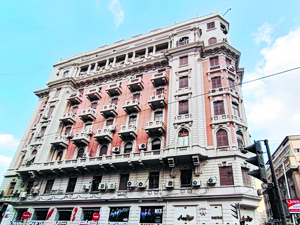
Property in the Talaat Harb area acquired by the Greek Community of Cairo through an auction. It is of eclectic style (Neo-Baroque with Art Deco elements), built prior to 1936.
Thus, in 1936, using funds from the Xenakis bequest, it acquired at auction an eclectic-style building with neo-Baroque and Art Deco elements, located at 32 Talaat Harb Street. It was an income-generating property whose rental revenue could financially support the operation of the Xenakeios Urban School.
Subsequently, the school was built on a plot purchased for the construction of a Boys’ School in 1938 or 1939, at the corner of Kasendt and Falaki Streets, in the Bab El Louq area. The building was designed and constructed by architect-engineers of the firm Michalitsianos and Diakomides, using reinforced concrete, in the Bauhaus style, and was inaugurated in 1941, becoming a symbol of modern architecture and educational innovation. According to data collected by Ms. Tzova, the total construction cost reached 16,000 Egyptian pounds.
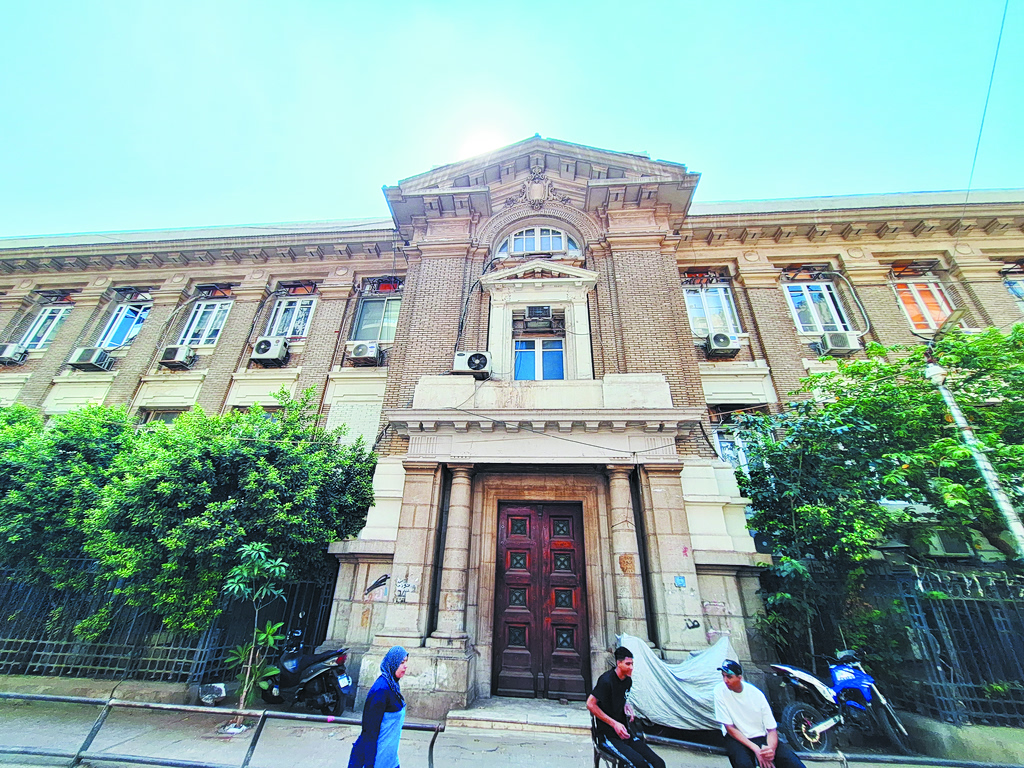
Achillopouleion Girls’ School: it was built and operated thanks to a benefaction by Evangelos Achillopoulos. It was completed in 1929 and for decades housed a school as well as the offices of the Greek community. Today it belongs to the American University of Cairo.
The Xenakeios building, together with that of the Achillopouleion Girls’ School, was sold in 1964 to the American University in Cairo, to which they belong to this day.
For the creation of the Girls’ School, Evangelos Achillopoulos had provided in 1883 not only funds but also his own residence for the housing and operation of the school. The new building was erected later, in 1926, by the Société Générale Autrichienne de Construction. “Despite disputes over construction issues and workmanship defects, the Girls’ School was completed in 1929 and operated for decades as a school while also housing the offices of the Greek Community (1929–1964) on Koubri Kasr El Nile Street,” Ms. Tzova notes. It is noteworthy that during the period 1942–1952, Greek schools in Cairo served the needs of Allied military forces as well as British troops.
By 1964, when the Greek community began to shift toward Heliopolis, its schools were also transferred there—the Achillopouleion and the Xenakeios, which in the meantime had become vocational.
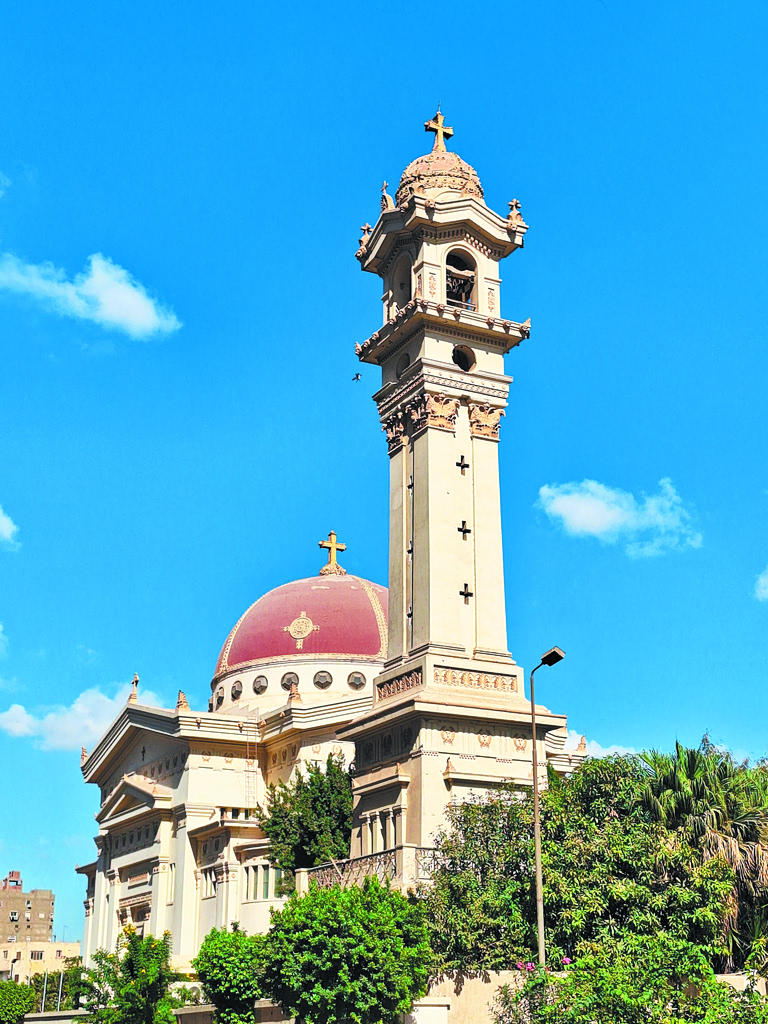
Community Church of Saints Constantine and Helen: the Greek church has always been the center of the Greek community in Cairo. Its construction was funded by Nestor Tsanaklis along with a loan from the Greek community.
The Spetseropouleion Orphanage
A special place in the activities of the Greek Community of Cairo was also held by the Spetseropouleion Orphanage. In 1925, the Patriarchate of Alexandria approached the benefactor Georgios Spetseropoulos, originating from Asea in Arcadia and owner of riverboats on the Nile, asking him to provide funds for the purchase of land to house orphans. Four years later, the Spetseropoulos Brothers Foundation, Georgios and Dimitrios, was established, and the orphanage was built—on a plot belonging to the Heliopolis Company and the Patriarchate—based on designs by architects Xoukas, Bogatsos, and Angelidis, following neoclassical models, with emphasized lintels and decorative Marseille bricks.
“The building remains alive to this day, housing schools, cultural and charitable organizations, sports clubs, and the Church of the Presentation of the Virgin Mary, which is adorned with works by Photis Kontoglou from 1933. Kontoglou, who was in Cairo at the time, had studied Coptic art at the Coptic Museum in Old Cairo, influencing the church’s iconography. During the period of nationalizations, the institution passed to the Church of the Community of Constantinople so that it would not come under state ownership,” Ms. Tzova notes.
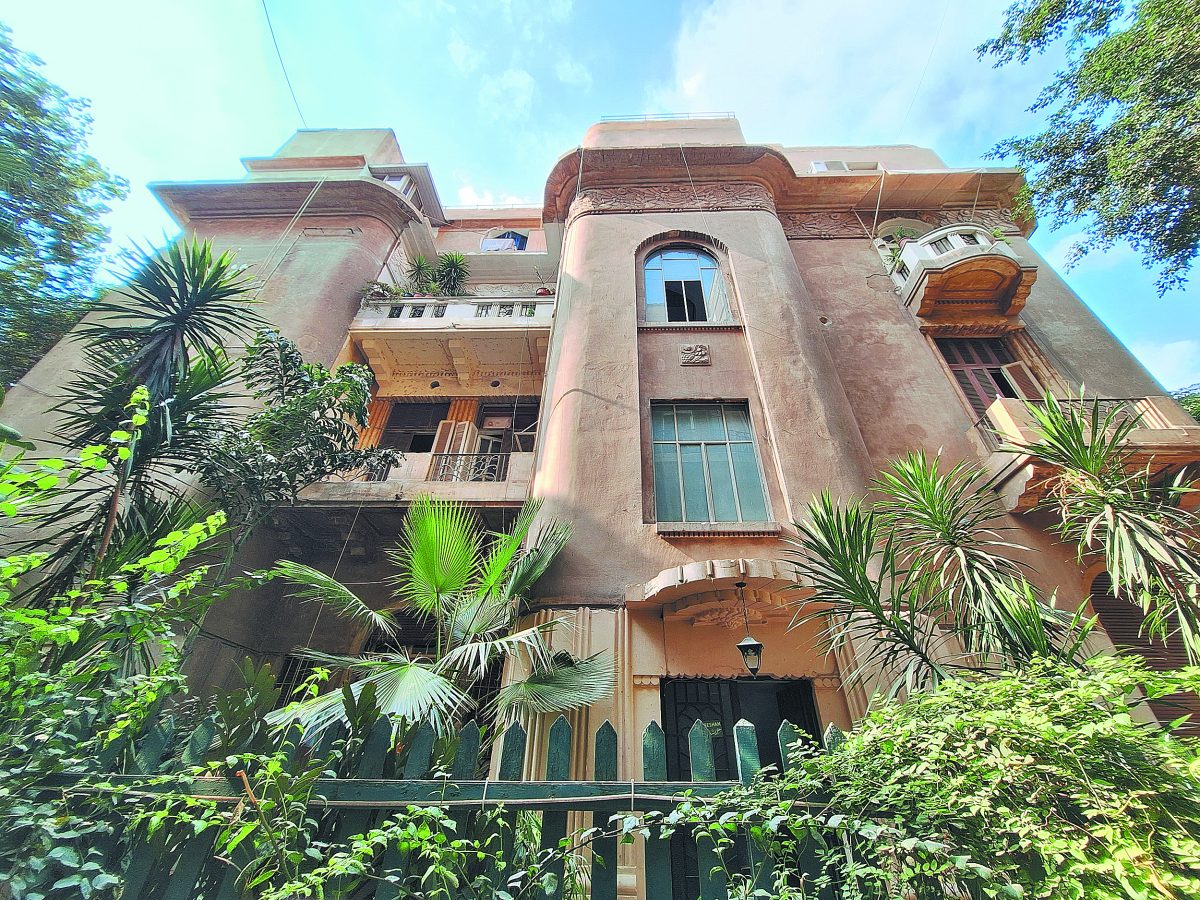
At the same time, the Greek Community of Cairo also acquired other Art Deco–style properties constructed from the late 1920s through the early 1930s. Among them are Imam Ali in Heliopolis and Garden City on Al Bergs Street, both bequests of Aemilia Dessypri (née Philippou), as well as the luxurious Mahmoud Azmy property and the Pyramid House in the Zamalek area, bequests of G. Philippou.
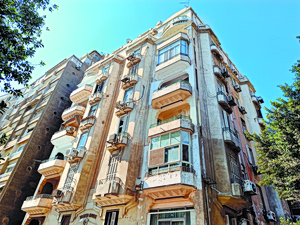
Pyramid House: a historic building in one of Cairo’s most picturesque and cosmopolitan districts, on Zamalek Island in the Nile, near the historic Gezira Club. Half of it belongs to the Greek community, while the remainder is privately owned