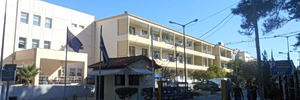
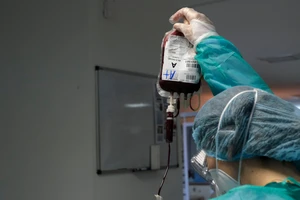
Thriasio Hospital in western Attica is facing serious staffing shortages, with workers warning of unsafe conditions for patients, including burn victims from recent wildfires in Salamina and Crete and an explosion at a factory in Oinofyta.
Employees are calling for the immediate reinforcement of the hospital’s Intensive Care Units (ICUs) and High-Dependency Unit, known in Greece as a Unit of Increased Care.
Severe shortages in critical care units
The High-Dependency Unit, which has 10 beds, is staffed by just 13 nurses and nursing assistants and one ward aide. The same staff are also expected to cover the hospital’s eight-bed Plastic Surgery Department.
The hospital’s General ICU has eight beds and is staffed by 20 nurses and nursing assistants and one ward aide.
The ICU at the hospital’s Burns Center, also with eight beds, has 21 nurses and nursing assistants, one ward aide and one patient transporter.
According to workers, the staffing shortages mean there are just 2.6 nurses per ICU bed, compared with six nurses per bed recommended as the minimum staffing level by Greece’s Central Health Council, based on international scientific standards.
The situation is even more acute in the High-Dependency Unit, where there are only 1.3 nurses per bed, without taking into account the additional needs of the Plastic Surgery Department. The Central Health Council recommends four nurses per bed for such units.
Wider staffing gaps across the hospital
Workers also say the hospital continues to face shortages of patient transporters and ward aides.
They further report that a significant portion of the workforce is employed on temporary contracts, leaving workers in what they describe as a state of prolonged employment insecurity.
The staffing shortages extend beyond intensive care, according to employees.
They say similar gaps exist across the hospital’s clinics, operating rooms, anesthesia department and sterilization services, blood donation unit, outpatient clinics, emergency department, artificial kidney unit, as well as the medical and hemodynamic laboratories.
Overall, 134 nursing and midwifery positions and 62 positions for patient transporters and ward aides remain vacant, according to the workers.
The employees are calling for the shortages to be addressed urgently, particularly in departments caring for critically ill and severely injured patients.