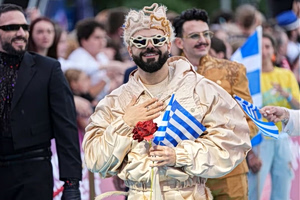
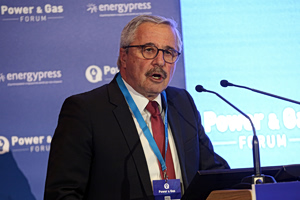
The heart of the 70th Eurovision Song Contest is beating loudly in Austria, with Vienna now at the center of Europe’s attention as it prepares to host the first semi-final on Tuesday, May 12, the second semi-final on May 14, and Saturday’s grand final on May 16 at the Stadthalle arena.
All 35 participating delegations have been in the Austrian capital for the past two weeks, with technical and stage rehearsals now reaching their peak.
Greece Takes the Stage Tonight
The semi-final is set to begin at 10 pm local time. Greece will perform fourth in the running order of the first semi-final, with Akylas and “Ferto” already emerging as one of this year’s most distinctive and widely discussed entries.
The Greek performance stands apart from previous Greek Eurovision entries, both musically and visually, earning positive reactions early on from fans and media alike in Greece and abroad.
The stage concept, created by renowned artistic director Fokas Evangelinos, unfolds inside a video game-inspired universe. Throughout the performance, Akylas “unlocks” successive levels through encounters with four characters on the Stadthalle stage.

During the bridge of the song, Akylas briefly breaks character and addresses his mother in one of the performance’s most emotional moments. In the finale, he climbs onto his signature orange scooter — the defining color theme of the entire performance — and continues the “game.”
Greek viewers will once again hear commentary from Maria Kozakou and Giorgos Kapoutzidis during all three live shows, while singer and Greece’s representative in last year’s Eurovision Klavdia will announce the Greek jury’s famous “douze points” during the grand final.
A Song About Greed and Emptiness
While “Ferto” is deeply personal at its core, tackling greed, overconsumption, and humanity’s endless hunger for more in an attempt to fill emotional voids left by childhood deprivation and unresolved trauma, the song has also evolved into something more symbolic on the Eurovision stage.
In many ways, the title itself seems to capture Greece’s ambition this year: a determined attempt to reclaim Eurovision glory.
As always, eurofans and competing delegations are also closely watching the betting markets, which offer an early indication of where the race may be heading — although Eurovision history has repeatedly proven that dramatic upsets can happen on final night.
At the time of writing, Finland leads the bookmakers with “Liekinheitin,” performed by Linda Lampenius and Pete Parkkonen.
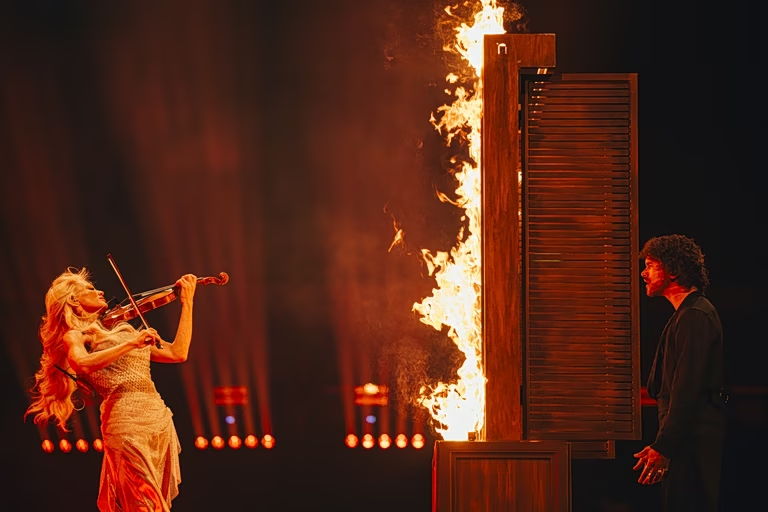
The song blends pop elements with a dominant live violin presence, a combination that appears to resonate strongly with both televoters and professional juries.

Greece’s “Ferto” currently sits in second place.
Denmark follows closely behind with Søren Thorpegaard Lund’s “Før Vi Går Hjem,” an electropop entry with a nostalgic Scandinavian atmosphere that many describe as especially radio-friendly.

Australia also appears strong this year, represented by Delta Goodrem with “Eclipse.” The country climbed sharply in the betting odds following the official artist announcement, with many praising it as one of the strongest vocal performances of the competition.

Completing the bookmakers’ top five is France, represented by Monroe with “Regarde!” — a more atmospheric and emotionally driven performance focused heavily on staging and vocal interpretation.

Cyprus Holds Steady
Cyprus remains slightly lower in the odds but comfortably within the top fifteen. This year’s Cypriot representative, Antigoni, will compete in the second semi-final with the energetic track “Jalla,” which has already received positive reactions during the first rehearsals, particularly for its stage presentation.
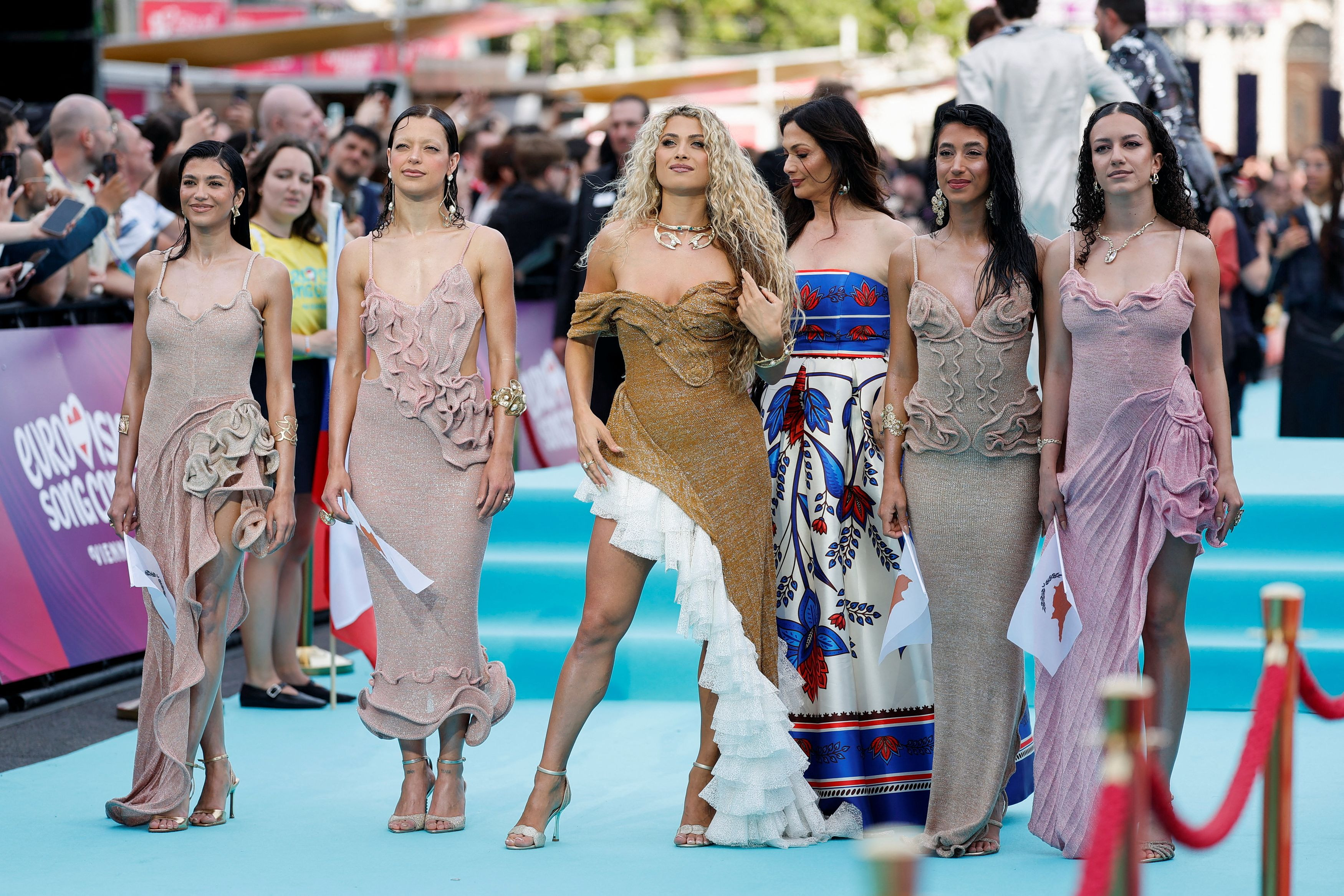
Antigoni, representing Cyprus, attends the 2026 Eurovision Song Contest’s ‘Turquoise Carpet’ event in Vienna, Austria, May 10, 2026. REUTERS/Lisa Leutner
Eurovision Turns 70
Organizers have heavily invested in the anniversary aspect of this year’s Eurovision, preparing a series of special performances and tributes celebrating the contest’s 70-year history.
The first semi-final will open with a short film titled “Life of Toni,” centered on a devoted eurofan who has watched Eurovision every year since 1956, when he was just a little boy.
As Toni grows older, every chapter of his life becomes tied to songs and memories from the contest — much like the experience shared by countless Eurovision fans across generations.
The first semi-final will also feature a strong Greek presence beyond Akylas. Legendary singer Vicky Leandros will take the Stadthalle stage to perform a brand-new orchestral version of “L’amour Est Bleu,” the worldwide hit with which she represented Luxembourg at Eurovision in 1967.

Eurovision Legends Return for the Final
For Saturday’s grand final, organizers have planned an all-star Eurovision reunion featuring some of the contest’s most iconic winners.
The anniversary segment, titled “Celebration!,” will include performances by Alexander Rybak (2009), Lordi (2006), and Ruslana (2004).

Even more artists are expected to appear on the approximately 2,000-square-meter stage, including JJ — the artist who secured Eurovision hosting duties for Austria — who will present a new song, alongside Austrian electro-swing star Parov Stelar.
A Contest Overshadowed by Controversy
Yet Eurovision’s 70th edition is unfolding during one of the most controversial years in the contest’s history.
Israel’s participation once again triggered strong reactions across Europe, with several countries calling for its exclusion from the competition.
The issue dominated discussions within the European Broadcasting Union (EBU), whose members voted internally last December to allow Israel to remain in the contest.
The decision sparked chain reactions across Europe, with Spain, the Netherlands, Slovenia, Iceland and Ireland ultimately withdrawing from the competition. Spain’s public broadcaster RTVE has even decided not to air the contest.
The developments highlight how deeply political tensions have spilled into a competition the EBU insists remains politically neutral.
This year’s Eurovision is therefore more than just a celebration of the contest’s 70-year history. It has become a moment where music coexists uneasily with debates that stretch far beyond the stage and into the broader political and cultural balance of Europe itself.
What remains to be seen is what kind of aftermath this year’s contest will leave behind.