 Μake us preferred on Google
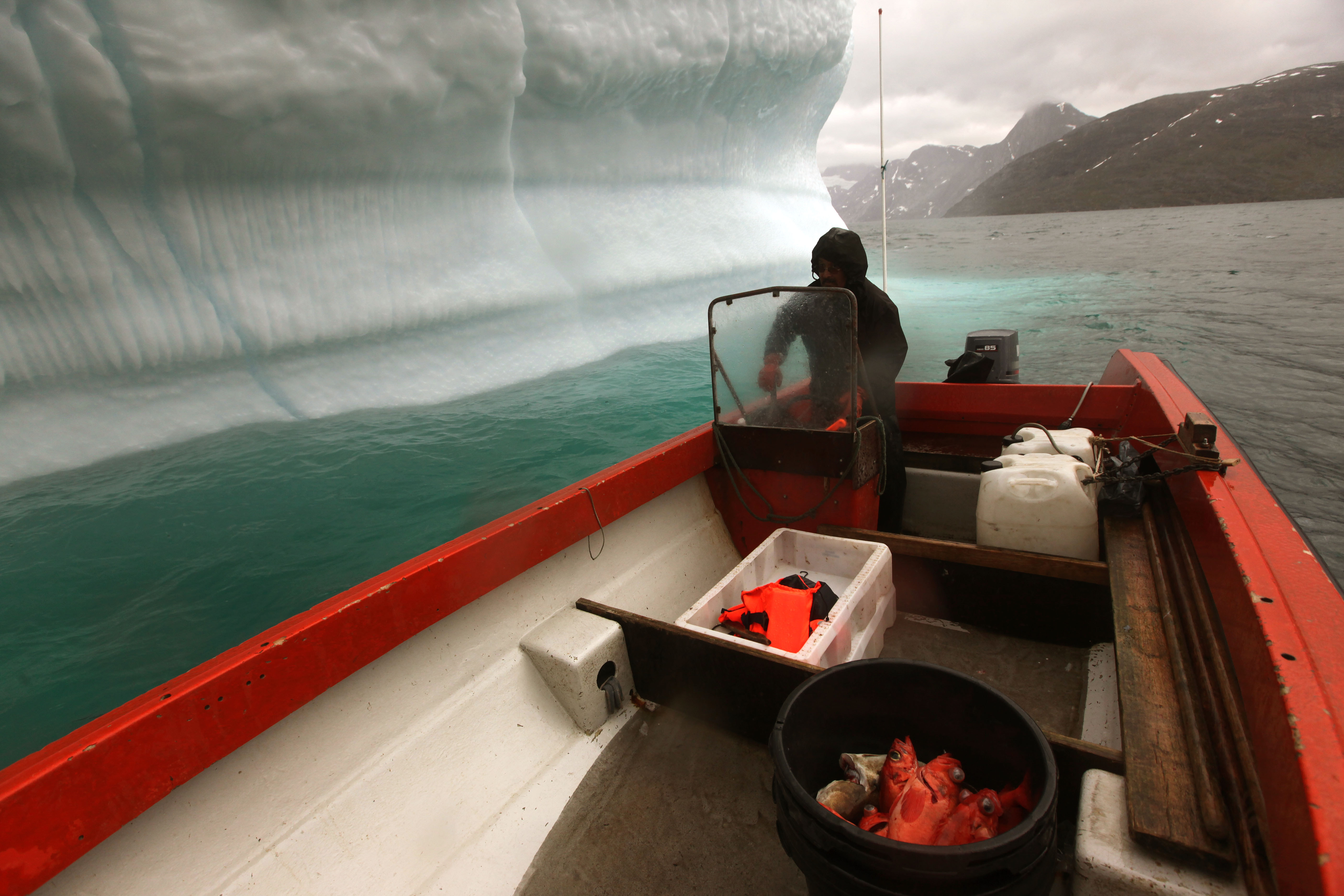
 Greenland’s Inuit are the stress test, not a provocation: a people with documented history, languages, homelands and one of the clearest Arctic migrations on record. Their ancestors emerged from the Bering Strait world into Arctic Canada and Greenland; Thule culture arose in North Alaska around 1000 CE; by about 1200 CE, Thule Inuit crossed the North American Arctic to Greenland as forebears of modern Inuit; genetics anchors that movement in Siberian migration pulses into the Americas and the Arctic.
The early Turkic world is nearby, not kin: Inner Asia, South Siberia, Mongolia, the Altai-Sayan zone, the Orkhon world and adjacent steppe societies. One northern Eurasian theatre of ice, forest, steppe, migration and imperial imagination. Close enough for myth. Nowhere near enough for truth.
That is where the claim dies. “The Inuit are a Turkic people” is nonsense. Not controversial. Not daring. Nonsense. Inuit languages belong to the Inuit-Yupik-Unangan, or Eskimo-Aleut, family. Turkic languages belong elsewhere, with separate history, grammar, textual record and social geography. Proximity is not kinship. Siberia is not a passport. Migration is not identity. No people becomes Turkic because someone draws an arrow across a map.
The fatal error: as a linguistic-cultural category, “Turkic” is legitimate. Turkic languages, literatures, states and communities exist, shaped by Turkic-speaking elites, nomads, merchants, soldiers, poets and bureaucracies. When “Turkic” becomes racial memory, political destiny or transcontinental entitlement, scholarship ends and mythology begins. Genetics shows no civilisational purity across Turkic-speaking Eurasia, only a pattern: populations resembling their neighbours, with uneven traces of Inner Asian ancestry. Turkic languages spread beyond their East Eurasian core through language replacement, elite dominance and social power, not mass biological replacement.
“Turk” is not bloodline but power. Turkish scholarship dates its official identity to the Göktürk state, which appeared in 542 and declared independence in 552. Established in Mongolia, the state used the form Türük in inscriptions. Byzantine usage placed “Turkia” first in Central Asia, later across zones from the Volga to Central Europe, then in Egypt and Syria, and only from the twelfth century in Anatolia. The name travelled: reapplied, territorialised. It did not descend from heaven as an eternal nation-state.
Anatolian Turkish identity is real, but not the biological heir of a single steppe tribe. It is layered ethnogenesis. Oghuz and Seljuk-Turkmen groups moved through Iran into Anatolia in the eleventh century; after Manzikert in 1071, Anatolia opened to deeper Turkish military and political rule. They entered no empty land. They entered a human palimpsest: Greek Orthodox, Armenian, Syriac-Assyrian, Georgian, Kurdish, Balkan, Caucasian, Jewish and other strata, overwhelmingly Christian in many regions. Over centuries, people became “Turk” through conversion, language shift, intermarriage, landholding, military service, patronage, taxation, urbanisation, security and survival. Some converted freely; others under pressure. Some remained Christian until expulsion, exchange, murder or absorption. Turkish Anatolia was not clean migration. It was an imperial borderland transformed.
Pan-Turanism is not exaggerated history. It is weaponised selective memory. It takes a real linguistic family, adds an imperial map, grafts mythic ancestry, erases the converted, the absorbed, the murdered and the renamed, and calls the result destiny. It preaches unity and ancient brotherhood while concealing homogenising violence and relying on modern state power, military corridors, energy routes, alphabet politics, diaspora management and institutional diplomacy. The fiction is a natural Turkic organism awaiting reunion.
When Myth Gets an Address
Hungary exposes the fraud with surgical clarity. Hungarian is Uralic, alongside Finnish and Estonian, not Turkic. Ancient DNA locates parts of the Uralic story in Siberia; it creates no Turkic claim. A Siberian horizon no more makes Hungarians, Finns or Estonians Turkic than the Bering Strait makes Greenland’s Inuit Turkic. Contact, loanwords, agglutinative features, steppe memory and elite legend do not outrank language, history and political fact.
Finland and Estonia had the same material. They did not weaponise it. Their European anchoring was not for sale. Orbán made Hungary’s negotiable. At the 2018 Turkic Council summit, he called Hungarian related to Turkic languages, invoked Hungary’s “Hun-Turkic origins”, cast Hungarians as the westernmost people of the East, and sought closer cooperation with the Turkic Council. Hungary received observer status that year. This was not linguistics but geopolitical laundering.
The Organization of Turkic States (OTS) gives the operation an address: Azerbaijan, Kazakhstan, Kyrgyzstan, Turkey and Uzbekistan as members; Hungary, Turkmenistan, the Economic Cooperation Organization and the occupied north of Cyprus as observers, with Ankara’s occupation regime smuggled into diplomacy as a Turkic observer. It turns ancestry into leverage: relativising Hungary’s European obligations, turning EU membership into an eastern bridgehead, blurring cultural diplomacy into civilisational blackmail, normalising Turkey’s occupation in Cyprus, declaring Hungary inseparable from the Turkic World, and recasting a linguistic family as a geopolitical bloc, memory system and soft-power architecture. Trade, transport, energy, education, culture and diplomacy are statecraft; language, geography and interest are legitimate grounds for cooperation. The breach begins when statecraft becomes metaphysics. That is entitlement laundering: language hardened into destiny, destiny into entitlement, entitlement into a claim against evidence.
The darkest chapter is human, not academic. Pan-Turkism emerged in the late nineteenth and early twentieth centuries as a project for the political union of Turkish-speaking peoples across the Ottoman Empire, Russia, China, Iran and Afghanistan. Its writers glorified a legendary common past and a future Turkish race; from 1913 to 1918, the Ottoman government officially promoted Pan-Turkish propaganda. The Committee of Union and Progress (CUP) turned centralisation, war paranoia, demographic engineering and Turkification into state violence. The Armenian genocide was not battlefield chaos. It was the elimination of the Armenian presence to secure Muslim Turkish dominance in central and eastern Anatolia. 1.5 million Armenians were murdered through massacres, deportations, starvation, exposure and disease.
The Armenians were not alone. Between 1914 and 1923, the Ottoman campaign against Christian minorities devastated Assyrians and Pontic and Anatolian Greeks. Sayfo murdered 750,000 Assyrians through massacres, village destruction, deportations, forced conversions, starvation, dispossession and erasure. The Pontic Greek genocide murdered 353,000 people, while the wider Greek presence of Anatolia, Eastern Thrace, Ionia, Cappadocia and Pontus was shattered through killing, death marches, labour battalions, expulsion and cultural destruction. These crimes had more than one engine: war, state collapse, fear of Russia, property seizure, revenge, religious hierarchy and nationalist state-building. But pan-Turanian fantasy gave the violence a map. The road from Anatolia to Central Asia was blocked by inconvenient peoples. Those peoples were removed.
Beyond Anatolia, Cemal Pasha’s executions and the Mount Lebanon famine revealed the same imperial grammar: centralisation, wartime coercion and contempt becoming mass death.
Genghis Khan is routinely drafted into Turan. His empire proves the opposite. Founded in 1206, the Mongol Empire stretched by the late thirteenth century from the Pacific to the Danube and the Persian Gulf, the largest contiguous land empire in history. It was Mongol, not Turkic, even as it absorbed Turkic tribes and interwove Mongolic and Turkic elites, armies and subject populations. Its western flank, the Golden Horde, was Turko-Mongol: Turkified, Islamised, and ruling over East Slavs, Mordvinians, Greeks, Georgians, Armenians and others. The Kipchak confederation was destroyed and folded into the Horde; some Cumans fled to Hungary, others entered Byzantine and Latin service, and Kipchak slaves became Mamluks in Egypt and Syria. The Mongol shock shaped Rus’, Muscovy, steppe Tatars, Crimean networks, Volga polities and European borderlands. But no serious history calls Russians Mongols because Muscovy paid tribute to the Horde, Hungarians Turkic because Cumans entered Hungary, or Greeks Latin because Crusaders ruled parts of Byzantium. Empires create peoples, names and political memories; they do not prove racial unity. Influence is not essence. Empire is not ancestry. Political subordination is not ethnic identity.
Conquest did not run one way. Alexander’s empire stretched from Macedonia to Egypt and the Indus; the Crusades created Latin polities in the eastern Mediterranean; the Fourth Crusade devastated Constantinople; Russian expansion overthrew the Khanate of Sibir, carried Cossacks and fur traders to the Bering Sea, and brought Central Asian khanates under tsarist power. These movements left languages, cities, churches, archives, legal categories, mixed communities and traumas. Yet no one claims everyone touched by Alexander is Greek, everyone touched by Crusaders is Frankish, or every Siberian people encountered by Russia is Russian by origin. Why should Turkic imperial contact be treated differently?
Greenland’s Inuit are the trapdoor.
If Siberian movement, northern Eurasian proximity, harsh-land survival, deep continuity, Uralic echoes, steppe contact, eastern memory or imperial contact suffice, the fantasy can annex anyone: Inuit, Hungarians, Finns, Estonians, half of Eurasia. That is the fraud: kinship forged, history edited, power dressed as ancestry.
The line is final. The Inuit are not Turkic. Hungarians, Finns and Estonians are not Turkic. Anatolian Turks are not a pure steppe transplant. Turkic languages are real; their cultures rich; their states legitimate. Pan-Turanism is blood-and-map mythology: not courage, not scholarship, not destiny. Courage defends peoples without inventing ancestry, builds cooperation without racial mythology, and denies Eurasia to rulers who mistake arrows for evidence and maps for truth.
Shay Gal works with governments and international institutions on strategy, risk and security decision-making in high-stakes environments.