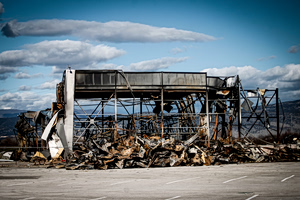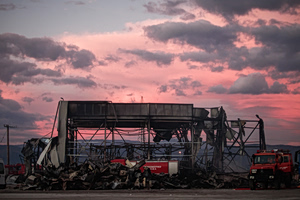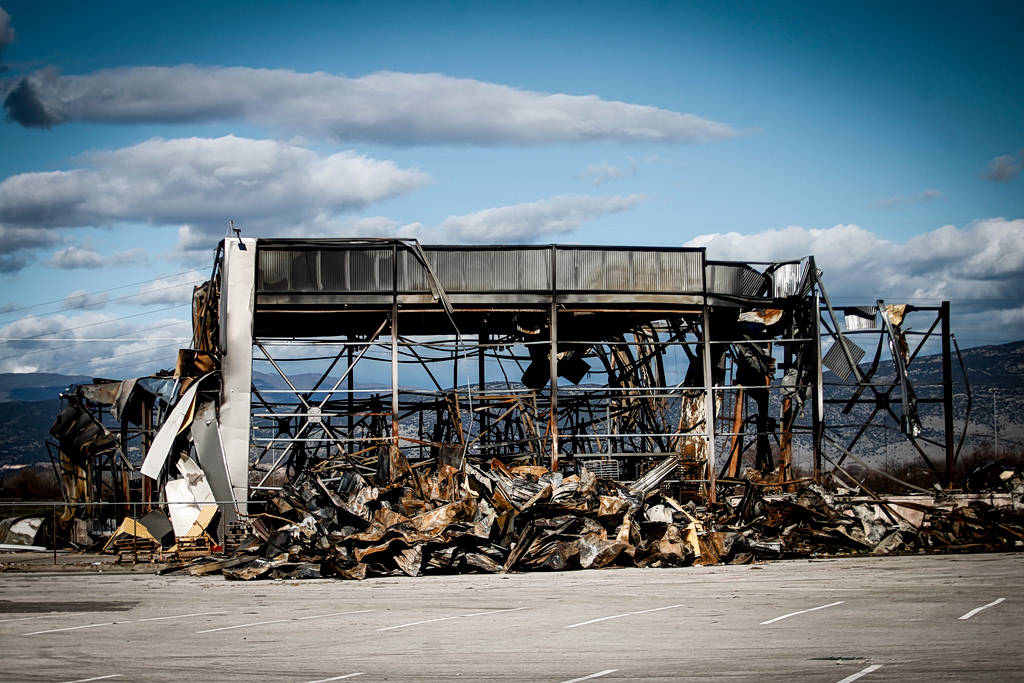
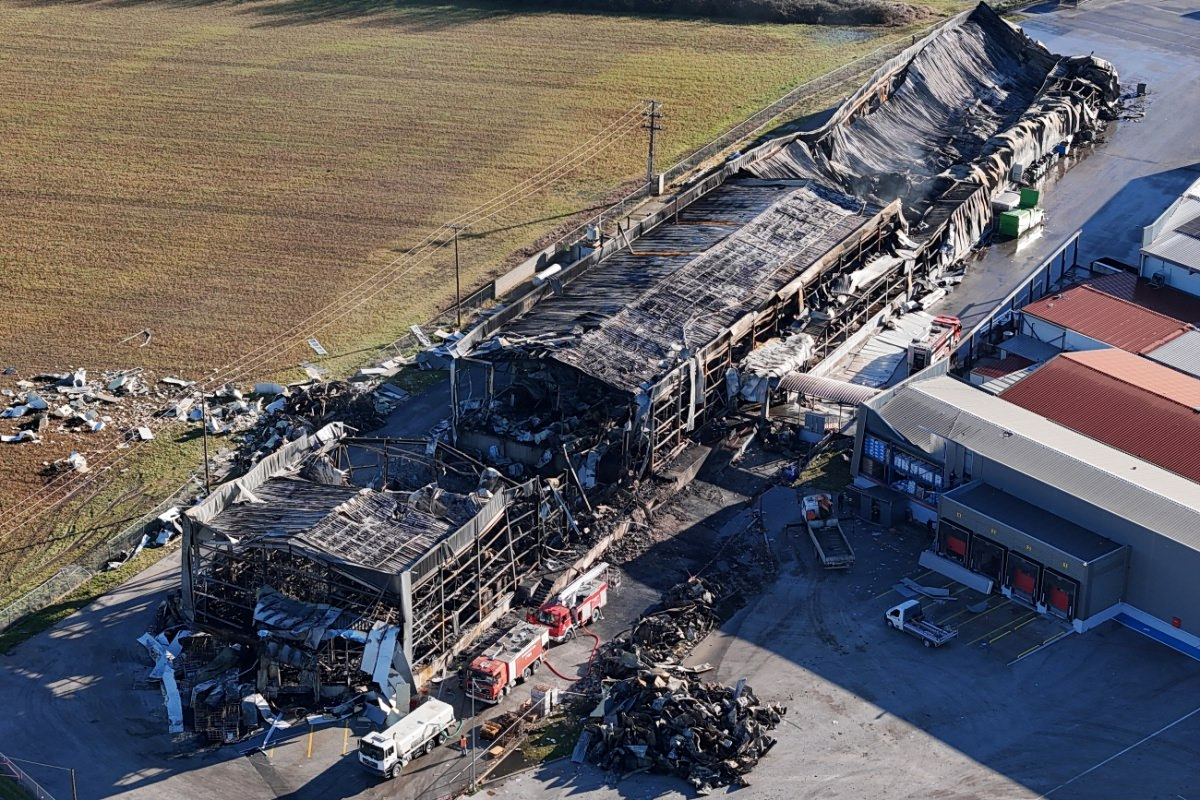
Revealing findings on the causes and omissions that led to the deadly explosion at the Violanta cookie plant outside the central Greece city Trikala were presented in an investigation conducted by the National Technical University of Athens (NTUA).
The explosion claimed the lives of five female workers and highlighted serious deficiencies in the plant’s safety systems.
According to the report, as cited by public broadcaster ERT, extensive corrosion was found in the pipelines transporting propane from external tanks into the unit’s premises. Two large holes were identified, through which the flammable gas had been leaking for a long period of time.
The investigation also points to serious construction flaws. For instance, underground pipelines were connected with threaded joints, which did not ensure the required tightness and lacked adequate protection, as safety standards require. According to experts, these omissions dramatically increased the risk of leakage.
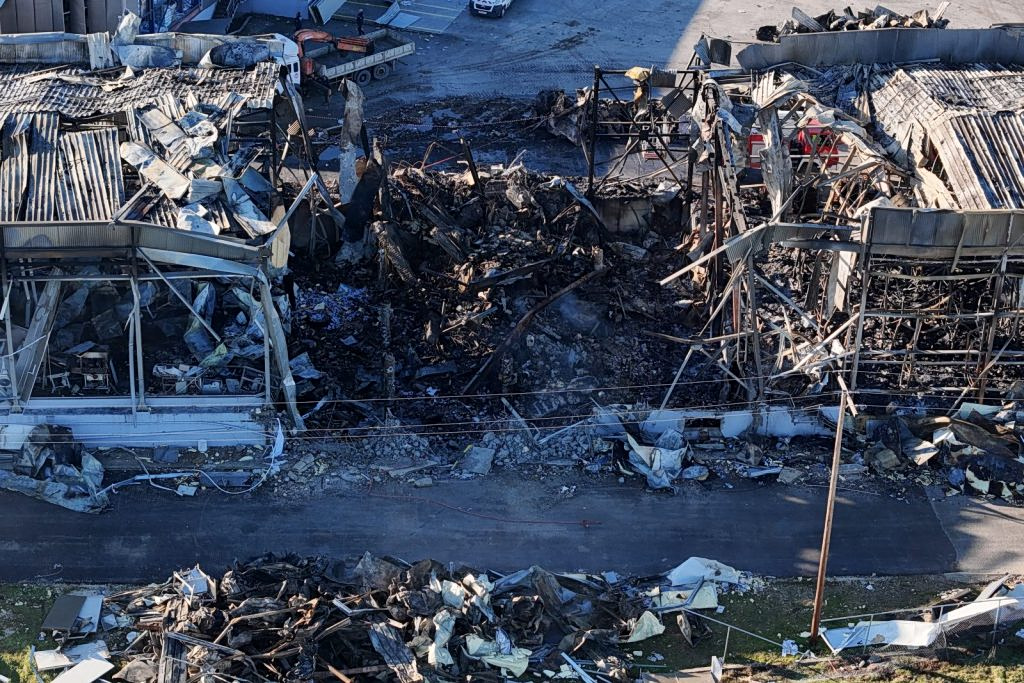
Testimonies, technical findings
At the same time, two members of the management are expected to testify before the investigating judge, as—according to employee testimonies—there was no response to repeated reports of strong and suspicious odors in the facility, which were clear warning signs of danger.
The NTUA (Athens polytechnic) report has already been submitted since late February to an investigating magistrate in Trikala, via the fire brigade’s arson investigation unit, as part of the ongoing judicial inquiry into the incident.
The technical analysis confirms that the damage to the pipe that caused the leak was not due to unsuitable materials, but to serious installation errors. Although the steel pipe was technically appropriate, it lacked anti-corrosion coating and a cathodic protection system, while a proper base layer—such as clean sand—was also missing.