Greece’s National Blood Donation Center (EKEA) has introduced updated blood donation measures following the detection of new West Nile virus cases, expanding surveillance and strengthening safeguards to ensure the safety of blood transfusions during the virus transmission season.
The measures are based on the Ministry of Health’s Action Plan and epidemiological data from the National Public Health Organization (EODY) through July 29, 2026.
The municipalities of Papagou-Holargos in northern Athens, as well as Pella and Skydra in the regional unit of Pella, have been added to the country’s list of “affected areas.”
Two Categories of Risk Areas
EKEA classifies municipalities into two categories:
- Affected areas: Municipalities where at least one human case of West Nile virus has been recorded during the current transmission season.
- High-risk areas: Municipalities with no recent human cases but where factors such as proximity to affected areas, historical data, mosquito surveillance findings, and animal surveillance indicate an elevated risk of transmission.
Expanded Molecular Blood Testing
To protect the blood supply, EKEA requires nucleic acid testing (NAT) for blood donations collected from donors in designated areas.
In the Attica region, all blood donations from individuals who live or work in Central, Northern, Southern, and Western Athens, Piraeus, Eastern Attica, and Western Attica are already subject to molecular testing for West Nile virus.
Molecular testing is also required for donations from people who live or work in municipalities classified as either affected or high-risk.
Across the rest of Greece, the same testing applies to blood donations collected from donors residing or working in affected and high-risk municipalities.
Blood Stocks Placed Under Precautionary Hold
EKEA also announced precautionary restrictions on certain blood, plasma, and platelet supplies.
In Attica, blood units collected since July 15, 2026, from donors residing in the municipalities of Pella and Skydra have been placed on hold.
Elsewhere in Greece, blood units collected since July 15 from donors in the municipalities of Papagou-Holargos, Pella, and Skydra have also been withheld.
The agency clarified that no retrospective testing is required for the newly designated affected areas in Attica because molecular screening has already been in place there since July 8.
Updated Guidance for Blood Donors
The revised measures also include updated donor eligibility rules.
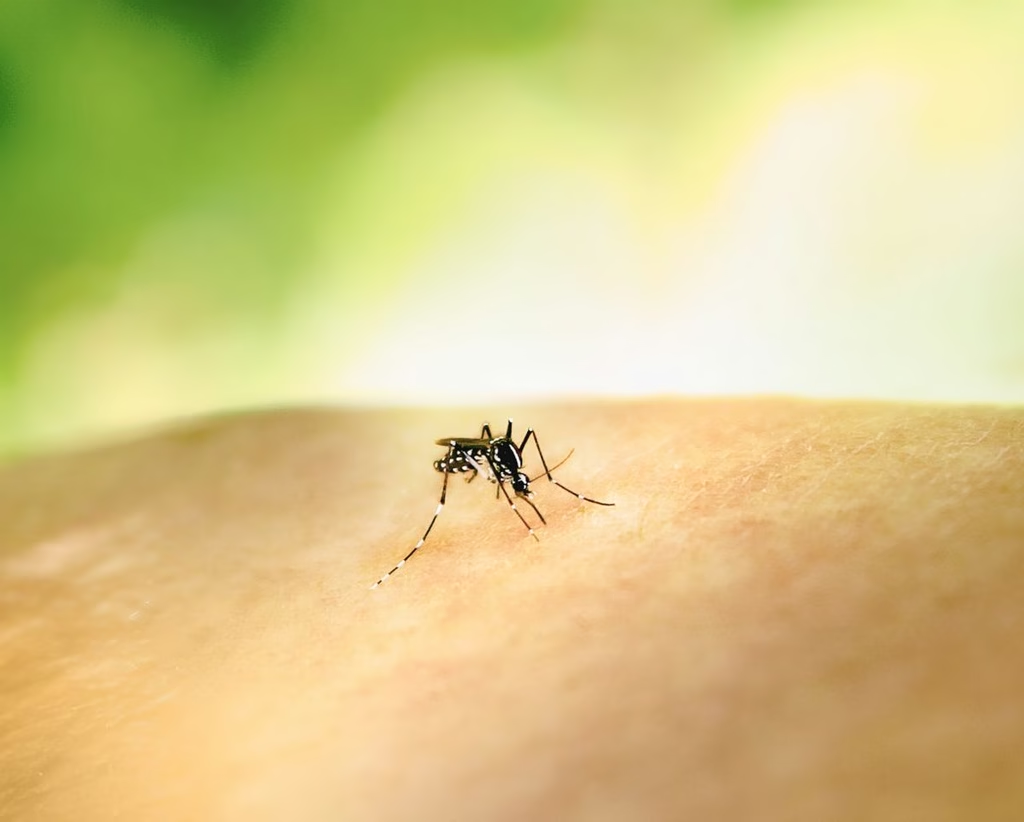
People leaving an area where human cases have been reported are temporarily deferred from donating blood for 28 days if molecular testing is not available. EKEA considers even a single overnight stay in an affected area to constitute exposure because mosquitoes are most active during nighttime hours.
Individuals who have recovered from West Nile virus infection may donate blood 120 days after diagnosis.
Medical screening of donors will place particular emphasis on symptoms that could indicate a mild West Nile virus infection. Donors are also asked to immediately notify blood donation services if they develop fever or other related symptoms within 15 days after donating, allowing blood units and their components to be placed under precautionary hold.
Appeal for More Volunteer Blood Donors
EKEA has urged blood donation services in areas where no human cases have been recorded to increase outreach to volunteer donor organizations, warning that temporary donor deferrals are increasing demand for available blood supplies.
The agency also called on blood services to maintain adequate reserves so they can respond, in coordination with EKEA, to any emergency needs that may arise elsewhere in the country.
The updated surveillance list includes affected or high-risk municipalities across Eastern Attica, Northern, Central and Southern Athens, Western Attica, Larissa, Karditsa, and Pella, with specific municipalities identified as high-risk.