

 Μake us preferred on Google
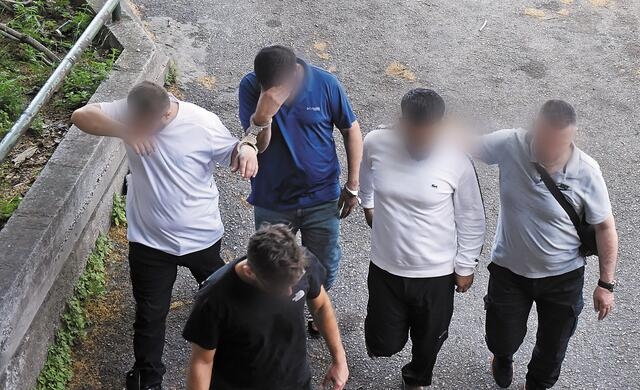
Sercan Sayal, who was handed over to Turkish authorities on Thursday, was reportedly wanted under an Interpol “red notice” and had 116 outstanding arrest warrants against him. Turkish authorities have also attributed to him the organization of 90 shootings in the western province of Izmir, along with three assaults, one murder and 164 acts of intimidation.
Sayal was transferred from Athens to Istanbul and was expected to be taken to Izmir.
His extradition is part of a broader effort by Ankara to secure the return of fugitives from abroad. Turkish Interior Minister Mustafa Ciftci said that 805 fugitives had been brought back to Turkey from 45 countries since the beginning of 2026, including 189 people identified by Turkish authorities as leaders or members of criminal gangs.
The issue has increasingly featured in contacts between Greek and Turkish officials, with Ciftci meeting Greek Citizen Protection Minister Michalis Chrysochoidis in Athens in early October. The two sides discussed organized crime, human trafficking and migration management.
The Turkish minister pressed for faster extradition procedures, arguing that members of criminal organizations continued to operate from Greek territory, in some cases even while in custody.
Athens, meanwhile, has proposed closer police cooperation, including the issuance of Interpol red notices for individuals wanted under Turkish arrest warrants, as a means of facilitating their identification and arrest.
The growing concern is not difficult to understand, given that Turkish criminal networks have established an increasingly visible, and often violent presence in Greece, with activities extending beyond “traditional” trafficking operations to include contract killings, weapons smuggling, drug trafficking, money laundering and migrant smuggling.
From Loutsa to Exarchia
The scale of the problem first became shockingly apparent in September 2023, when six Turkish nationals were gunned down in rural Artemida, in eastern Attica prefecture, an incident that became one of the most prominent manifestations of the violent rivalries between Turkish criminal gangs operating abroad.
The victims were reportedly members of the Dalton gang, one of the most prolific and violent Turkish criminal networks in Europe, which originated in Istanbul’s Beyoglu district. The group’s historical leader, Baris Boyun, is currently being held in a maximum-security prison in Italy.
Greek authorities suspected that the killings were retaliation for the murder of a member of a rival organization in Paris. The victims were shot while sitting in a car bearing German license plates. Two Turkish nationals were subsequently convicted in connection with the killings, receiving six life sentences each.
The Dalton gang is only one of several Turkish criminal organizations whose activities have extended into Greece. Other names associated with the broader underworld include the Red Kits, the Hackney Turks and the Caspers, as well as networks such as the Hawks, Baygaralar, Sahinler and Duran groups.
In December 2024, another bloody incident occurred in Glyfada, coastal southern Athens, when armed men entered a betting parlor and opened fire on three Turkish nationals. The victims attempted to escape, but the gunmen caught up with them outside. Two were killed and the third was seriously wounded.
The incident was treated by Greek authorities as a settling of scores between rival Turkish criminal groups. A subsequent police operation led to numerous arrests and the discovery of weapons and narcotics at residential premises.
In May 2025, members of Greece’s National Intelligence Service (EYP) came under fire in Thermi, near northern Thessaloniki, from three individuals reportedly linked to the Dalton gang and already under surveillance. The suspects apparently believed they were being followed by Turkish intelligence agents. The three were subsequently sentenced to prison terms ranging from six to 12 years.
More recently, on June 13, a 25-year-old Turkish national was murdered in Athens’ central Exarchia district. A 28-year-old Turkish national was arrested several days later. He was suspected of having travelled from Turkey to carry out a contract killing.
The violence has not been confined to Greece. Similar incidents have been recorded in Spain, Germany, the United Kingdom and the Netherlands, reflecting the increasingly transnational character of the networks and their rivalries.
A 2024 Europol assessment of the most threatening criminal networks in the European Union identified Turkish organized crime as active in more than 40 countries. Analysts attribute the violent clashes primarily to retaliation and competition over criminal markets, particularly drugs, weapons and migrant smuggling.
Meanwhile, in September 2026, tovima.gr reported on an unannounced visit to Athens by Turkey’s intelligence chief, Ibrahim Kalin, who reportedly referred to approximately 300 Turkish organized-crime members operating in Greece over the preceding four years, belonging to around 15 networks.

TikTok and the new generation of gangs
Although Turkish organized crime has maintained a presence in Europe since the 1990s, the failed coup attempt against President Recep Tayyip Erdogan in 2016 is widely regarded as a turning point in the expansion and transformation of the country’s underworld.
According to an analysis by the Middle East Forum, the transformation had begun earlier, in 2013, when Erdogan’s ruling Justice and Development Party (AKP) was engulfed in a major corruption scandal involving people close to the president.
The aftermath of the failed coup brought extensive purges within the police and other security services, removing officers with considerable experience in combating organized crime. The analysis argues that some criminal groups subsequently benefited from political tolerance, while unemployment, economic hardship and growing social inequalities pushed increasing numbers of young people towards criminal networks.
A further development was the emergence of so-called Generation Z gangs, whose recruitment methods and activities have been amplified through social media.
A report by French newspaper Le Monde describes how these groups frequently recruit teenagers from some of Turkey’s poorest urban neighborhoods. Recruitment, as well as footage celebrating criminal activities and acts of violence, is circulated through platforms such as TikTok, providing gangs with publicity and a means of attracting new members.
The scale of the phenomenon was illustrated by the trial of the Dalton gang in Istanbul, which began in the latter part of 2025. There were 362 defendants, including senior members of the organization, with the average age of those appearing in court reportedly just 20.
Two senior members received 12 life sentences each for offenses including murder, drug and weapons trafficking and money laundering. Other defendants received prison sentences ranging from one year to as many as 700 years. Approximately 60 defendants were acquitted, while proceedings against another 34, including Boyun, were separated.

Turkish Interior Minister Mustafa Ciftci.
Criminal fugitives or political refugees?
The fight against Turkish organized crime, however, presents Greek authorities with a particularly sensitive legal and political complication: not every Turkish national sought by Ankara is necessarily a criminal fugitive.
During his Athens visit, Ciftci reportedly stressed that Turkey wanted the faster extradition not only of suspected members of criminal organizations but also of members of the movement associated with Fethullah Gulen, which Ankara holds responsible for the failed 2016 coup and designates as a terrorist organization.
The distinction is important because the Turkish authorities have frequently pursued individuals on criminal charges while also accusing them of involvement in political or opposition movements.
Greek legal circles point out that some Turkish nationals seeking asylum in Greece have credible grounds for fearing political persecution. This does not mean that all individuals requesting international protection are political refugees: some may also be attempting to evade legitimate criminal proceedings. Each extradition request therefore requires an individual assessment by the Greek courts.
Judicial documents reviewed by Ta Nea indicate that, in several cases, Turkish extradition requests have failed to disclose previous convictions or pending proceedings involving alleged political offenses.
One such case concerned a 24-year-old man of Kurdish origin whom Turkey sought to extradite on theft and drug-related charges. Greek judicial documents established that he had been politically active in pro-Kurdish movements and had previously received an eight-year-and-four-month prison sentence for alleged participation in a terrorist organization, identified as the Kurdistan Workers’ Party (PKK).
The Greek court noted that the earlier conviction had not been disclosed in the Turkish extradition request. It also expressed concern that, if returned, the man could be imprisoned to serve that sentence and face further prosecution on political grounds.
The Turkish authorities failed to provide supplementary information requested by the Greek judiciary within the prescribed 60-day period. The Supreme Court’s criminal division consequently accepted his appeal and rejected the extradition request, concluding that there was a credible risk of persecution related to his political beliefs and pro-Kurdish activities.
A similar decision was reached in the case of a 32-year-old Turkish national sought over drug-related offenses. He produced a Turkish court ruling from 2018 sentencing him to eight years and three months for membership in an organization considered terrorist by Ankara.
Greek authorities requested additional information from Turkey, but the response was incomplete. The Supreme Court council ultimately ruled against extradition, finding that the circumstances warranted further consideration of the risk of politically motivated prosecution.
The outcome was different in another case involving a 23-year-old Turkish national wanted to serve the remainder of a prison sentence for bank fraud. He had escaped from a Turkish prison in 2024, after serving two months of his sentence, and was subsequently the subject of a new arrest warrant.
His lawyers argued that the extradition request was a pretext for political persecution, presenting a separate conviction from 2022 under Turkey’s legislation governing demonstrations and public gatherings.
The Greek judicial authorities, however, found insufficient evidence of political activity that could suggest the extradition request was politically motivated. The Supreme Court council therefore rejected his appeal against extradition.
The cases illustrate the difficult balance facing Greece as it seeks to cooperate with Turkey against increasingly active transnational criminal networks while upholding its obligations to protect individuals who may face persecution if returned.
For Athens, the challenge is not simply to prevent Turkish criminal organizations from using Greece as a base for their activities. It is also to ensure that the fight against organized crime does not become a mechanism for returning genuine political opponents to a country where they could face prosecution for their beliefs.