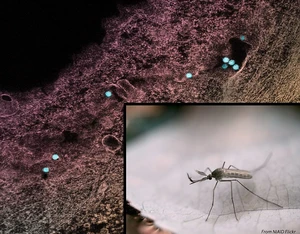
Attica is facing a growing outbreak of West Nile virus, with mosquito-borne infections spreading across the metropolitan area from Voula and Glyfada in the south to Pallini in the east, and from Agia Paraskevi to Fyli in the west. The Athens basin now accounts for the highest number of reported infections nationwide.
As the virus has become more widely dispersed, the National Blood Donation Center (EKEA) has introduced universal nucleic acid testing (NAT) for blood donations in affected and high-risk areas, replacing geographical donor restrictions, which are no longer considered a practical safeguard.
Speaking to Ta Nea, EKEA President Eleni Tsagkari said the screening “is applied horizontally, covering all blood donations collected in the areas where the measure is in force.” Every blood unit collected in affected and high-risk regions is sent to EKEA for molecular testing, following the same procedures used to screen for viruses such as HIV and hepatitis. The testing enables authorities to detect even asymptomatic carriers of the virus.
“Our objective is twofold,” Tsagkari said. “First, to avoid worsening the seasonal shortage of blood supplies, and second, to ensure the safety of blood transfusions.”
According to the latest epidemiological report from Greece’s National Public Health Organization (EODY), 23 additional locally acquired cases were reported within the past week, bringing the total number of confirmed infections this season to 65.
Of those, 54 patients developed neuroinvasive disease, including encephalitis, meningitis or acute flaccid paralysis, while the remaining cases experienced milder symptoms.
So far, 38 patients have been discharged from hospital, while 20 remain hospitalized, including 12 in regular wards and eight in intensive care units. Health authorities have also recorded six deaths, all involving patients over the age of 65 who developed severe neurological complications.
Scientists caution that the reported figures significantly underestimate the true extent of the outbreak. They point to a seroepidemiological study conducted in 2010, which found that for every reported case involving the central nervous system, there are an estimated 140 additional infections, most of which are either mild or entirely asymptomatic.
West Nile virus is transmitted primarily through the bite of infected common mosquitoes. The insects become infected after feeding on infected birds—particularly certain species of wild birds—but infected humans do not transmit the virus back to mosquitoes or to other people.
Although the vast majority of infected individuals either remain symptom-free or develop only mild illness, fewer than 1% experience severe disease affecting the nervous system, most commonly encephalitis or meningitis.
According to health experts, people over the age of 50, as well as individuals with weakened immune systems or chronic underlying health conditions, are at the greatest risk of developing serious complications.