Once upon a time, summer had a song. Or at least, that is how we remember it.
A catchy chorus would pour out of radios, car windows, beach bars and town squares, and before the vacation season was over, it had become the unofficial soundtrack of an entire summer.
From “Macarena” and “I Gotta Feeling” to “Despacito,” “Gangnam Style” and “Waka Waka,” these songs were more than hits. They became memory codes for summer road trips, sunsets with friends on the beach and fleeting summer romances.
“The summer song is a typical song that starts in the ear, comes down with its catchy chorus and then stays in the heart,” Fernando Martínez, a DJ known as Fernandisco, told the Spanish newspaper El País. He recently took part in a Madrid city event celebrating the greatest summer songs of all time.
But today, there appears to be no longer a single song that belongs to everyone.
Playlists are personal, streaming platforms are seemingly endless, and a melody can go viral on social media within hours, only to be replaced by the next one before it has had time to become a memory.
From vinyl records to Spotify
The idea of the quintessential summer song emerged in the 1950s and 1960s, as radio grew increasingly popular. Record companies and artists began targeting teenagers who were on summer vacation, seeking to sell them more pop-culture products.
The obsession with finding the one song that would dominate the entire summer reached its peak in the 1990s, helped by MTV, which had become a major destination for discovering mainstream music trends.
Music magazines also played a role. Based on reader preferences, they would publish lists in July and August predicting which artists and songs were most likely to dominate the season.
Today, charts perform much of the same function, identifying the biggest hits through algorithms and streaming figures in the digital environment.
But the shift has also reduced the ability of DJs, radio hosts and music-industry executives to determine which songs become hits. Much of that power has moved to listeners, who are often guided by personalized recommendations on platforms such as Spotify.
The formula for a summer hit
Many songs created for summer followed a familiar formula, revolving around themes such as the sun, beaches, romance, sand and parties.
Their rhythms were often influenced by Latin American music, a style that has since become popular throughout the year rather than being associated primarily with summer.
Artists including Elvis Crespo, Ricky Martin and King Africa helped propel tropical Latin rhythms into mainstream music, while pop now occupies the leading position.
Most of these songs were deliberately lighthearted. They were not necessarily intended to be works of great artistic ambition, but rather to provide an immediate boost in mood.
A catchy chorus and a dance that audiences could easily follow were also crucial ingredients for a hit.
Today, however, the choreography has largely been replaced by viral social media videos. Songs become part of the soundtrack to dances, challenges or other content that users create and share on their profiles.
From a shared soundtrack to personal playlists
The transformation of the summer song reflects a broader change in the way music is consumed.
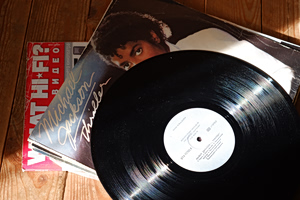
“In the past, you bought a vinyl record, turned it over and spent time listening to it. Now consumption is like fast food,” said Mónica Martínez, a producer for the Los 40 Classics web radio station, who also took part in the Madrid celebration at the Matadero cultural center.
“On radio or television, they would bet on one song and you could hear it many times throughout the summer,” she said. Those songs became viral before reels and Spotify existed because they were everywhere — on radio and television, in music programs, at concerts and in the family car.
The result is a music landscape in which there may no longer be one defining song shared by everyone.
Instead, the soundtrack of summer can be different for every listener, shaped by individual playlists, streaming habits and algorithmic recommendations.