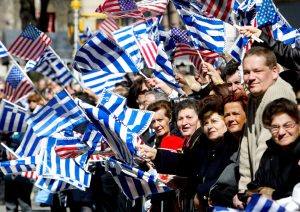
Twentieth-century Greek migration is closely intertwined with the United States and the American Dream. Countless stories tell of Greeks who left their homeland behind and, through sheer hard work under harsh and often unforgiving conditions, managed to achieve success and recognition abroad.
The land of opportunity still exerts a powerful allure today. The US remains a symbol of possibility and reinvention for many young people, among them Evelin Antae Boatenk, a young woman from Thessaloniki who decided to cross the Atlantic in pursuit of her dream.
Early Waves of Migration
Between the 1890s and 1917, approximately 450,000 Greek immigrants arrived in US ports. Many found work as hired laborers on the railroads and in the mines of the American West. The overwhelming majority—about 90 percent—of those who passed through Ellis Island were men. Nearly all shared the same goal: finding employment in order to survive and support the families they had left behind back home.
Another 70,000 people made the long voyage to the United States between 1918 and 1924. However, over the twenty years after that, the number fell to around 30,000. Most of these later arrivals were women; often referred to as “picture brides,” they came to marry the Greek men who had emigrated to America in the earlier waves.
Postwar Shifts
Greek migration to the United States sped up again after 1945, as many sought to escape the economic devastation wrought by World War II and the Greek Civil War. However, following Greece’s admission to the European Union in 1981, immigration numbers dropped significantly, to fewer than 2,000 arrivals per year. In the decades since, Greek immigration to the United States has remained minimal.
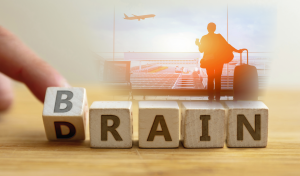
Even during the recent economic crisis between 2009 and 2018, when Greek society suffered a serious “brain drain”, most of those who left migrated to other European countries rather than the United States.
A New Generation
Although the economic situation in Greece appears to have stabilized, the idea of the opportunities the United States can offer for both financial and personal growth remains highly attractive to many young people in Greece. Ultimately, however, it is the individual’s unique circumstances that shape both their decision to migrate and how they cope with the challenges that may arise after they settle in a foreign country.
For Evelin, being raised in a very close-knit family that had to struggle to get by both shaped her mentality and became the driving force behind her decision to pursue her dream abroad.
Roots and Resilience
“I grew up in Greece in a single-parent family,” she says. Very early in her life, she had to find a job to help her mother support herself and her two younger half-sisters. “From a very young age, I learned what survival, work, and dignity really mean. I started work at 17 to help my mother and contribute to our household expenses.”
At the same time, food was always her “safe place,” as she puts it. “I grew up cooking with my grandmother and grandfather, surrounded by Greek, Pontian, Polish, and African flavors—my father is of African descent. Ours was a family in which the table brought people together.” This multicultural foundation shaped not only her aesthetic, but also the way she views life.
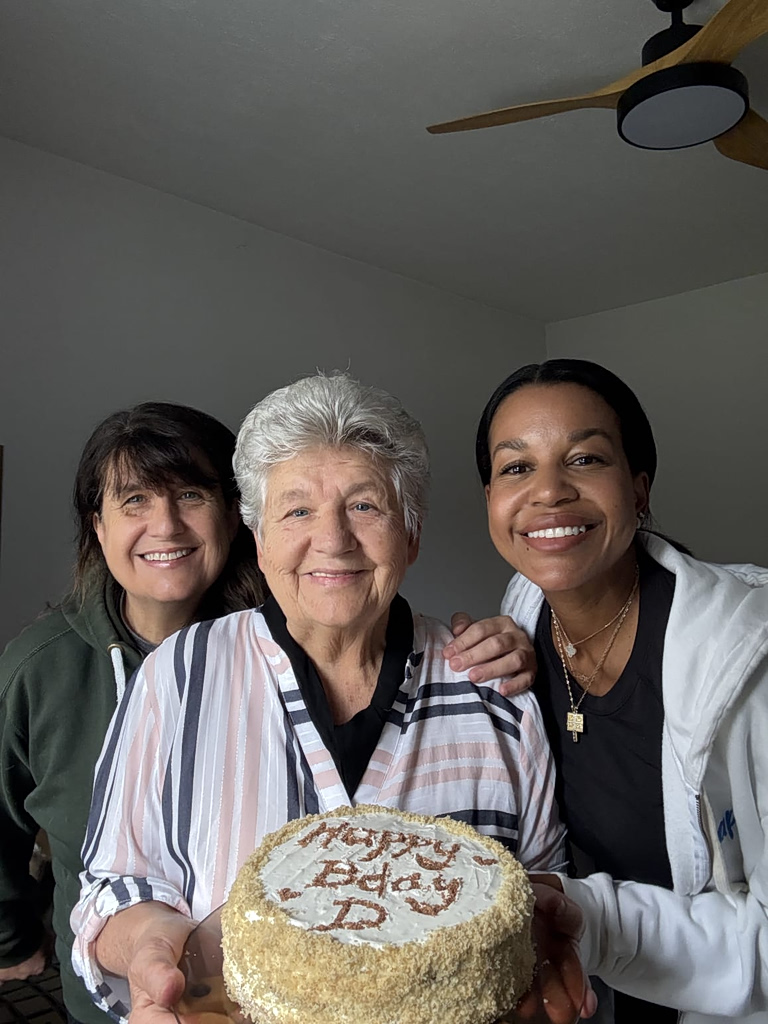
Evelin (right), with her mom (Afroditi Michailidou) and her grandma ( Margarita MIchailidou) at her village in Pellas, Central Macedonia, Greece, posing with a homemade cake. Credit: Evelin Antae Boatenk
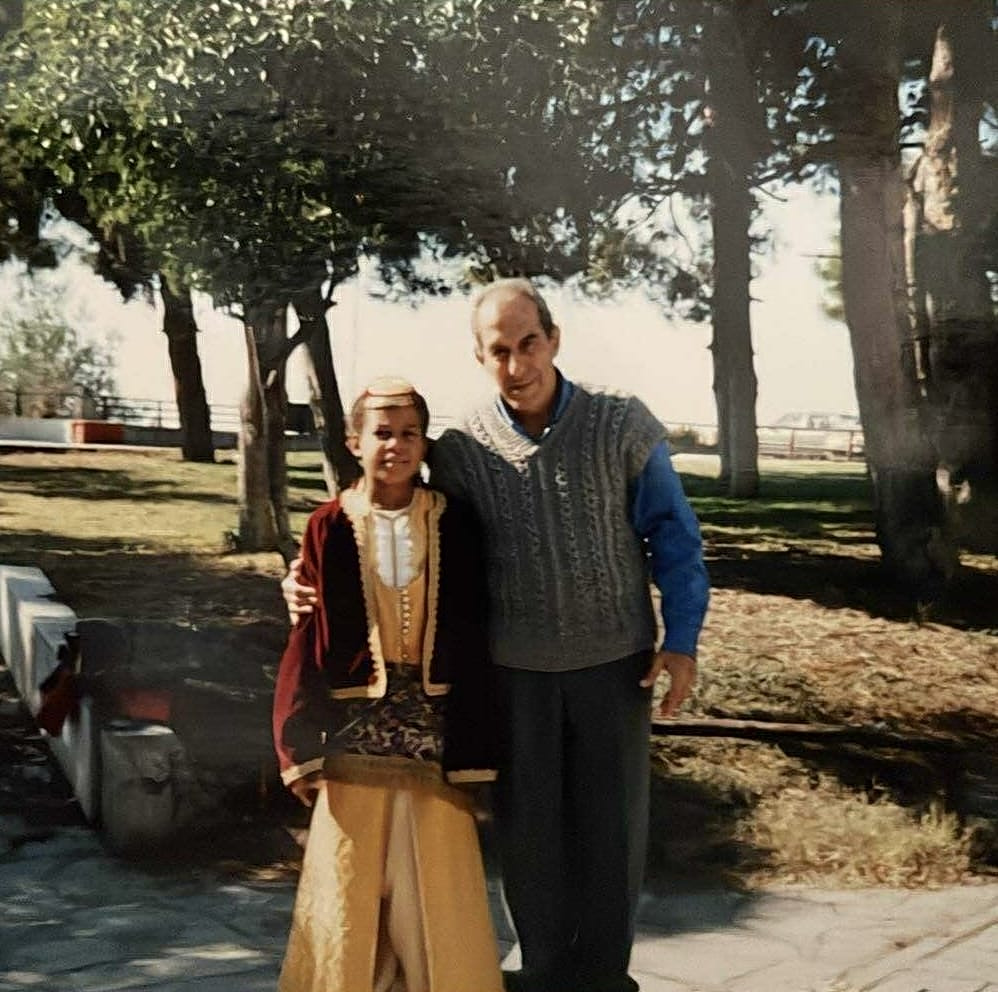
Boatenk with her grandfather in 1999 in Thessaloniki dressed in traditional Pontian costume. Credit: Evelin Antae Boatenk.
New York Calling
Financial hardship from a young age and limited opportunities in her hometown led her to leave Greece. Her chosen destination was the Big Apple, long a magnet for migrants keen to try their luck and a city that embraces people from everywhere and all walks of life. “I needed to see how far I could get without a ‘ceiling.’ America—and New York in particular—is tough, but it’s honest. If you work hard, it pays off. I didn’t come with a Plan B. I came with $2,000 in my pocket and no safety net–just determination and the belief that, if you don’t take risks, you will never truly learn who you are.”
A Dream Takes Shape
Setting off on her journey, Evelin also brought with her a dream: setting up her own business and being her own boss. The project was a restaurant that would bring together Greek dishes and flavors from elsewhere, reflecting the multicultural richness of her heritage. She admits that the project is still evolving, both as a dining space and as an experience. Evelyn stresses that the biggest challenge is “keeping your vision clear in a city that is constantly pressuring you to compromise.”
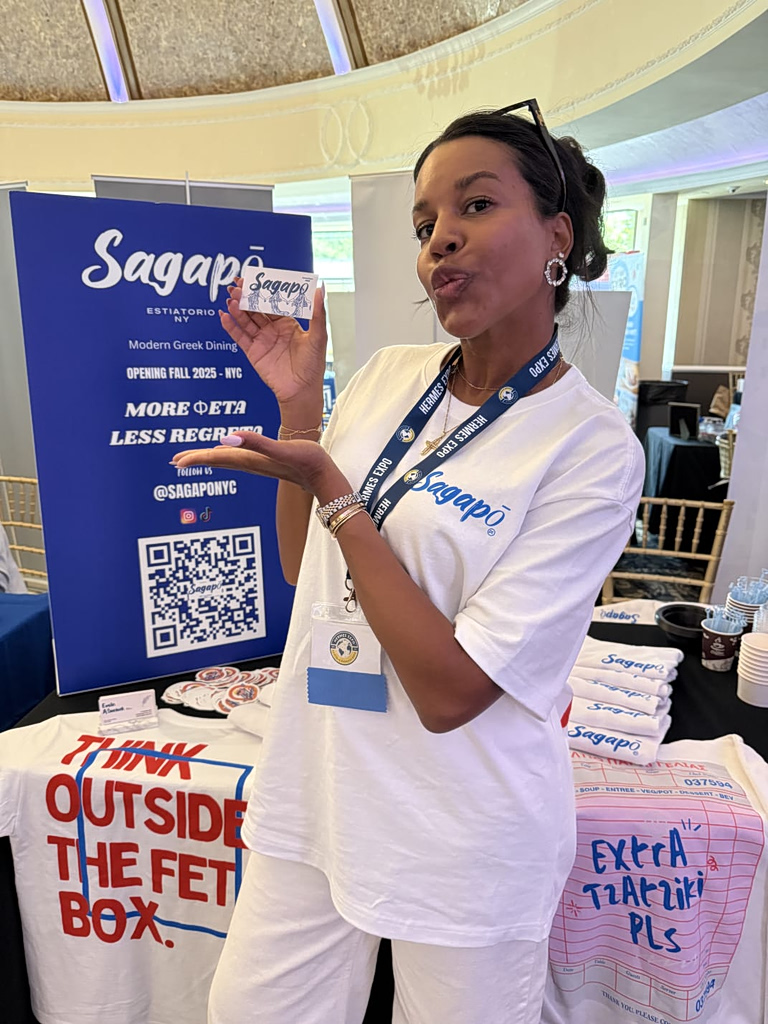
Evelin stands at the booth of her Greek restaurant, Sagapo, at the 2025 Greek Hermes Expo in New Jersey. Credit: Evelin Antae Boatenk
Inspired by love for her grandparents, she called the restaurant “Sagapō,” which means “I love you” in Greek. “Growing up watching food bring my family together around our table, I learned what it means to share. I wanted the name to express love, hospitality, and family. To remind people that food isn’t just consumption: it’s memory, emotion, and sharing—”sit down and eat,” as we used to say at home.” Greek culture is the core of her project, she stresses. “The philosophy of sharing, of family-style dining, of simplicity that carries depth—that’s what I want people to experience, not just read written on a menu.”
Loneliness and Community
However, no matter how strong and determined you may be, Evelin admits that the life of an immigrant can be very lonely at times. The loneliness of migration, she says, doesn’t show on Instagram. “You can only overcome it by soldiering on—especially on the days when your self-belief is low.” She adds that meeting her husband in New York has helped her, as she now has someone she can call family there.
On the difficult path she has chosen far from her homeland, Evelin makes special mention of the important and deeply supportive role of the Greek community. “The Greek community is an anchor. It’s solidarity, understanding, and a shared language—both literally and emotionally. Having Greeks around you on such a demanding journey helps you stay on your feet.”
Building Beyond Borders
To build up her business, the young Greek woman has created a strong social media presence, posting videos, shorts, and reels that humorously capture everyday life. But while her content has received an enthusiastic response, she does not view social media as a promotional tool. “Social media is a relationship tool,” she says. “I built an online community before my business even existed.” And that journey gave rise to Mytha Creative Studio, the social media and branding company she co-founded with her friend Emily Intzekostas to help businesses across different industries build a meaningful and authentic presence online.
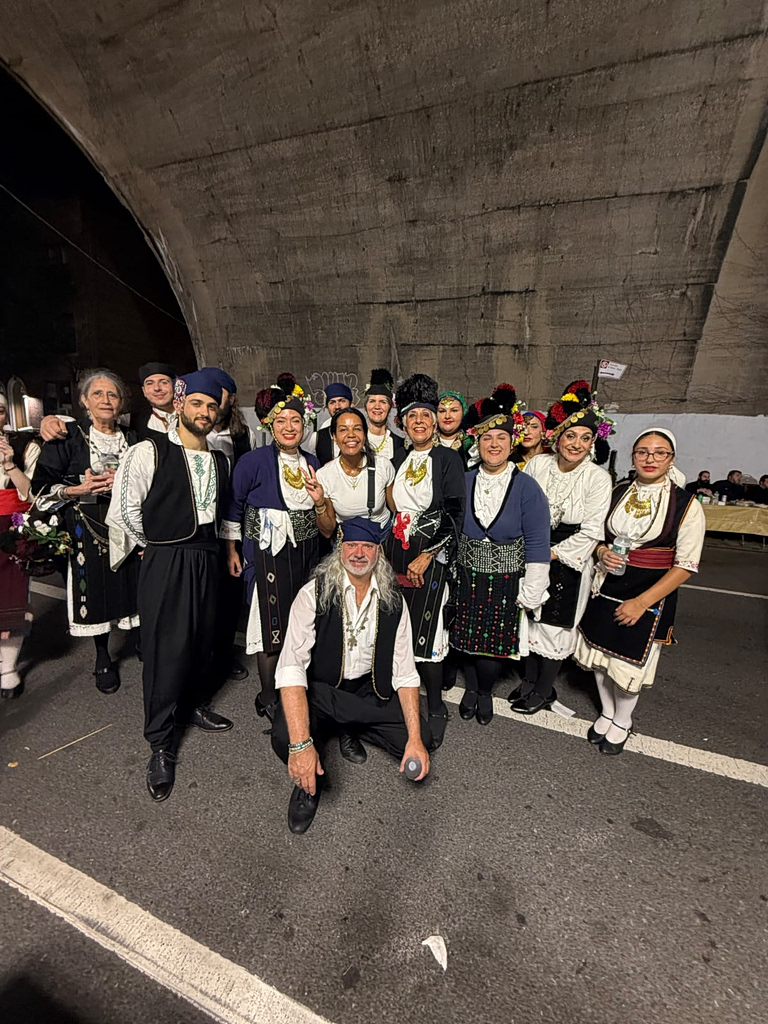
Boatenk surrounded by the Greek American Folklore Society dancers during the Greek Festival of St. Eirini Chrysovalantou in Astoria, NY, in the summer of 2025. Credit: Evelin Antae Boatenk
Reflecting on her journey, Evelin admits that while the entrepreneurial reality in America is undoubtedly demanding, it is also fair. “In America, people with passion and a strong work ethic are recognized and celebrated. If you work hard, you can truly succeed.”
Moving Forward
Having left Thessaloniki two years ago, her future goals include living a life of stability and creativity surrounded by a strong sense of community. “I want my restaurant and my projects to be reference points, not just businesses.” Her words also reflect her strong family ties when she says, “My dream has always been to gain financial independence, so my mother doesn’t have to work anymore.”
Finally, her message to young Greeks who may be thinking about leaving the country is this: “Leave prepared, not afraid. Remember who you are and where you come from. There is meritocracy where you’re going, and space for those who work hard—just as long as they don’t ask permission to pursue their dream.”
View this post on Instagram