 Μake us preferred on Google
 Seventy-year-old Manolis Syllignakis, now a retiree from the Public Power Corporation (DEH), moved to Sitia, Crete, in 1985, just before the Christmas season. At first glance, he noticed something was missing: there was no Christmas decoration anywhere—no lights on flowerbeds, no illuminated buildings. “Not a single light… My God, where have I come?” he thought, disappointed by the lack of festive atmosphere. Rather than succumb to discouragement, he decided to bring the holiday spirit himself.
He asked his wife to sew him a red suit while he crafted the signature white beard. That Christmas, he took to the streets dressed as Santa Claus, carrying a sack full of sweets. He walked through the squares and alleys, handing out chocolates and candies to children. The sparkle in their eyes was his reward.
The following year, he arrived as Santa Claus from the sea. Dressed in his red suit and aboard a small boat, he appeared at the port of Sitia, sparking excitement and establishing a new local tradition. Over the years, the “Santa of Sitia” expanded his efforts: he collected food to discreetly distribute to poor families and visited hospitals across Eastern Crete, from Sitia to Heraklion, offering kourabiedes, melomakarona, and a flower to patients to bring a smile to their faces. On one visit, he gave a small flower to an elderly woman, later seeing that she had kept it in a glass beside her bed—a gesture that moved him deeply.
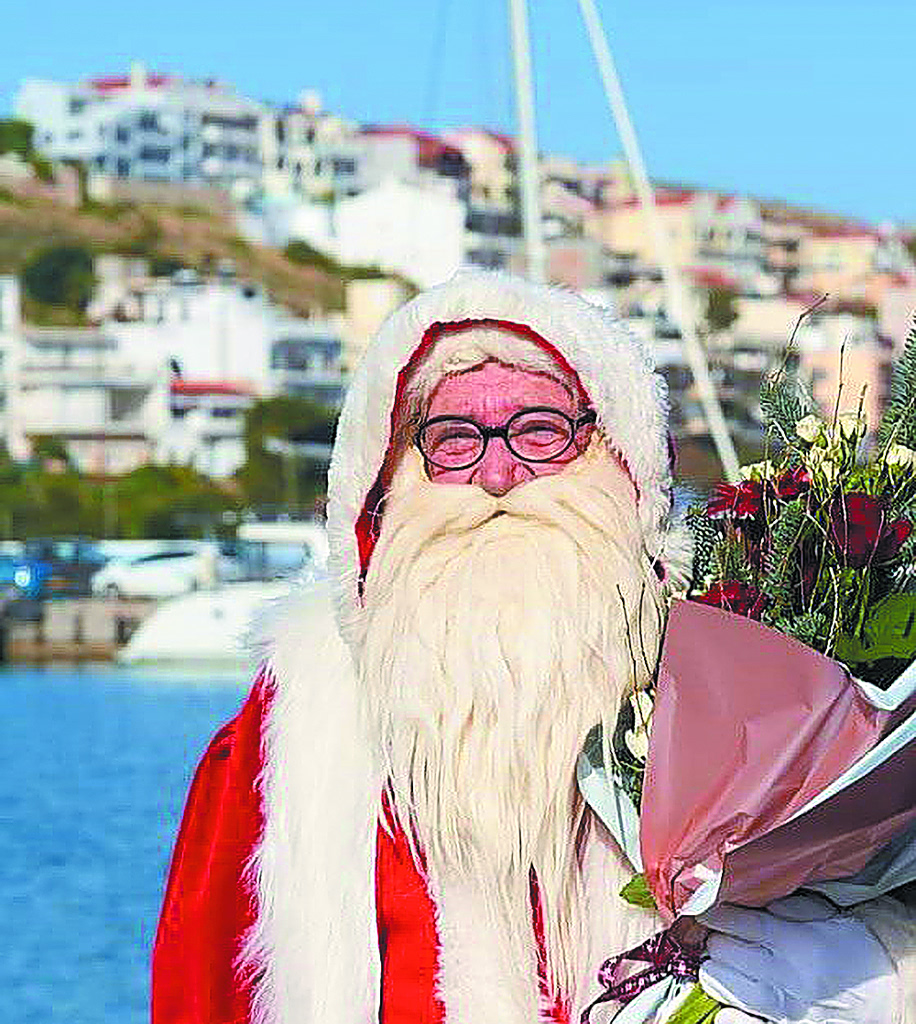
For 40 years, Manolis Syllignakis, the “Santa Claus of Sitia,” collected food and quietly distributed it to needy families.
His beard remains the same to this day, carefully maintained. Last year marked forty years in his “profession” as Santa Claus. He is not the only one, of course, but he is among the most emblematic examples of people who show that behind the legend, behind the costume and the characteristic “ho ho ho,” are extraordinary personalities. For them, being Santa Claus is not just a fairy tale—it is a calling of the heart.
In many countries, embodying Santa Claus is taken very seriously. In the United States, there are schools for aspiring Santa Clauses, nicknamed the “Harvard of Santa Claus,” while in Lapland, Finland, an entire village welcomes visitors year-round. In Greece, Manolis Syllignakis and his “colleague” Sakis Xanthopoulos don the red suit every year and become one with the Christmas myth. How do they feel this year? They told To Vima that being Santa Claus means far more than seasonal work: it is a journey of giving, love, and personal transformation.
In Schools
For Mr. Syllignakis, being Santa Claus is first and foremost an act of love. “Santa Claus isn’t just about giving gifts; it’s about giving love to everyone,” he says. When visiting schools, he makes sure to send messages to children: don’t fight, love your family and friends, and help those in need. With playful humor, he asks them to leave a few sweets and a glass of milk on New Year’s Eve “so I can regain my strength,” promising that he will not forget any child.
Through the magic of the story, he teaches values while preserving the enchantment. His efforts have left an indelible mark on the local community. Children who eagerly awaited him have grown up, yet still remember the “real Santa Claus” of their childhood. Many have become parents, passing these stories to their own children.
He himself remembers the joy he felt as a child when he received an unexpected gift from Santa Claus: “Back then, there were no Christmas trees or decorations. My aunt would tell me stories about Santa Claus. One morning, I woke up and saw a decorated box—and inside was a motorcycle. I was overjoyed,” an inspiration for his own giving. “I’ll do this as long as I can walk,” he affirms.
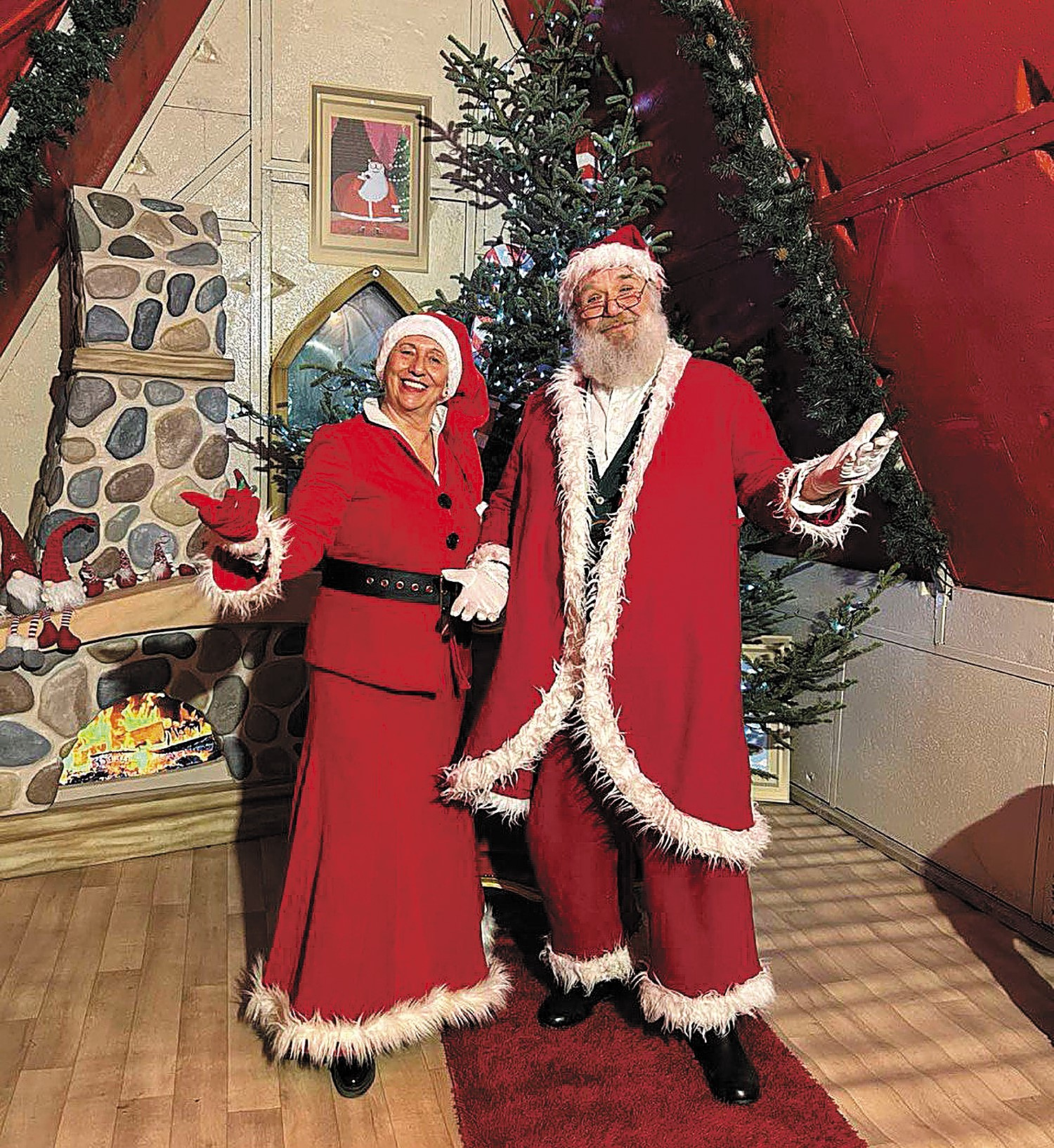
Elsewhere in the country, 63-year-old Sakis Xanthopoulos has worn the Santa Claus suit for fifteen years at holiday events and Christmas-themed parks from Northern Greece to Athens. “Christmas is in my heart,” he says enthusiastically, explaining that he wanted to share the joy he himself feels. Every time he sees the sparkle in children’s eyes, he experiences something unique. Now, even his own beard reflects the familiar image of Santa Claus.
Like a Superhero
Mr. Xanthopoulos works with an events team and travels each year to different cities for Christmas celebrations. To him, Santa Claus is like a superhero. When he puts on the suit, he embodies the Santa he imagined as a child: kind, humorous, and endlessly generous. He does not follow a script but relies on spontaneity and genuine interaction. Since last year, his wife has accompanied him as “Mrs. Claus.” At the end of each visit, he reassures every child that he will not miss any home during the holidays, takes commemorative photos, and exchanges warm wishes and hugs.
Although the role of Santa Claus is a seasonal occupation for Sakis, he does not see it as work. “I don’t treat it as a job; for me, it’s a need,” he says. “Once I put on these clothes, I stop thinking like an ordinary citizen. These days are an oasis of happiness for me.” He adds that interacting with children and seeing their pure excitement gives him immense joy and energy.