Traditional olive farming in southwest Magnesia stands at a critical crossroads, with producers looking for a new model that will keep the groves alive while giving their products, olive oil and table olives, greater economic value.
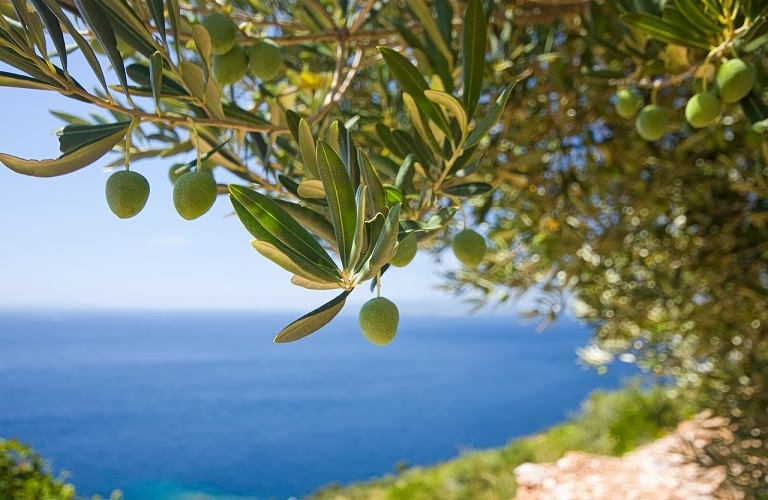
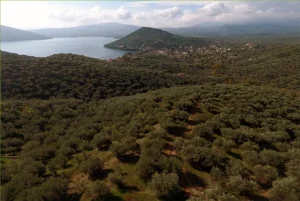
From Ptelos to Agios Dimitrios Achilleiou, Achilleio, Agioi Theodoroi, Nies Sourpis, Amaliapoli, and Drymonas, a unified olive-growing landscape is taking shape, one defined by shared characteristics. These are semi-mountainous, traditional groves with significant biodiversity and a strong historical and cultural connection to the area going back roughly 3,000 years.
Southwest Magnesia has a historic olive grove, a distinctive natural environment, and products that could build a much stronger market identity.
The Olive Tree, an Inseparable Part of the Region
“For centuries, the olive tree has been an inseparable part not just of production, but of the natural environment and local life here,” Agapitos Christellos, from the Southwest Magnesia Traditional Olive Grove Association “Oliveto Magnes,” told OT.
The key question now, as he puts it, is how this traditional grove can adapt to new conditions. With that goal in mind, the Association, which has an organizational and developmental mandate, aims to implement a new olive-farming model that will make the practice both sustainable and appealing to younger generations, while also addressing the major challenges facing the wider region, both from climate change and from shifting market conditions in olive oil and table olives.
From Advantage to Production Drawback
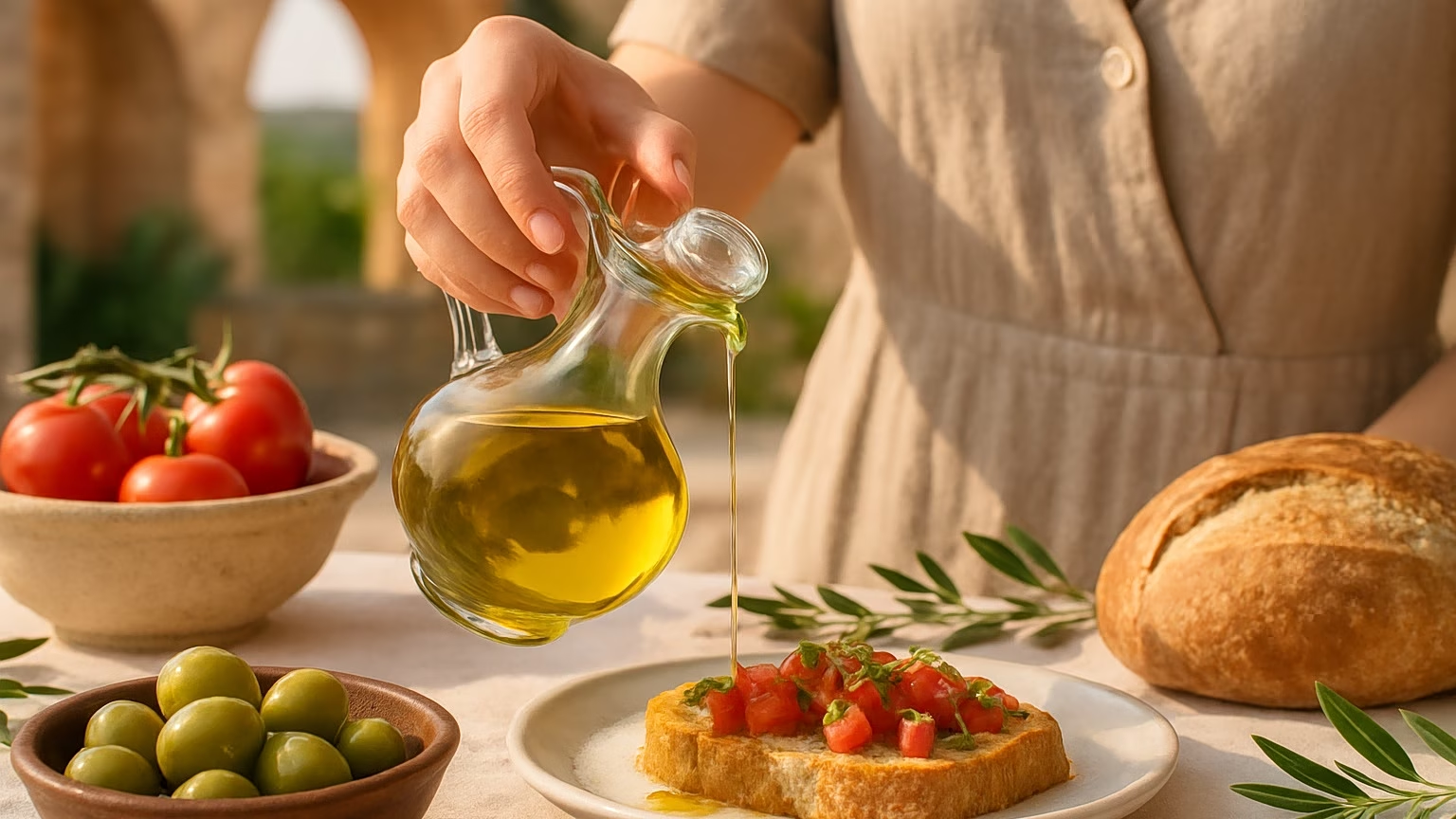
The region holds a significant comparative advantage, according to Christellos, producing exceptional extra virgin olive oil and highly nutritious table olives. Yet the qualities that could form the basis of a high-value-added product haven’t so far been leveraged to their full potential.
The semi-mountainous terrain of the groves adds to cultivation difficulties, while producers also face high costs for farming and agricultural inputs. Compounding these problems are shortfalls in infrastructure, technological equipment, scientific support, and access to capital.
This creates a paradox: a grove with distinctive quality and environmental characteristics struggles to compete with regions where production relies on more intensive, lower-cost systems.
The bigger problem, though, is the inability to convert that quality into income. When a product’s distinctive characteristics go unrecognized, its “quality-added value” is lost, and producer income shrinks along with it, Christellos explains to OT.
Ptelos Green Olive Oil on the Path to PGI Status
“With support from local government, Oliveto Magnes took part for three consecutive years in a University of Thessaly program (run by its biotechnology department, together with the company Food Oxys) measuring the bioactivity of the olive and its oil (green olive oil), which found the products to be of excellent quality (17/20),” adds Christos Kalles, president of the Oliveto Magnes Association, speaking to OT.
He also notes the Association took part in research by the National and Kapodistrian University of Athens (EKPA) on the sustainability of traditional olive groves, and worked with the Agricultural University of Thessaly to organize advisory seminars, while the University has also begun research into olive oil’s carbon footprint.
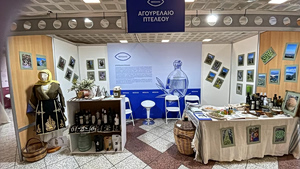
“In partnership with the Region of Thessaly and EKPA’s Agricultural School, we’ve put together a file to secure Protected Geographical Indication (PGI) status for Ptelos green olive oil, covering the entire southwest Magnesia olive grove,” he notes. The Association’s presence at three food exhibitions under the auspices of the Region of Thessaly has also been notable, marking a first step in promoting their products.
Redesigning Local Olive Farming
Focused on producing high nutritional and health-protective value table olives and olive oil from local groves, drawing on the benefits of the local variety, the microclimate, science, and technology, the Oliveto Magnes Association, which aims to redesign local olive farming and its long-term sustainability, has laid out the core points of its effort:
- Unifying and coordinating local olive-farming communities that have so far operated without coordination, direction, or shared goals.
- Ensuring the sustainability, evolution, and modernization of traditional olive farming through science and technology, alongside a genuine understanding of the problem from local institutions and political leadership.
- Highlighting and leveraging the social and environmental dimension of Greece’s traditional olive groves, protecting and making the most of (rather than crudely exploiting) the natural environment and biodiversity surrounding the local olive variety, which give it unique characteristics.
- Showcasing centuries of olive-farming tradition and 3,000 years of local history, which form the broader, highly significant backdrop of the local olive-growing areas.
- Promoting the region’s high-nutritional-value olive products as the result of the area’s microclimate, geography, and cultivation practices, through coordinated outreach.
- Developing alternative forms of economic activity such as agrotourism, linking the traditional character of olive farming with the area’s natural beauty, history, and local culture. The benefits are considerable, as new local markets develop and existing ones are strengthened, while supplementary income or even new jobs can be created for farming families, helping keep younger residents in rural areas.
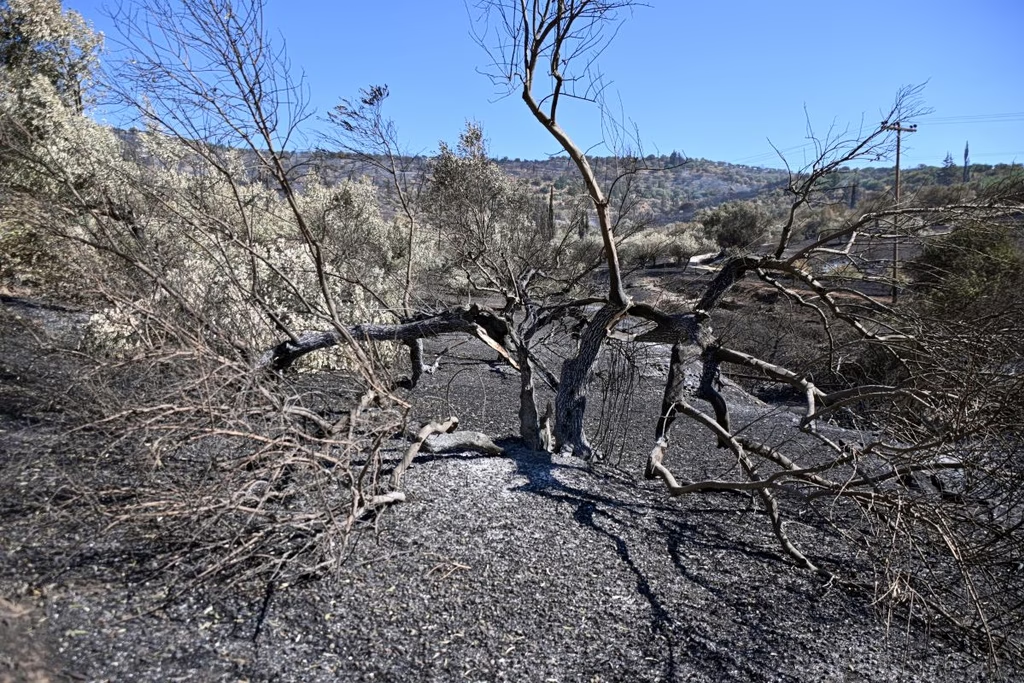
- Directly addressing the major problems tied to climate change’s impact on the groves, now clearly visible and posing the newest and most serious threat to olive farming.
- Improving the incomes of local rural communities, which have taken a dramatic hit over the past three years.
- Finding ways to lower cultivation costs and take advantage of economies of scale, particularly for agricultural inputs, which currently far exceed the European average.
- Seeking funding tools and partnerships to enable the technological upgrades needed and make use of scientific studies that will help fully showcase the nutritional and health-protective properties of the local olive variety, building meaningful comparative and competitive advantages.
- Developing traceability and labeling tools for extra virgin olive oil sourced from traditional groves.
- Fully leveraging the range of natural food products the olive can offer, along with the uniqueness of local flora such as wild herbs and medicinal plants, something achievable only through a technologically advanced model processing facility.
- Designing and implementing a challenging but realistic olive-farming model that corrects today’s problems in cultivation practices and product management, while boosting recognition of both local olive farming and the products it generates.
- Securing the active participation and support of local institutions and political leadership in designing a sustainable olive-farming model.