 Μake us preferred on Google
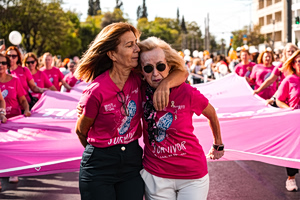
Every October, Greece turns pink: ribbons on lapels, balloons over charity walks, public buildings lit in solidarity, and a language of tenderness about early detection, hope and the promise that no woman faces the disease alone.
Caught early, breast cancer has a five-year relative survival rate approaching 91.9 per cent, according to the US National Cancer Institute. From June 2022 to June 2026, free screening under “Prolamvano” (“I prevent”), the national prevention programme funded by the EU’s Recovery and Resilience Fund, caught it early in at least 6,000 women, the Ministry of Health says. The mammography scheme is named after Fofi Gennimata, the PASOK leader who died of the disease in 2021. Its nationally funded successor offers free mammograms to 2.7 million eligible women at more than 470 public hospitals and private centres.
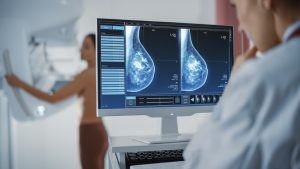
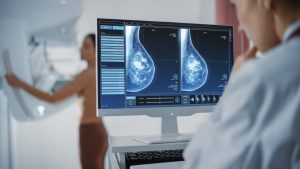
This month I tried to book a mammogram, as every woman is told to do, starting with 1566, the hotline promoted since 2025 as the gateway to a single booking system for public health services. The courteous operator could only check appointments at hospitals I named, rather than search for available slots across Athens. Not knowing every hospital by heart, I had to look them up online and read out their names one by one, while he checked each in turn. This was the Ministry of Health’s own appointment hotline. Several leading women’s hospitals were fully booked for October. For others, the operator explained that appointments were not posted by some hospitals on the central booking system, meaning I would have to call each one individually to find out whether there was a slot.
Each call meant five to ten minutes on hold and a transfer to radiology department, where the answer was a lottery: a date within a fortnight, a month later, or nothing. At some of Attica’s biggest hospitals the line went dead or no one answered. Twelve calls took an hour and twenty minutes. One switchboard did not know whether its hospital did mammograms; another said it did, only for the radiology department to say it did not. One operator, alone among the 12, asked about my menstrual cycle so the examination could be done correctly, leaving me to wonder whether she or the other 11 were wrong. Another major hospital had stopped bookings altogether because its breast radiologist was retiring.
It was a small experiment, not a scientific survey, and screening is not an urgent referral. Insiders describe the same disorganisation: a woman left to find her own way through a whirlwind of switchboards, referrals and waiting lists. “Population screening is about more than sending text messages and offering free examinations,” says Dr. Evangelos Filopoulos, a breast surgeon and president of the Hellenic Cancer Society (EAE).
Greek women still hold households together. According to the European Institute for Gender Equality, 66 per cent of Greek women do housework every day, compared with 41 per cent of men. Among those providing childcare, women are more than twice as likely as men to devote over 35 hours a week to it. Greece ranks second from the bottom of the EU in EIGE’s measure of gender equality in how time is spent. When such a woman falls ill, an income may vanish and her family absorb costs it never planned for. For a cancer this curable, which the state has already paid to catch early, seeing her through treatment is a question of social policy, not hospital efficiency.
‘Deal with it yourself’
The doctors and patient advocates who spoke to TO VIMA International Edition describe a country that treats breast cancer well in parts, but leaves the patient to piece them together herself.
“The big problem begins the moment you have your mammogram and there is a finding,” says Paraskevi Michalopoulou, President of Alma Zois, the Hellenic Association of Women with Breast Cancer, who was diagnosed herself in 1991. After that, “nobody connects you to anything.” Following a finding, a woman must find an oncologist, a hospital that can do a biopsy and an appointment alone, carrying her fear with her; Without systematic psychological support integrated into the patient treatment process, some even delay the next steps because they cannot face it.
Dr. Emmanouil Saloustros, President of the Hellenic Society of Medical Oncology (EOPE), agrees that “cancer care remains fragmented”, leaving patients to coordinate alone a pathway of diagnostic tests, biopsies, molecular testing, surgery, systemic therapy and follow-up.
Operating theatres are scarce, says Dr. Georgios Pissakas, Head of Radiation Oncology at Alexandra Hospital, and a shortage of histopathologists means the wait for post-surgical tissue results can stall everything after it. Chemotherapy, mostly given in day clinics, including outside Athens, causes little delay. In contrast, radiotherapy, with waiting lists of about two months, does: “A woman whose oncologist refers her early, while chemotherapy is still under way, will usually find a slot. One referred at the last minute often will not.”
Once inside a treatment protocol, women fare better; those with metastatic disease, says Michalopoulou, generally have appointments scheduled for them. The gaps lie before the first treatment and after the last, and there the line between public and private care has blurred, not least because public hospital doctors may also practise privately. “If I want surgery tomorrow, is there an operation tomorrow in the public system? Of course not, so you go private,” she says. “I may have chosen a doctor in the public sector and ended up in the private one”. Some, face costs they never imagined they would have to bear. Desperate not to lose precious time, they borrow money or sell their belongings to pay for care they cannot afford to wait for.

Good treatment, hard care
S.R. had done everything right, undergoing regular mammograms since her late thirties. Yet at 55, despite years of vigilance, she was diagnosed with breast cancer. A trainee mental health counsellor herself, attuned to the psychological fragility of illness, she moved between public and private hospitals to keep treatment on schedule.
What she paid for privately, she says, was not better medicine but warmth, calm and respect. In the public hospital she had chemotherapy upright in a chair, among about 15 other patients at different stages of different cancers, some crying out in pain, others reading quietly. Facing that room daily deepened the trauma rather than helping her meet the illness with a clear mind.
After chemotherapy she needed Herceptin, a targeted drug that has transformed the outlook for one aggressive form of the disease, every 21 days. At the private clinic each dose went through an intravenous line and, she says, was billed as a full day of hospital treatment to EOPYY, the National Organisation for the Provision of Health Services, which pays for public and contracted private care. When she moved to a public hospital to escape the out-of-pocket costs, her doctor told her the drug could be injected into her thigh in minutes for a fraction of the cost.
Patient associations hear such accounts weekly. Mary Hinari, President of the Association of Cancer Patients, Volunteers, Friends and Physicians of Athens (K.E.F.I.), describes chemotherapy rooms of at least 20 people sitting in chairs for four or five hours, with no bed, who then queue together for up to two hours to see their oncologist at the end of a debilitating day.
The shortcomings are not a reflection of the expertise or dedication of Greek oncologists, but of a healthcare system that too often leaves them without the staff and support they need to provide the care their patients deserve.
Greece has 6.6 doctors per 1,000 people, among the highest ratios in the OECD, but only 3.8 nurses, against an OECD average of 9.2. “We have plenty of doctors,” says Dr. Filopoulos. “What we don’t have are nurses and administrative staff.”
The shortage is measured in minutes. A doctor may want 20 minutes to explain a patient’s treatment, says Hinari, “but there is a queue outside waiting for him”; without secretarial support, says Michalopoulou, paperwork “takes up a great deal of the doctor’s time”. “Oncology care needs that time”, argues Dr. Saloustros, “for discussion, treatment choices, side effects and family support, and it is significantly reduced when an oncologist also carries administrative work”.
The hidden bill
On paper, breast cancer treatment in a Greek public hospital is free. In practice, says Dr. Filopoulos, “cancer is financially toxic”. The bill accumulates around the treatment: journeys to distant hospitals, lost wages, private tests to avoid a wait, rehabilitation the state does not cover. One woman in her sixties, unable to find a radiotherapy appointment in a public hospital, paid about €15,000 at a private clinic. “This was an enormous financial burden for our family,” says a relative. “We had to make considerable sacrifices, save wherever possible, and even sell valuable personal belongings to cover the costs”. She asked not to be named, fearing how she might be treated should she need a public hospital again.
Psychological support is among the heaviest of these costs. Women with metastatic disease especially “need psychosocial support, which is not provided,” says Michalopoulou; those who cannot pay a therapist, or never learn that associations such as hers offer it free, are left “completely adrift, unprotected”. Dr. Saloustros says such support, like palliative care and rehabilitation, is underdeveloped though it “must be an integral part of oncology care”. K.E.F.I offers up to 15 free sessions a year and has provided 1,432 to date to 287 patients, whereas a single session in the private sector costs at least €50. Such care, Hinari argues, should be “built into the system and be entirely reimbursed by EOPYY”. Germany’s statutory health insurance fully covers medically indicated psychotherapy, including for patients suffering significant psychological distress related to cancer. France offers up to twelve publicly supported psychological consultations annually, with full coverage for eligible patients whose care is linked to a recognised long-term condition such as cancer.
Nowhere is the gap between rule and practice sharper than in radiotherapy, however. Dr. Pissakas estimates Greece has about 56 radiotherapy machines, public and private, against the roughly 85 that the European benchmarks imply for a population of approximately 10 million people.
To cover the shortfall, EOPYY has for more than a decade contracted private centres, on terms now set out in Article 23 of its benefits regulation. Patients receiving conventional radiotherapy owe no co-payment and pay only the radiation oncologist’s fee; for stereotactic treatment even that is covered.
Three interviewees say private centres routinely charge far more. Dr. Pissakas says patients are asked for €1,500 to €2,000 on top of a doctor’s fee of around €1,500. “The private provider takes money from both EOPYY and the patient, and that is illegal,” says Hinari, adding that some is demanded in cash. The rules are “being circumvented and not enforced”, says Dr. Filopoulos. No provider has been named or found to have broken the rules, and To Vima International Edition has not independently verified individual charges.
Dr. Pissakas made the same allegations publicly in 2020, 2023 and last year, alongside patient organisations, noting that the centres’ contracts with EOPYY bind them to those terms. “The big problem in Greece is this: when you sign an agreement, do you honour it? And if you don’t, who holds you to account?” he asks, before accusing the authorities of knowing about the alleged practices but failing to intervene: “EOPYY knows, the Ministry knows, everybody knows. But nobody dares to take on the private providers.”
“A woman who cannot afford the private centre waits for a slot at a public hospital”, he argues, “lengthening the very lists the contracts were meant to relieve”. As former President of the Greek Radiation Oncology Society, he repeatedly asked EOPYY how many patients it reimburses for private radiotherapy and was never told, though every claim passes through EOPYY. Nor can patients easily complain. “What is she supposed to do? Report the doctor? Not go to the hospital?” asks Dr. Filopoulos.
Distance adds to the bill. Radiotherapy centres cluster in Athens, Thessaloniki and a few regional cities, says Dr. Pissakas, so patients from places such as Lamia or the Peloponnese travel to Athens. Travel may be reimbursed, says Michalopoulou, “but not accommodation, which is the enormous expense. It is one thing to stay one night, and another to stay 45 days to follow one’s treatment plan”. France, by contrast, pays hospitals a nightly rate to house distant patients free in so-called “hospital hotels”, and Norway’s patient-travel scheme covers accommodation. “An Athens hotel costs at least €100 a night”, says Hinari. K.E.F.I has one apartment for out-of-town families and donors run a few more, including Pnoi Agapis beside Agios Savvas hospital, but from the state “there is no provision at all”.
Maria Karra, Co-Founder of the non-profit Emfasis, says their organisation has cared for women who, unable to afford a hotel, slept in their cars for consecutive nights during treatment in Athens, and relatives who did the same to stay near hospitalised patients.
Before the first dose, after the last
For younger women, the most consequential decision can come before treatment. Chemotherapy can damage fertility, and a woman may have days to decide whether to undergo ovarian stimulation and have her eggs retrieved and frozen. “That procedure isn’t reimbursed,” says Michalopoulou, “not even in public hospitals”. Some hospitals offer it free or cheaply. “But how is a woman supposed to know which clinic does it for free, and whether she can get there in time?”
Greece covers approved fertility medications for eligible cancer patients, but a clear and comprehensive reimbursement pathway for egg retrieval, freezing and storage before cancer treatment remains difficult to establish. Patient advocates say that women often face out-of-pocket costs or must search for hospitals offering the procedures without charge. Elsewhere, support is more clearly defined. Cyprus offers eligible women a €2,000 state grant towards egg freezing, while Israel, France and Belgium provide public insurance coverage for medically indicated fertility preservation, subject to eligibility requirements. For women already facing the uncertainty of a cancer diagnosis, such support can help preserve the possibility of motherhood without adding another financial worry.
When treatment ends, the scaffolding that held a woman through it is quietly taken down. “I get a message when my car is due for a service,” says Michalopoulou, “why shouldn’t a patient get a text saying: this month you need these tests?”. Instead women chase each follow-up referral themselves; appointments are booked so far ahead that electronic referrals expire first, says Hinari, so she books the slot and seeks the referral later. In England, breast cancer patients are meant to have a dedicated specialist nurse to guide them from diagnosis through treatment and beyond, alongside a personalised care plan and regular follow-up. Sweden follows a similar approach, with a designated nurse who remains a point of contact throughout a woman’s care and a personal plan, available online, to help her navigate life after treatment.
The state’s judgment of what a woman has lost can be similarly unforgiving. After one mastectomy, Hinari says, the state’s Disability Certification Centre granted 67 per cent disability for three years. “Is the breast going to grow back?” she wonders drily. Nor does a diagnosis bring an automatic allowance. Women certified at 67 per cent or more may receive €338 a month, generally only if they neither work nor draw an insurance pension; employees can claim temporary sickness benefit, some self-employed women cannot. Meanwhile, this month Cyprus announced a monthly allowance for vulnerable breast cancer patients, paid throughout treatment and for up to a year after.
Yet, the hardest gap comes at the end. Once there is nothing more to offer, a hospital cannot keep a patient, Dr. Pissakas acknowledges, and “in effect you are told: go home and die”. Nothing is worse at that stage, he says, “than being left hanging”, least of all for those who live alone.
In June the Ministry of Health presented a National Palliative Care Action Plan for 2025–30, promising €368.9mn of public investment for the roughly 135,000 people a year who need such care, though for now these remain targets on paper. “We try to fill the gaps left by the state,” says Hinari, whose association sends psychologists and social workers to the homes of terminally ill patients and their carers.
A network on paper
In early October, Eirini Agapidaki, the Alternate Minister of Health, announced a network of integrated breast centres in public hospitals, giving women a single point of reference for their care. Seven hospitals are to take part, six in Attica and Theageneio in Thessaloniki, but no date has been set for when they will begin.
View this post on Instagram
Whether the new network delivers on its promises will also depend on how well Greece can measure the care women actually receive. The National Cancer Registry began operating in February 2025, an important step towards a clearer picture of cancer care across the country. But questions remain about how complete and timely its data will be. Dr. Saloustros wants hospital systems to share information automatically, tracking not only diagnoses but also delays in treatment and inequalities between regions. Professor Meletios-Athanasios Dimopoulos, Director of the Therapeutic Clinic at Alexandra Hospital, points to the burden of data entry on already overstretched doctors, arguing that dedicated administrative staff are essential if the country is to understand where care is falling short and what needs to change.
In a few days the pink lights will go off. Greece has made progress in early detection and has the medical expertise and treatments to care for women with breast cancer, but has yet to create a coordinated system that guides and supports them through every stage of their illness. Until it does, each woman is left to thread the pink ribbon through them herself, with her own persistence, savings and family, from the first suspicious finding to the life that follows.