 Μake us preferred on Google
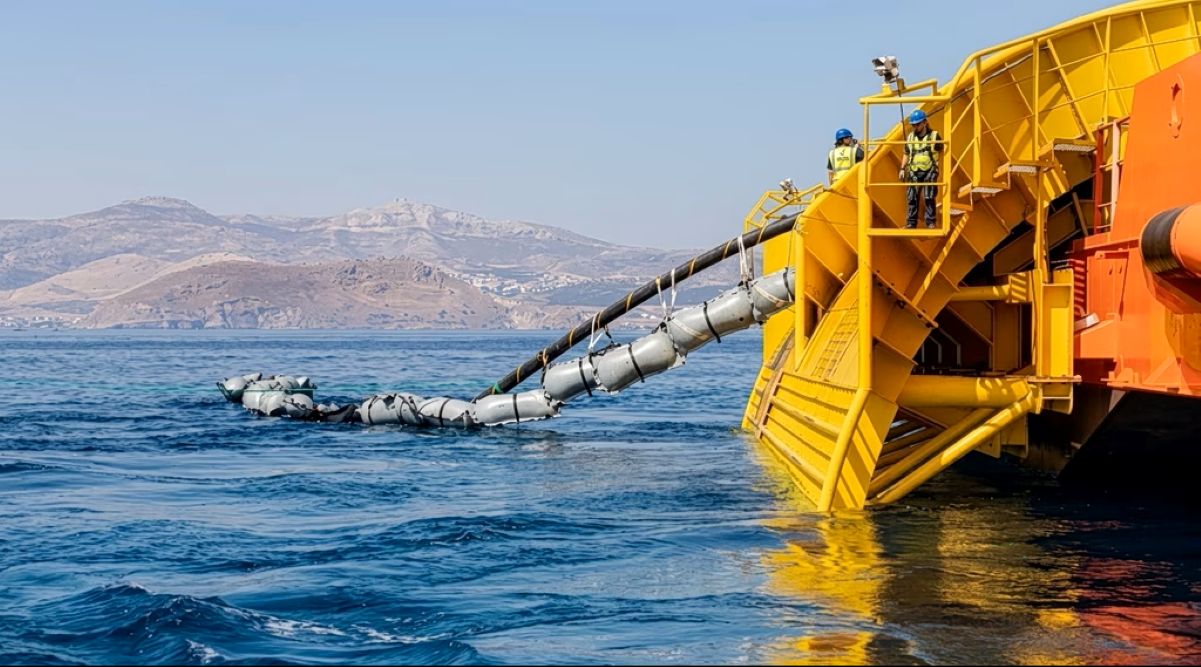
Greece’s Independent Power Transmission Operator (IPTO) is accelerating development of the Greece-Italy submarine electricity interconnection, a joint project with Italian transmission system operator Terna, with international tenders expected to be launched in summer 2027.
The updated timetable was announced by Ioannis Margaris, IPTO’s vice chairman and chief officer for Technology, System Development and Strategy, during the 8th Renewable & Storage Forum.
According to Margaris, cooperation between the two transmission system operators has confirmed that project preparations are advancing rapidly, with the aim of launching international tenders for the cable systems and converter stations in summer 2027.
Seabed surveys are scheduled to begin in early 2027, while permitting procedures and technical specifications are currently being prepared.
Margaris described the project as one of Greece’s most important international electricity interconnections.
Based on the current timetable, construction is expected to begin during 2028.
New Technologies to Increase Grid Capacity
Margaris also addressed the technological changes and energy transition challenges reshaping the planning, development and maintenance of electricity transmission systems.
IPTO and other European transmission system operators are increasingly focusing on advanced technologies and smart-grid solutions that can increase the capacity of existing infrastructure.
This approach is particularly important given the environmental and permitting restrictions associated with constructing new high-voltage transmission lines.
“We are exploring internationally how we can increase the capacity of transmission lines, ideally without even replacing the pylons,” Margaris said.
“Projects of this kind are at the forefront of transmission system development worldwide.”
At the same time, IPTO is implementing an extensive program to gradually replace critical equipment across Greece while keeping the electricity grid operational.
The upgrades are intended to improve both the resilience and transmission capacity of the national electricity system.
Data Centers Present New Challenges for Electricity Grids
Margaris also highlighted the challenges associated with the rapid expansion of data centers, particularly their growing electricity requirements.
He noted that technical requirements and restrictions governing their connection to electricity networks have not yet been fully established at the European level.
Regulatory frameworks are being developed both nationally and in cooperation with the European Network of Transmission System Operators for Electricity (ENTSO-E).
“We are particularly interested in flexible loads,” Margaris said.
He explained that electricity system planning is undergoing a fundamental transformation, moving away from a model based on guaranteed electricity consumption toward more flexible technical solutions for managing generation and demand.
This transition will require greater flexibility in how electricity is produced, distributed and consumed.
Margaris predicted that data centers will play an increasingly significant role in determining how electricity systems operate in the future.
Source: Ta Nea