Greece and Cyprus pause their flagship power-interconnection project to re-evaluate costs, hunt for investors, and navigate U.S. interest and Turkish pressure—revealing deep rifts between the two allies over strategy, risk, and the project’s viability.
Speaking at an off-the-agenda debate in Parliament on Thursday on foreign policy issues, PM Kyriakos Mitsotakis referred to an initiative by Athens for a future meeting of Mediterranean states of the wider region
A planned undersea power interconnection between Greece and Cyprus, the infamous "cable," which last week led to the culmination of an unprecedented — at least in the post restoration of democracy era - clash between Athens and Nicosia
Speaking to Cyprus News Agency (CNA), Calviño underlined the Bank’s willingness to back “strategic projects supported by both countries, where both governments remain committed to their development.”
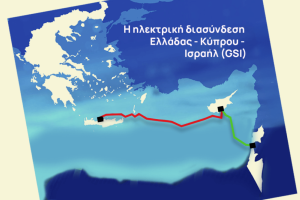
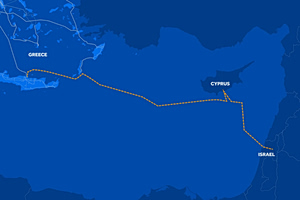
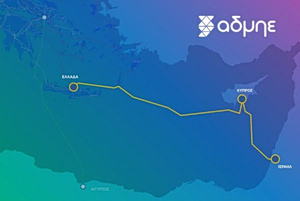
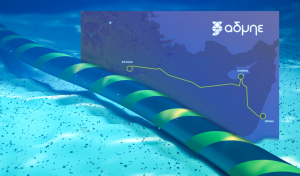
Both sides reiterated their commitment to the ambitious project, officially known as the Great Sea Interconnector (GSI), which is envisioned as first linking Israel's power grid with Cyprus.
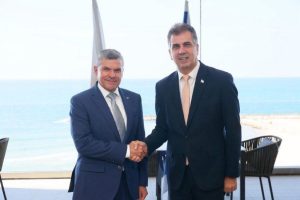
The ambitious project to connect Israel with Greece, via Cyprus, with an undersea power cable was up for discussion between the relevant Israeli and Cypriot ministers this week
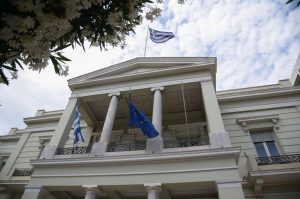
Greek FM: "There is a protection plan in place, the project is of European interest, and any obstruction will have consequences at the EU level.”
Nicosia explores a potential partnership with the UAE for a €1.9 billion subsea power link connecting Europe to the eastern Mediterranean, amid ongoing delays and a new European investigation
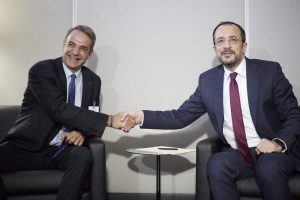
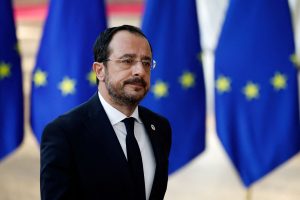
Christodoulides called the project a matter of geostrategic importance while stressing that Nicosia will honor every obligation it has undertaken.
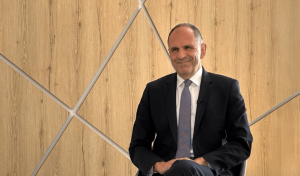
Gerapetritis reiterated Athens’ firm support for the Great Sea Interconnector (GSI) electricity cable project.
The confirmation follows revelations made by top government officials from the Republic of Cyprus, including President Nikos Christodoulides.
The European Public Prosecutor’s Office has launched an investigation into possible criminal offenses linked to the Greece–Cyprus electricity interconnection.
The Greek government plans tax relief for the middle class at the Thessaloniki Fair, while Cyprus questions the viability of a key energy project.
Gerapetritis also said that Prime Minister Kyriakos Mitsotakis and Turkish President Recep Tayyip Erdogan may meet on the sidelines of the UN General Assembly in New York, scheduled for September 22–26.
He emphasized that Athens has already demonstrated—through maritime spatial planning, the establishment of marine parks, and the licensing of blocks south of Crete—that it defends its sovereign rights in practice, not merely in words.
RAEK committed to approving the regulated revenue mechanism that will allow funds to be collected from Cypriot electricity consumers to support the project’s financing.
The focus of the latest virtual meeting is to address concerns raised by Cyprus’s energy regulator RAEK regarding approval of the funding mechanism for the project.
During a visit to the Turkish-occupied areas on the dour anniversary of the 1974 invasion, Erdogan referred to 'major infrastructure initiatives,' including an undersea power connection between Turkey and the TC pseudo-state
Turkey itself has extended its territorial waters to 12 nautical miles in the Black Sea and in parts of its Mediterranean coastline since 1964.
Following months of intense efforts by all parties involved, Greece and Cyprus signed a bilateral agreement in September 2024 to expedite the project's progress.