With summer ahead of us and many of you planning to visit the Greek islands, one question I often get is whether beaches in Greece are actually public and accessible to all.
There is no simple “yes” or “no” answer. But one thing I will say is that gone are the days when Greek beaches were open to everyone.
Welcome to “All About Greece”, part of “TO BHMA International Edition Travels Greece With You” series. Here, we answer your questions and introduce you to this wonderful country we call home and you call vacation!
Where Free Beaches Still Exist
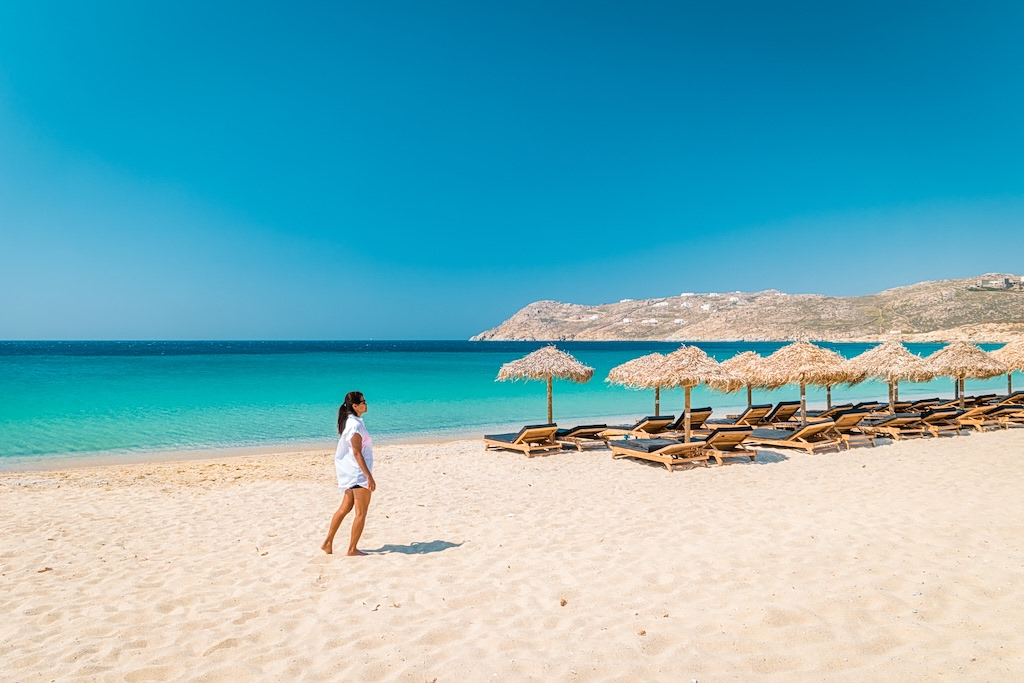
There are definitely dozens of free beaches across Greece, where all you need is your towel, your picnic, and a good mood. You can spend the day soaking up the sun and enjoying the beach vibe. In fact, this is even foreseen by Greek law.
This is the case in places that are not especially popular, or during the winter, on beaches that are hard to get to, or beaches with cliffs, stones and which are overall not very visitor-friendly.
The Reality
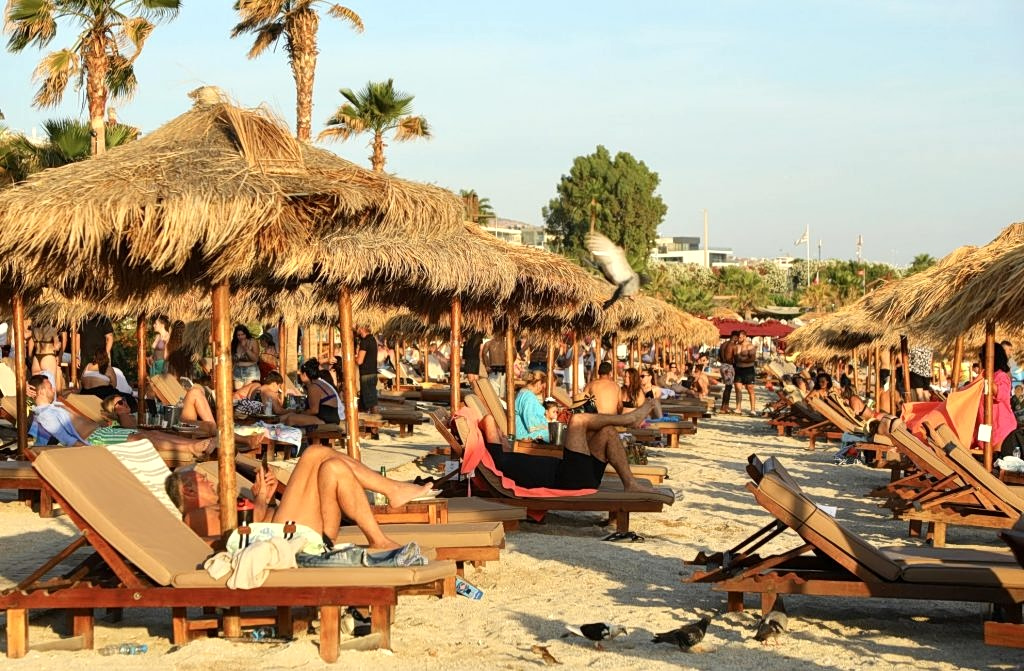
For those of you, however, dreaming of finding a free beach on super famous islands like Mykonos, Rhodes, and Paros, to name just of few of your favorite places, forget about it.
Nearly all the beachfront space on these islands is now covered with endless rows of loungers and umbrellas or massive sun beds inside private beach zones. Prices for these vary depending on season, beach, island, and month with the most expensive being in July and August.
And it doesn’t stop there. Getting to the beach now often requires entering through a beach club, which has basically cut off direct access to the shore. This means you may have to park your car or motorbike in a private parking area and pay for that too. Then comes the umbrella rental, coffee, food, and everything else that follows.
Should you decide to go on foot, you may still be allowed to enter, even though many places will initially discourage you, but finding an actual free space to place your own towel or umbrella is, in most cases, nearly impossible.
The Towel Movement
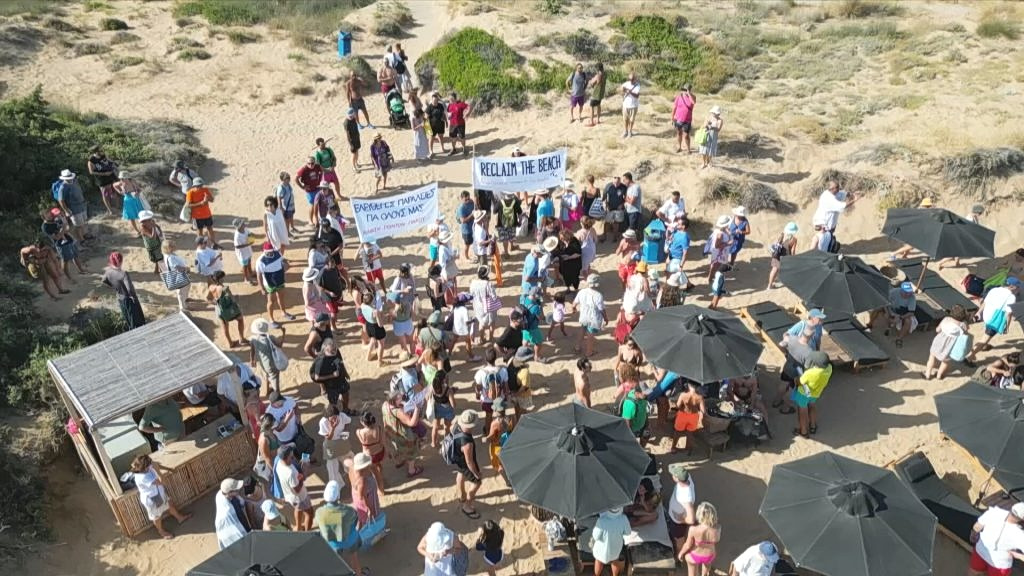
Inevitably, the situation got so out of hand that locals on several Greek islands and in seaside areas across the country began reacting after finding it impossible to find a free spot on the beach to place their towel and take a swim.
This led, a few years ago, to the launch, initially on Paros, of the so-called “Towel Movement”.
Frustrated locals demanded that Greek beaches return to the people while bringing into the spotlight hundreds of shoreline-use violations. Since then, they have repeatedly called on the government to take action.
Despite Greece’s stringent shoreline-use laws, every summer new violations come to light, including illegal construction in protected areas as seen on Milos, Mykonos, Santorini, Zakynthos, and Halkidiki, as well as more umbrellas and sun beds, the operation of massive beach bars, and violations regarding permitted noise levels. The movement eventually spread to other islands, including Crete, Corfu, Rhodes, and Halkidiki.
What Greek Law Actually Says
According to Greek law, access to the sea – whether that is to take a walk along the beach, swim, or place your towel – is considered a public good that cannot be privately owned. This even applies to luxury resorts promising exclusivity.
But the reality is very different, and you will quickly see this for yourself. Businesses, including hotels, beach bars, and resorts can lease sections of beach from the state and cover these with sunbeds, umbrellas, food/drink services, and water sports facilities. Under these lease agreements, they are required to leave open public access paths, keep part of the beach free, and avoid blocking the shoreline entirely. In reality, this is almost never the case.
What Travelers Should Know
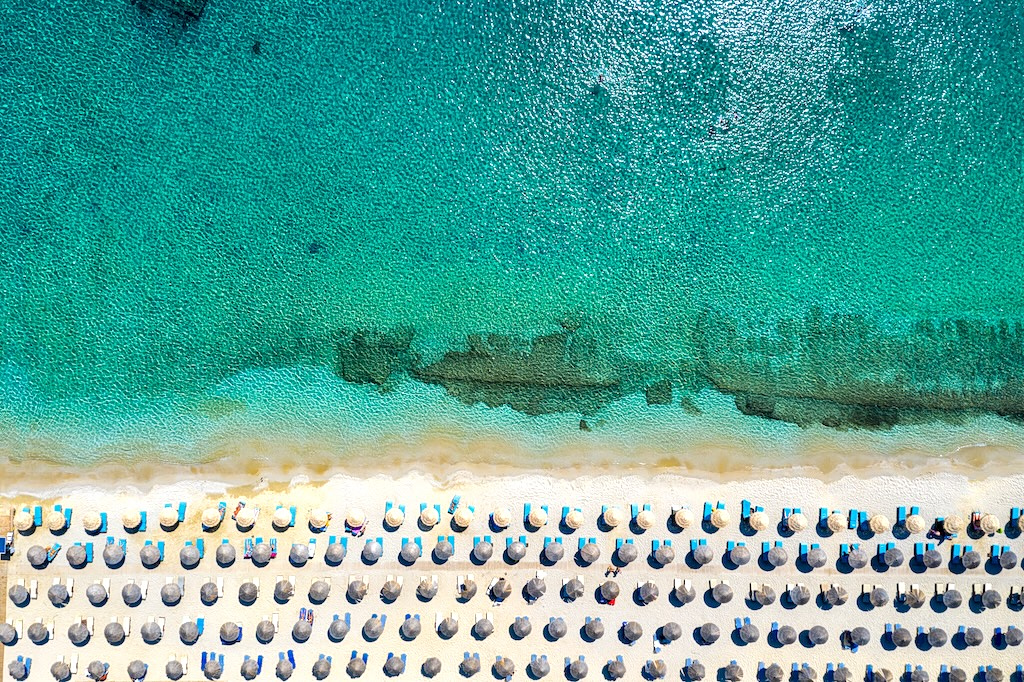
The ongoing takeover of public beach space in Greece under often vague lease agreements has led to growing public outrage. In response, the government has repeatedly pledged to increase inspections and fines. It even launched the MyCoast app two years ago, where users can report violations in real time. Unfortunately, the dire situation continues.
That said, under Greek law, no one can deny you access to the beach. If someone attempts to block you from entering, you can ask whether the area is operating under a state-leased concession, look for posted concession boundaries, contact the local port authority (“limenarchio”), or report the issue through on the MyCoast app.
This, of course, is something very few travelers wish to do, and I totally understand. While on vacation, time is precious and not worth wasting on a bureaucratic ordeal.
In this case, the best recommendation I can make is to avoid extremely popular Greek islands if your priority is free and easy beach access. And if you still want to go, then simply be prepared for the reality. Don’t expect to find open stretches of free beach everywhere. Instead, plan ahead, understand that sunbed prices can be hefty. One good idea is to visit Greece in the shoulder season.
The truth is that Greece still has incredible beaches. But the experience has changed dramatically in many parts of the country. On some islands, beach culture today is less about simplicity and freedom and more about reservations, minimum spend requirements, and finding parking plus fees. That does not mean travelers should avoid Greece. It simply means you should arrive knowing what to expect.
*Send your questions to Maria Paravantes at mparavantes@tovima.com