 Μake us preferred on Google
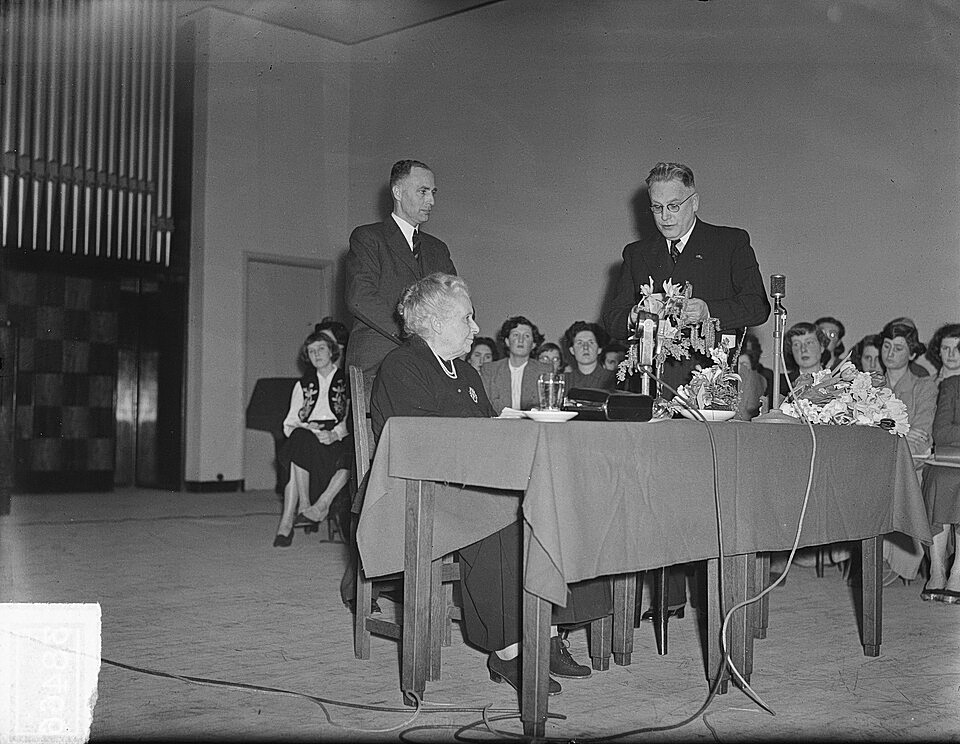
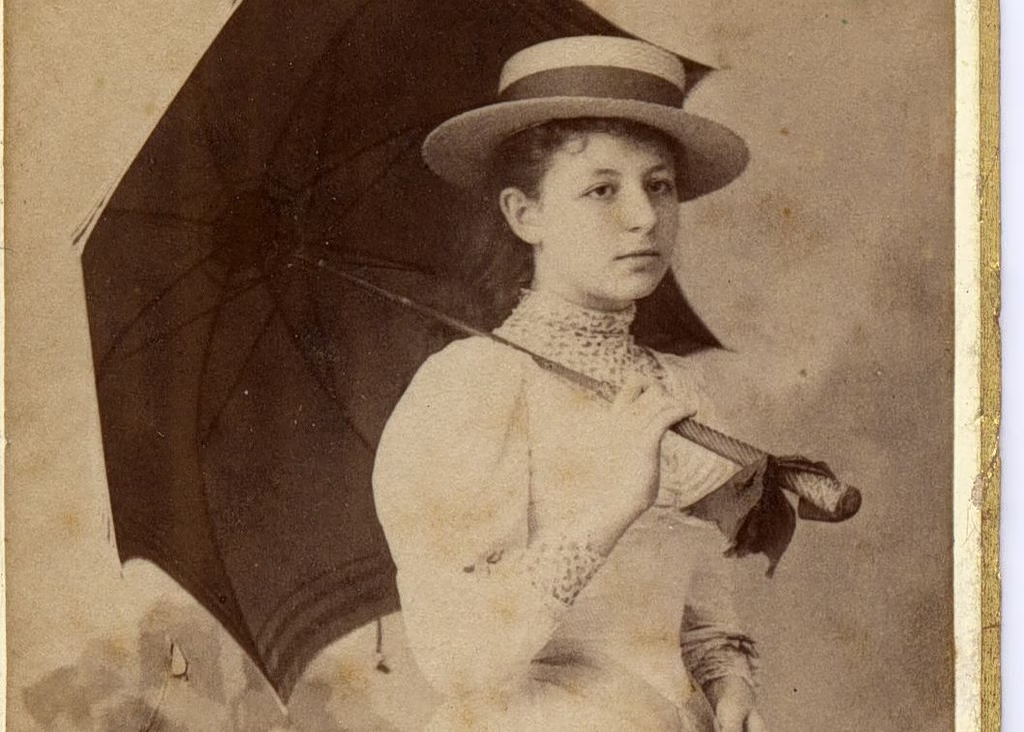
 On May 2, 1941, Penelope Delta died at the age of 67, by her own hand. She had taken poison a few days earlier, immediately after German forces entered Athens during the Occupation of Greece in World War II.
She had been in a deteriorating physical and mental state, having suffered from paralysis in her final years. The collapse of her country, however, appears to have been the tipping point.
Her death is considered deeply symbolic, as it coincided with one of the darkest moments in modern Greek history: the entry of Nazi forces into Athens.
She is one of the most significant figures in modern Greek children’s literature. More than any other writer of her era, she managed to link children’s reading with history, with national identity, and above all, with emotion.
Yet her legacy has never been entirely separable from the dramatic circumstances of her end. As Mairy Papayiannidou noted in To Vima on August 4, 1991:
“The anniversary this year, fifty years since the suicide of Penelope Delta, on the day the Germans occupied Athens in 1941, has barely been mentioned in tributes or public addresses up to now.”
The Publishing Rights
Around that same time, however, a different kind of interest was taking shape around her work:
“Along with the anniversary, the publishing arrangement for her books is also changing, since the period during which copyright protection applies is now expiring. From now on, any publisher can put out books by Penelope Delta.”
That development gave fresh momentum to the circulation of her books, which had “never stopped” being read by generations of children.
So what is it that makes Penelope Delta timeless? At a time when Western thinking treated the child “as an investment in the future,” Delta took a different path. She remained faithful to the “transcendent world of fairy tales.” Her aim was not simply to teach, but to shape character through emotion and imagination.
The Timelessness
As the article notes:
“A new study now places Delta’s work within the body of modern Greek children’s literature and examines, across time, the trends and influences in children’s writing at the end of the last century and the beginning of our own. The book in question is Tereza Pesmazoglou’s The Heroic Fairy Tale of P. S. Delta […]
“Ultimately, what is it that makes Penelope Delta’s books so beloved by children? We may not have consciously recognized it when we were all reading Fairy Tales and Other Stories, A Fairy Tale Without a Name, In the Time of the Bulgar-Slayer, In the Secrets of the Swamp, Manga, and Crazy Antonis, but according to this new monograph, Delta offered the ‘other way out,’ the ‘vision,’ that the other writers of her era could not provide, since they were shaped by the ideological currents of the West.
“The others went along with the demands of modern Western society, which ‘believes in the child as an investment in the future, as a promise for a better and more productive tomorrow. Perceiving time as a unit of production, it treats the child accordingly.’
“Penelope Delta resisted that imported outlook and remained faithful to the ‘transcendent world of fairy tales.'”
Children’s Literature
Her contribution to the broader intellectual and educational landscape of her time was also significant. Questions such as the language controversy, the clash between proponents of the vernacular (demotic Greek) and those who favored the formal, archaic katharevousa, as well as the role of publications like Diaplasis ton Paidon (The Shaping of Children), all shaped the environment in which children’s literature developed:
“Tracing the arc of the most representative poets and writers of the 19th century, the study also brings into focus other burning, and still relevant. questions in the history of education: the evolution of the language question, the battle between the demoticists and the purists, the establishment of Modern Greek as a subject in secondary schools, the role of children’s magazines and especially the most popular one, Diaplasis ton Paidon, and more.
“As Spyros Doxiadis notes in the preface, ‘the study of literature for children — what children read outside of their school obligations — reveals quite a lot. It shows us what society and its representatives, namely the authors, who have undoubtedly been shaped by the broader intellectual climate in which they live, consider likely to give children pleasure.’
“It is no surprise, then, that according to Ms. Pesmazoglou, many children’s books today still have an informational, journalistic, or scientific character, intended to ‘prepare’ children for the adult world.
‘The romanticism we see in Delta’s books is gone. She wanted to shape, to mold characters.'”
A note on the title: The phrase “transcendent world of fairy tales” renders the Greek υπερούσιος κόσμος των παραμυθιών — a philosophical term drawn from Orthodox Christian theology, where υπερούσιος (literally “beyond being” or “superessential”) describes something that surpasses ordinary reality.
Delta used it to convey the idea that the world of stories exists on a higher plane than the utilitarian, practical world of modern Western education.